Common Problems
Why Is My Oven Door Locked? A2, A3, and Two Hours of Patience
Wait, and do not force it. A self-clean latch is a temperature interlock rather than a timer: it will not release until the cavity is genuinely cool inside, and a full clean cycle in a 30-inch oven can take a couple of hours to get there with the door shut — long after the door front feels normal to the touch. If the oven is genuinely cold and it is still locked, the maker's own instruction for an A3 is to turn the power off at the wall and back on, then touch the oven door to help the lock disengage. A2 is the opposite condition: the door could not be locked when a clean cycle started, so the cycle never ran, and its published sequence is power off for ten seconds, power on, set the clock, then restart the cycle with the door pushed firmly closed. What turns either of those into an expensive morning is pulling on the front: the latch is a small motorized mechanism, and the door, its hinges and its glass are not.
The full guide
Why is my oven door locked: one mechanism, two opposite complaints
There are only two ways this goes wrong, and Fisher & Paykel gives each of them its own code. Knowing which one you have decides what to try first, and most pages about locked ovens never mention that there is a difference.
A2 — the door could not be locked when a self-clean cycle was started. The oven asked the latch to close, could not confirm that it had, and refused to run the cycle. You have a working oven and a clean cycle that will not start.
A3 — the door could not be unlocked when the cycle finished. The oven is now cool, or getting there, and the door is still shut. This is the one that produces the phone calls.
Same latch motor. Same position switch. Opposite ends.
:::
The interlock is a thermometer, not a timer
This is the part that matters most and the part almost nobody is told.
A self-clean latch does not release after a set period. It releases when the cavity is genuinely cool. And a self-clean cycle takes an oven far above any temperature it reaches while cooking, so the inside stays hot for a long time after the front of the door feels perfectly normal to the hand.
Two hours from the end of the cycle, door shut, is a reasonable line. A great many of these open on their own inside that window — which is why the honest first advice on this page is not a repair at all.
Do not pull on it. This is the single most expensive mistake available here. The latch is a small motorized mechanism and a repair. The door, its hinges, its springs and its glass are not, and every one of them is what gets damaged when a locked oven meets a determined pull. If the door needs two hands, stop.
The maker's own free attempts
For A3, once the oven is genuinely cold:
- Turn the power to the oven off at the wall and back on.
- Touch the oven door — press gently against it — to help the lock disengage.
- If the code reappears, the latch or its switch needs looking at.
For A2, before you assume anything is broken:
- Turn the power off at the wall.
- Wait about ten seconds — this lets the lock return to its starting position.
- Power on and set the clock.
- Start the self-clean cycle again, making sure the door is closed firmly rather than resting.
Both of those are free, both come from the manufacturer, and between them they end a real share of these calls.
The power-cut version
Storm season produces a run of these every year, and the maker publishes it as its own article: an oven showing 12:00 with a locked door after an outage.
What has happened is that the cut arrived during or just after a cycle. The control came back without a clock, and a control that does not know the time will not act on a timed instruction — including the one that releases a latch.
Set the clock. It sounds too small to be the answer and it very often is.
When it is genuinely the latch
If the oven is cold, the reset has been tried, the clock is set, and the door is still shut, then it is the latch motor — which has driven the lock closed and cannot drive it back — or the position switch, which reports where the lock is and may be telling the control something untrue.
Both are ordinary repairs. Both are far smaller than the door repair that follows forcing it. On a built-in oven the figure carries the access, because the machine comes forward out of its housing to reach the mechanism, and that is established at the diagnostic rather than discovered on the day.
The other thing this page is really about
If your oven locked during a clean cycle and afterwards would not heat at all, that is a different and equally common outcome: a thermal cut-out has done its job. Self-clean drives a cavity to temperatures nothing else does, and the protection that exists for it opens and does not reset itself. You get a live display and a cold oven, which looks alarming and is an ordinary repair.
Tell us if a clean cycle was the last thing the oven did. It changes where the visit starts.
If it turns out to be a repair
What this leads to, and what it costs
Every job on this site is priced the same way: an on-site diagnostic first, the figure agreed in writing before anybody starts.
-
A3, and patience Oven door locked after a self-clean cycle
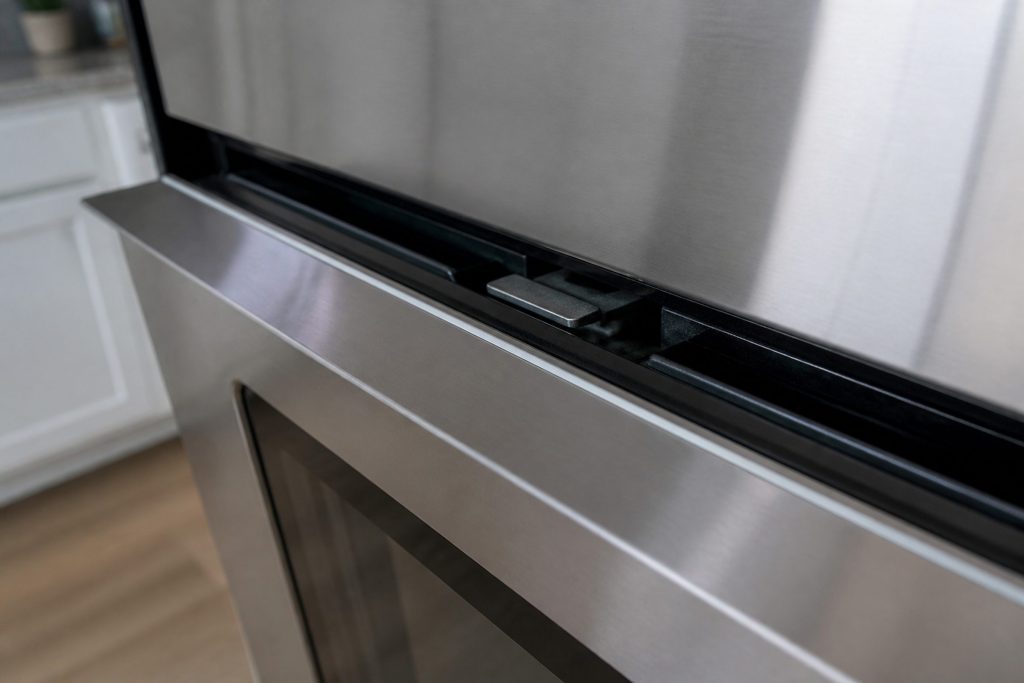
A door that will not release when the cycle has finished. The lock is driven by temperature rather than by a timer, so the first thing to try is time — and the one thing not to try is force.
- The cycle has ended and the door stays shut
- A3 showing on the display
- The oven feels cool on the outside
-
from $165 Oven door & self-clean lock repair
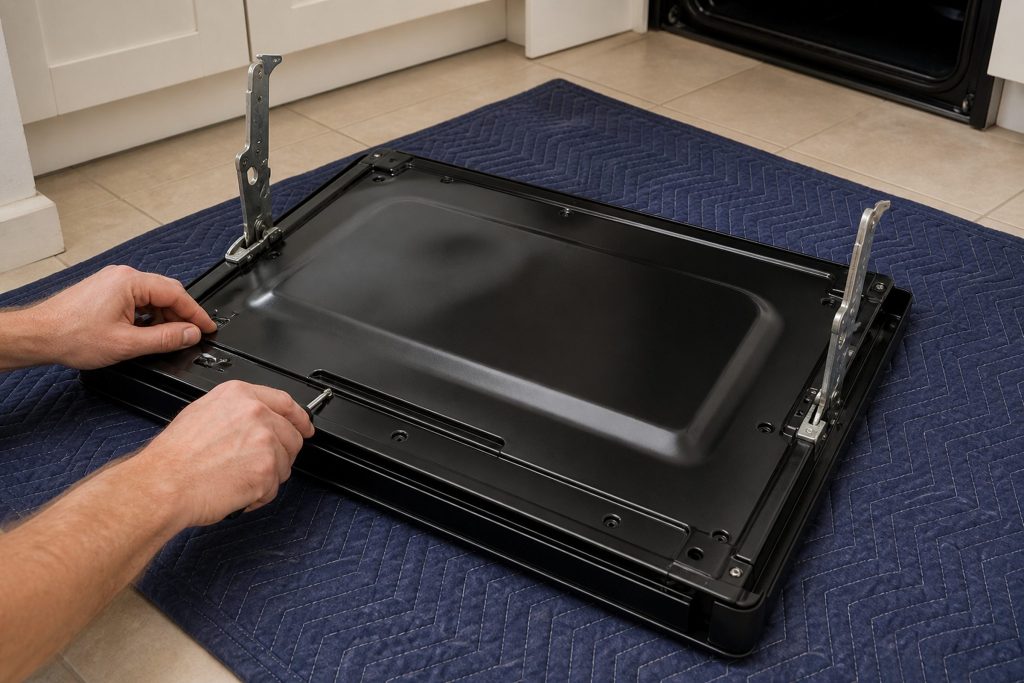
A door locked after a clean cycle and staying locked, a door that will not lock so the cycle will not start, hinges that have carried a heavy door for years, or cracked door glass. On this maker the first two have their own codes — A2 and A3 — and they mean opposite things.
- A2 and A3 told apart before anything is dismantled
- The interlock given time before it is called broken
- Hinges and glass as separate jobs from the latch
Questions people ask about this
How long should I actually wait?
Two hours from the end of the cycle, with the door left shut the whole time. Checking the handle every ten minutes achieves nothing and opening it is impossible anyway. A real share of these release inside that window, which makes patience the cheapest repair on this page.
The oven feels cold. Why is it still locked?
The outer skin cools long before the cavity does, and the interlock reads the cavity. Feel the inner door glass rather than the front panel. If that is genuinely cool and the lock has not released — or if A3 is showing — the latch motor or the switch that reports its position is the repair.
Is there a manual release?
Not one you should be hunting for. On these machines the latch is driven by a small motor and released by the same motor, and the things people try instead — a knife under the door, a screwdriver at the hinge — go through the seal, the glass or the hinge. There is no hidden lever behind the kickplate to find.
My oven shows 12:00 and the door is locked after a power cut.
The maker publishes an article for exactly that, which tells you how common it is in storm season. A cut during or just after a clean cycle leaves the control without a clock and the latch where it was. Setting the clock is often the whole fix — the control will not act on an instruction while it does not know what time it is.
Can I stop a self-clean cycle part way?
You can cancel it, and the door will stay locked until the cavity cools regardless. What is worth avoiding is canceling and immediately restarting: the maker publishes a separate condition for a self-clean interrupted and quickly restarted, and its instruction is to wait at least thirty minutes for the oven to cool before trying again.
Should I use self-clean at all?
It works, and it is hard on the oven. It is the most extreme thing the appliance ever does — the cavity goes far above any cooking temperature, and the thermal protection that exists for exactly that is what opens afterwards and leaves you with a live display and a cold oven. Using it once or twice a year rather than monthly, and never immediately before a dinner party, is the practical advice.
Common Problems
More guides like this one
-
Your Fisher & Paykel Refrigerator Is Beeping: Count Before You Clear It
There is no error number on the display, because on much of this line there is no display. The machine counts beeps and flashes an LED instead — and the count is the code.
Read more -
DishDrawer Will Not Drain: the Filter, the Hose and the A3 Code
The maker publishes both the code and the order to work through it, and the first two things on its list cost nothing. Most of these end before anybody is called out.
Read more -
DishDrawer Problems: What Goes Wrong on a Dishwasher That Is a Drawer
A DishDrawer has no door and no door gasket. It seals from above, under a motor, which changes where it leaks, what fails, and why one drawer of a double can be perfect while the other is out.
Read more
Tell us the model number and what it is doing.
This article is based on:
- Official manufacturer documentation
- Internal repair procedures
- Technician repair history
- Company quality standards