Common Problems
DishDrawer Problems: What Goes Wrong on a Dishwasher That Is a Drawer
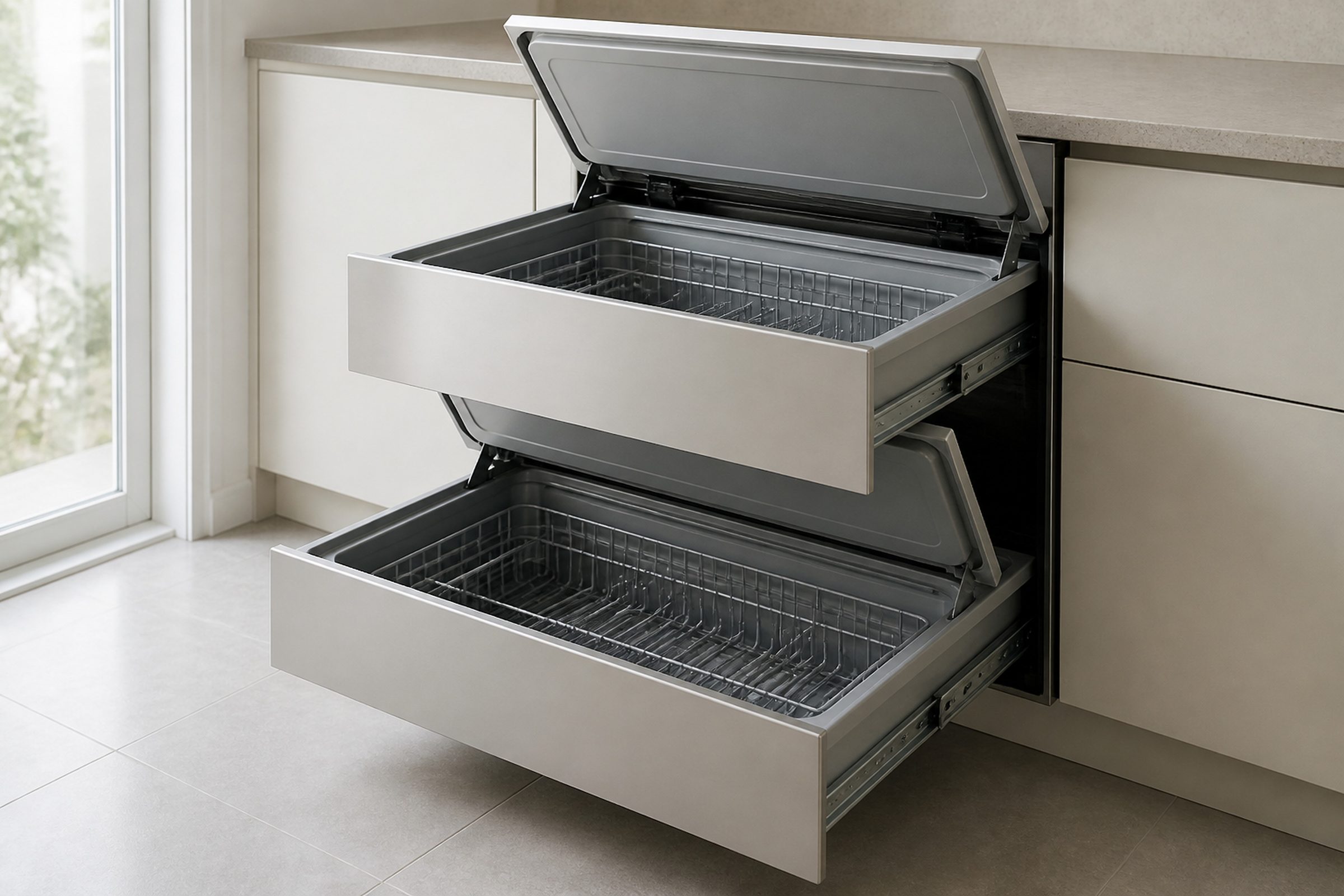
Almost every DishDrawer problem traces back to one design decision: it seals from above rather than in front. A lid is driven down onto the top of the drawer by a lid motor and held there under pressure for the whole cycle. That gives it a motor no other dishwasher has, a seal that lies flat and therefore collects whatever falls on it, and — on a double — two complete wash systems that fail independently. So a leak appears on the floor with a spotless interior, because water that escapes a top seal runs down the outside. A drawer that will not open at the end is usually the lid mechanism not lifting rather than a lock. And a machine where one drawer is faultless while the other misbehaves is normal rather than mysterious, because they share almost nothing but a cabinet and a water supply.
The full guide
Fisher and Paykel DishDrawer problems start with one design decision
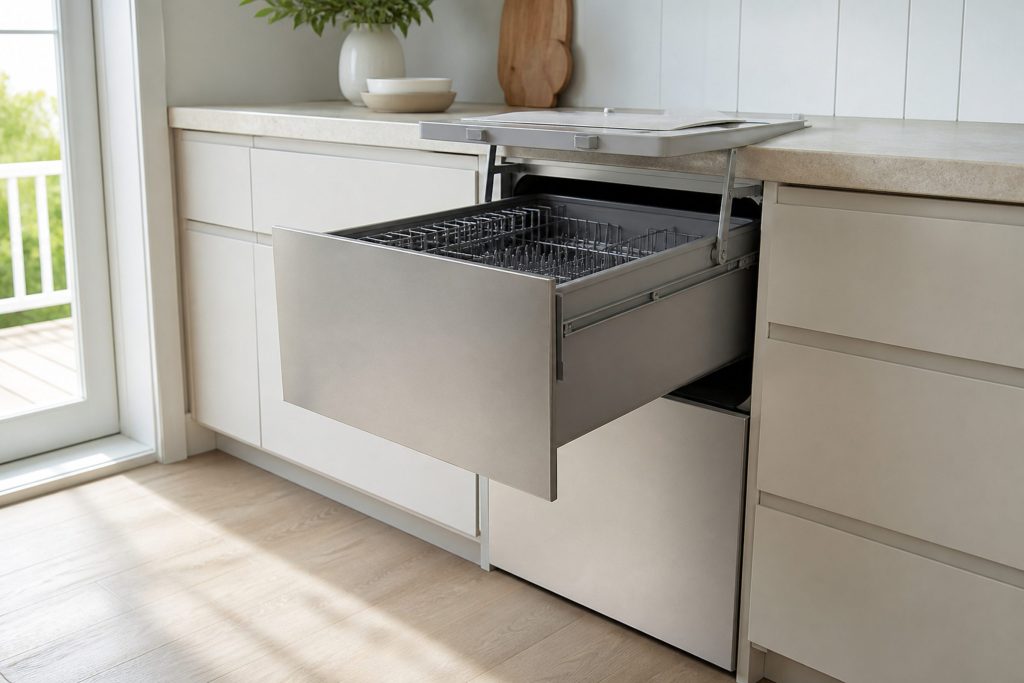
Every dishwasher you have ever used seals in front. A door swings down, a gasket runs around its edge, a latch holds it shut. A DishDrawer does none of that. The drawer slides out on runners, and when a cycle starts a lid is driven down onto the top of the tub by a motor and held there under pressure until the cycle ends.
That one difference explains most of what people report about these machines, and it is why a technician who has only worked on door dishwashers will spend your appointment learning.
Forty of the fifty-one dishwashing machines Fisher & Paykel lists for the United States are drawers — sixteen tall doubles, fifteen tall singles, and nine of the shorter versions. So on this make, the drawer is not the unusual option. It is the machine.
Where the water goes when it escapes
On a door dishwasher, a failed gasket puts water at the bottom of the door. It is obvious, and it points straight at the part.
On a drawer, the seal is at the top. Water that gets past it runs down the outside of the drawer, inside the cabinet housing, and appears under the front — while the interior of the drawer looks exactly as it should. People describe it as a mystery leak, and it is the single most characteristic symptom these machines have.
The search order that follows from that is:
- the lid seal, which lies flat and collects what falls on it rather than shedding it;
- the lid motor, because a lid that is not driven down evenly cannot seal however good the rubber is;
- the flexible fill and drain connections, which move every time the drawer opens and weep before they leak;
- the spray arm seat, if the arm has come off its mounting and is sending water somewhere the design does not expect.
Water in the base is not a wait-and-see. These machines have flood detection: once the appliance has seen water where it should not be, it shuts down deliberately and refuses to restart. From the front that looks exactly like a dead control board, and it is the opposite — the machine protecting itself. Look underneath before assuming the worst.
A double is two machines, and it fails like two machines
A double DishDrawer has two lid motors, two rotors, two wash controllers, two motor controllers and two filters. What the two drawers share is a cabinet, a water supply, a drain and a communication link.
Practically, that means:
- one drawer out is not a broken dishwasher. You keep washing in the other one while a part is on order, which is worth a great deal in a household that cooks;
- "my dishwasher is not draining" needs a follow-up question — which drawer — and the answer narrows the job before anybody drives anywhere;
- both drawers reporting at the same instant is its own condition. It usually points at the link between them rather than at either controller failing.
The machine has no display, so it flashes instead
There is no screen on a DishDrawer. A great deal of this line is integrated behind a cabinet panel, and a screen would be hidden by it — so the machine reports through the lights it already has.
Read it like this:
- wash modifier lights and the lock light flashing together is an F condition;
- wash modifier lights alone is an A condition;
- in both cases one or more program lights stay lit, and which ones identify the specific code.
The A conditions are the ones with published owner steps: water supply, drainage, the spray arm, foam recovery, the sanitize temperature and an overheated element. The F conditions cover the rotor, the lid motor, the heating element, the drying fan, the fill valve and the two controllers, and most of them need a technician.
Photograph the panel before you switch the machine off. The pattern is the diagnosis, and it disappears the moment power is cycled. Ten seconds with a phone is worth more to us than a paragraph of description.
:::
The complaints that are not repairs at all
Three of the things people write to the maker about most on these machines are the machine working correctly, and it is worth knowing which before you pay anybody:
Detergent still in the dispenser. The most-linked article this maker publishes about its dishwashers. Three of its four causes are free: a dish leaning over the dispenser cover so it cannot open, moisture in the cup before the tablet went in, and a cycle too short for a tablet to dissolve.
The fan running after the cycle ends. That is the drying fan pulling moisture out of the drawer, and a second fan cooling the electronics. It is meant to run on.
Plastics still wet. These machines dry with residual heat and a fan rather than a large element. China and glass hold heat and dry; plastic holds almost none and does not. It is physics rather than a defect.
What is genuinely worth a call
- Water on the floor, especially with a machine that has stopped and will not restart.
- A drawer that will not open, once the machine has been off and on at the wall and given a few minutes.
- A flashing F pattern that comes straight back after being cleared.
- A drawer that will not drain after the filter and the filter plate have both been out, rinsed and reseated, and the drain hose checked at the sink.
Everything above starts at the diagnostic, which is credited toward the repair. What we would rather not do is sell a lid mechanism to somebody whose real problem was a teaspoon too much detergent — so if you are unsure which half you are in, say so on the phone.
If it turns out to be a repair
What this leads to, and what it costs
Every job on this site is priced the same way: an on-site diagnostic first, the figure agreed in writing before anybody starts.
-
Single DishDrawer · Double DishDrawer · Tall · Drop door · Integrated · Series 5 · 7 · 9 · 11 · 24" Dishwashers and DishDrawers
Fifty-one machines, and forty of them are drawers. The DishDrawer is this maker's own invention and nothing else in a South Florida kitchen works the way it does: a lid that seals under motor pressure instead of a door, a wash system per drawer, and on a double, two machines that can run — and misbehave — independently of each other.
- Detergent still sitting in the dispenser at the end of a cycle
- A drawer that stops mid-cycle, beeps, and flashes its modifiers
- Water under the machine, or a drawer that will not drain
-
from $185 DishDrawer lid & seal repair
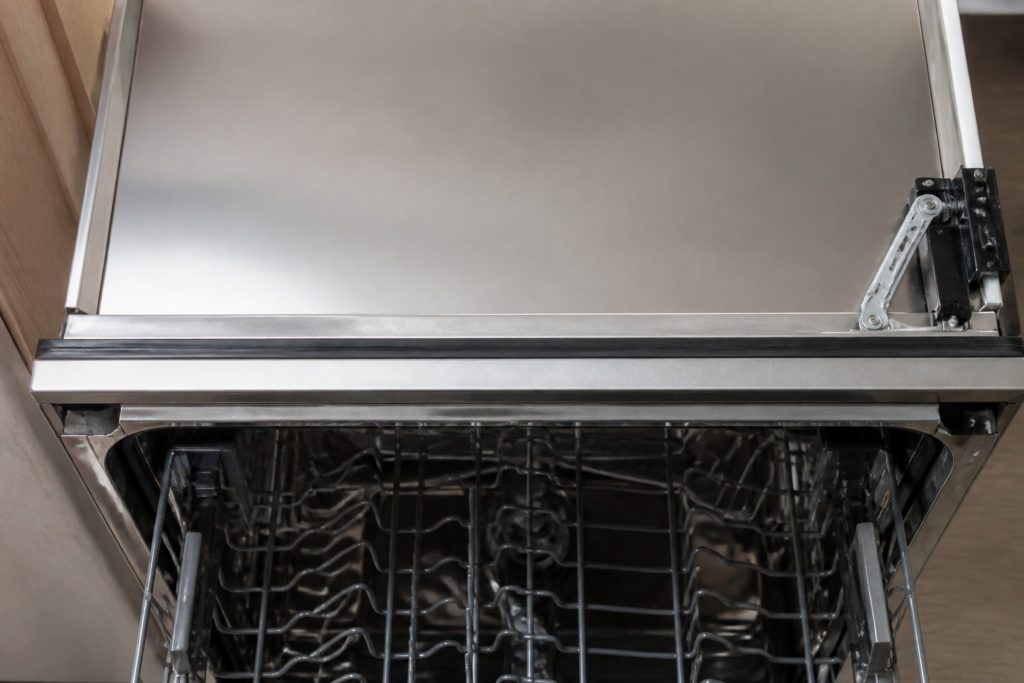
The repair that exists only on this maker. A DishDrawer has no door and no door gasket: a lid motor drives a seal down onto the top of the drawer and holds it there for the whole cycle. When that mechanism stops sealing you get water on the floor, a drawer that will not start, or a drawer that will not open at the end.
- Lid motor and lid seal checked as one mechanism
- Which drawer, on a double — they fail independently
- The drawer runs a full cycle under watch before we leave
-
Shut at the end of a cycle DishDrawer will not open
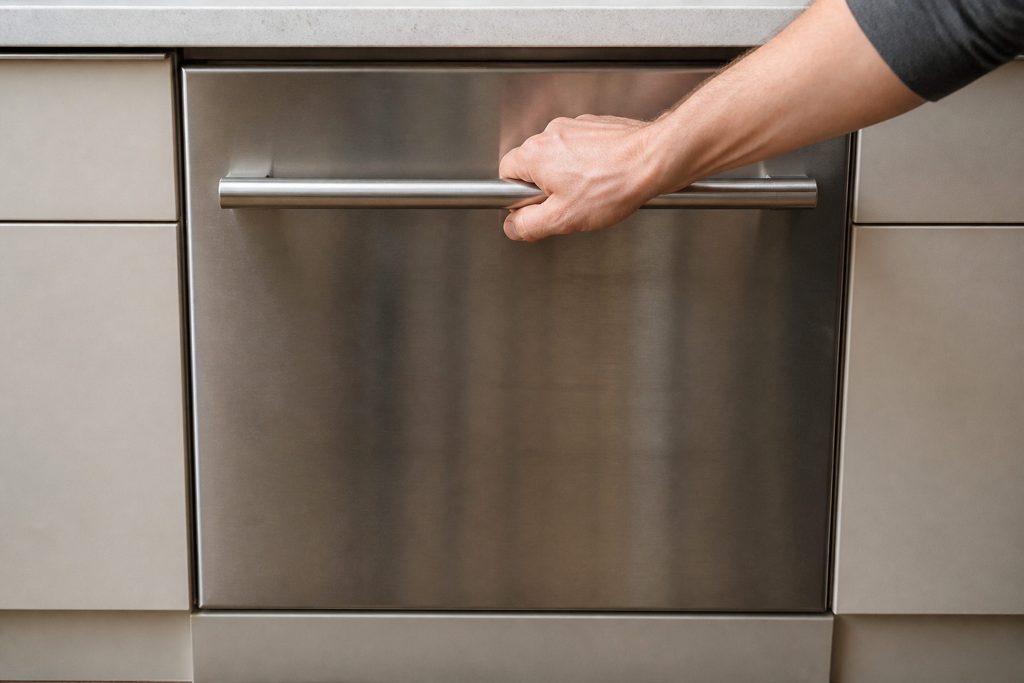
A drawer that stays closed after a cycle has finished. This is the one symptom on this site where the wrong ten seconds turns a small repair into a large one, so the first instruction is: do not pull on it.
- The cycle has ended and the drawer will not slide out
- It opens sometimes and not others
- There was a beep or a flashing pattern first

Questions people ask about this
Why does the floor get wet when the inside of the drawer looks fine?
Because the seal is at the top of the tub rather than around a door. Water that gets past it has nowhere to go but down the outside of the drawer and out under the front, so the interior stays clean while the floor does not. On a conventional dishwasher the same puddle would send you to a door gasket; here it sends you to the lid seal, the lid mechanism, or the flexible connections behind the drawer that move every time it opens.
One drawer works perfectly and the other does not. Is the machine failing?
No, and it is one of the real advantages of a double. Each drawer has its own lid motor, its own rotor, its own filter and its own wash controller. A failure on one side says nothing about the other, and you keep using the working drawer while a part is on order. What is worth mentioning when you book is whether both drawers began misbehaving at the same moment, because that points at the link between them rather than at either one.
The drawer will not open at the end of a cycle. Can I pull harder?
Please do not. The lid is held down on the drawer under motor pressure during the cycle and is meant to lift at the end; a drawer that stays shut usually means that last movement did not complete. Pulling on the front turns a mechanism repair into a drawer-front or cabinet-panel repair, which is a much larger job. Switching the machine off and on at the wall will often let the lid release on its own.
Is there more to go wrong on a drawer than on a normal dishwasher?
There is one thing more — the lid mechanism — and several things fewer. There is no door with hinges and springs carrying a heavy panel, no door latch, and on a double you are never without a dishwasher, because half of it keeps working. Whether that trade is good depends on the household. What is certainly true is that it needs a technician who has opened one before.
How much detergent should go in?
Far less than a full-size machine, and this is behind more complaints than any single part. The wash chamber in a drawer is small, and the maker's own guidance for these is a teaspoon at most. Too much makes foam; foam pushes past a seal that holds water perfectly well; the machine reads the result as a leak and can shut itself down. If you have a leak and a foam problem at the same time, run one cycle with no detergent at all before booking anybody.
Can you get parts for older DishDrawers?
Often, and it is the question worth asking first on any machine past its first decade. The maker's US support base lists only machines it still sells, so an older DishDrawer is not in it — that does not mean parts have gone, it means availability has to be checked rather than assumed. We check before ordering, not after, and we say plainly when a machine is not worth the part.
Common Problems
More guides like this one
-
Why Is My Oven Door Locked? A2, A3, and Two Hours of Patience
The lock is a thermometer, not a timer. It releases when the cavity is genuinely cool, and the single most expensive mistake available is pulling on the door before it does.
Read more -
Your Fisher & Paykel Refrigerator Is Beeping: Count Before You Clear It
There is no error number on the display, because on much of this line there is no display. The machine counts beeps and flashes an LED instead — and the count is the code.
Read more -
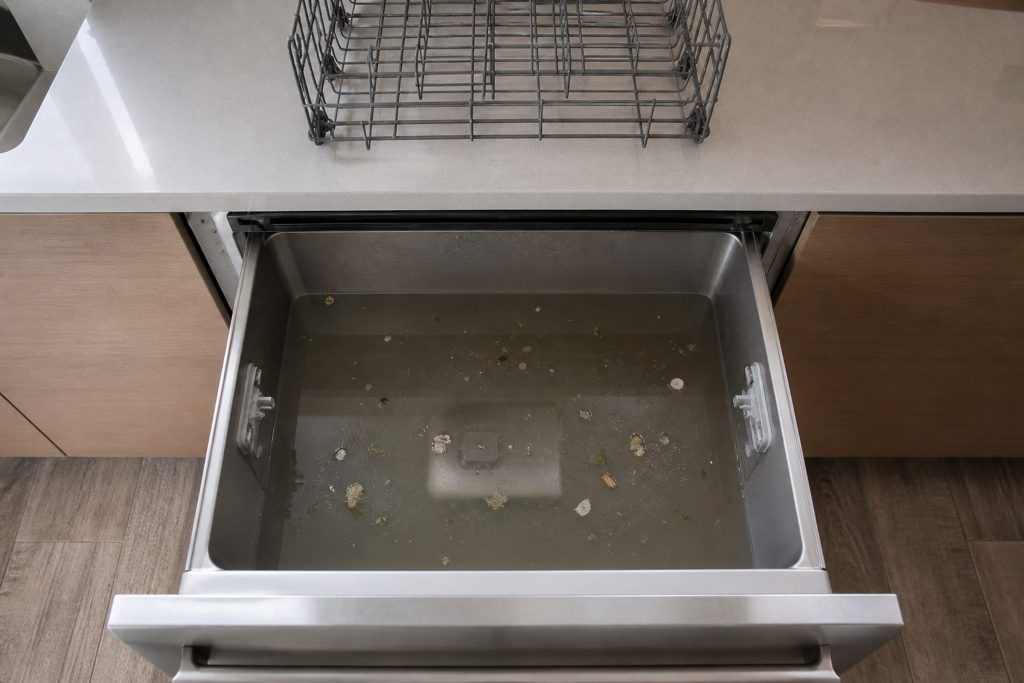
DishDrawer Will Not Drain: the Filter, the Hose and the A3 Code
The maker publishes both the code and the order to work through it, and the first two things on its list cost nothing. Most of these end before anybody is called out.
Read more
Tell us the model number and what it is doing.
This article is based on:
- Official manufacturer documentation
- Internal repair procedures
- Technician repair history
- Company quality standards