Appliance
Fisher & Paykel ranges
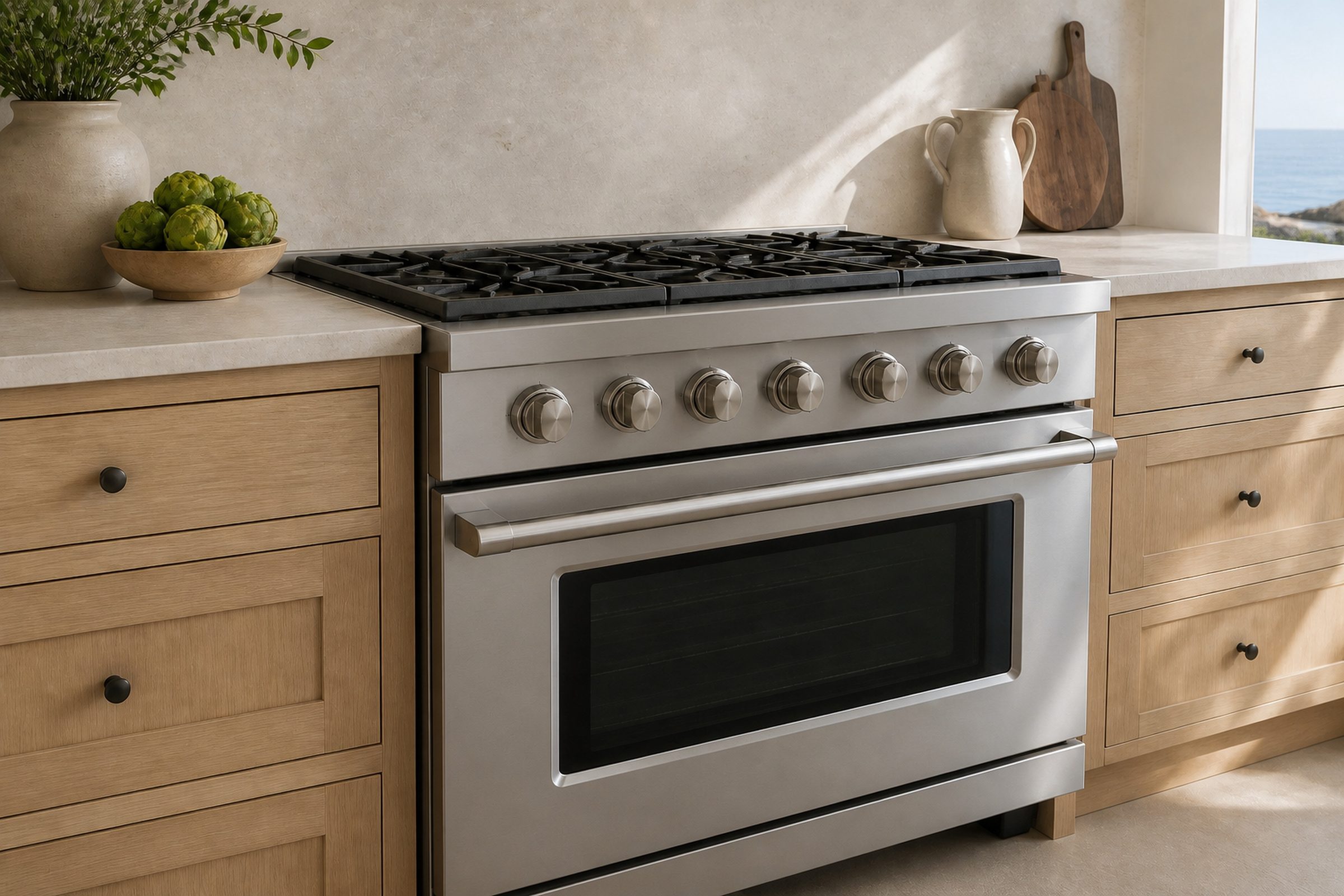
Forty-one freestanding ranges, and the split tells you what this maker is: sixteen dual fuel, fifteen gas, seven induction and one electric. Twenty-seven of them are Professional — heavy grates, dual-flow burners, four to eight of them, and on the larger machines a griddle let into the top. On a 48-inch range, "the oven is not heating" means one of two ovens, and which one narrows the part before anybody drives anywhere.
- 10 symptoms we are called out to
- From $95 diagnostic, credited to the repair
- 59 cities and neighborhoods covered
- OEM parts available on order
The short version
What this equipment is, for a repair
Configurations
Professional gas · Dual fuel · Induction · Classic · 4 · 5 · 6 · 8 burner · Griddle · 30" · 36" · 48"
Access
Planned before the visit, not discovered on arrival
Parts
OEM, available on order
Diagnostic
From $95, credited to the repair
What goes wrong with it
Symptoms we are called out to on Fisher & Paykel ranges
Each one covers the likely causes in the order they are worth checking, and what to do in five minutes before booking anything.
-
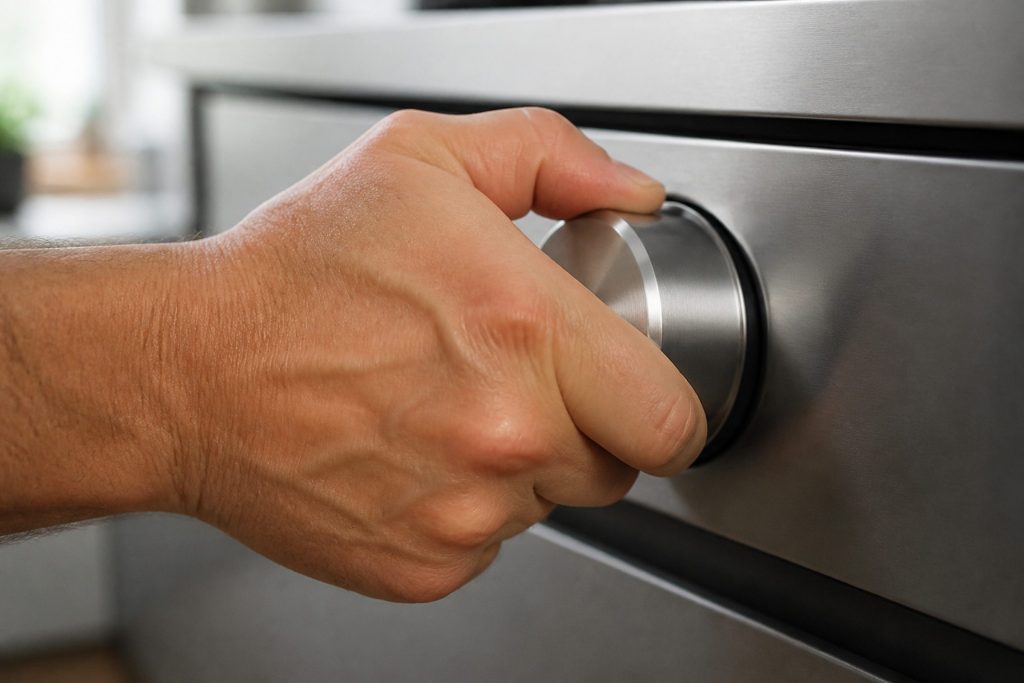
Stiff, not broken Cooktop dials difficult to turn
The complaint this maker's own cooktop owners raise more than any other — its article is linked from sixty-one models — and it is a maintenance repair rather than a breakdown. The one thing worth doing meanwhile is not forcing it.
- One dial stiffer than the rest, or all of them
- It got gradually harder over a year or two
- A dial that has started to feel gritty
-
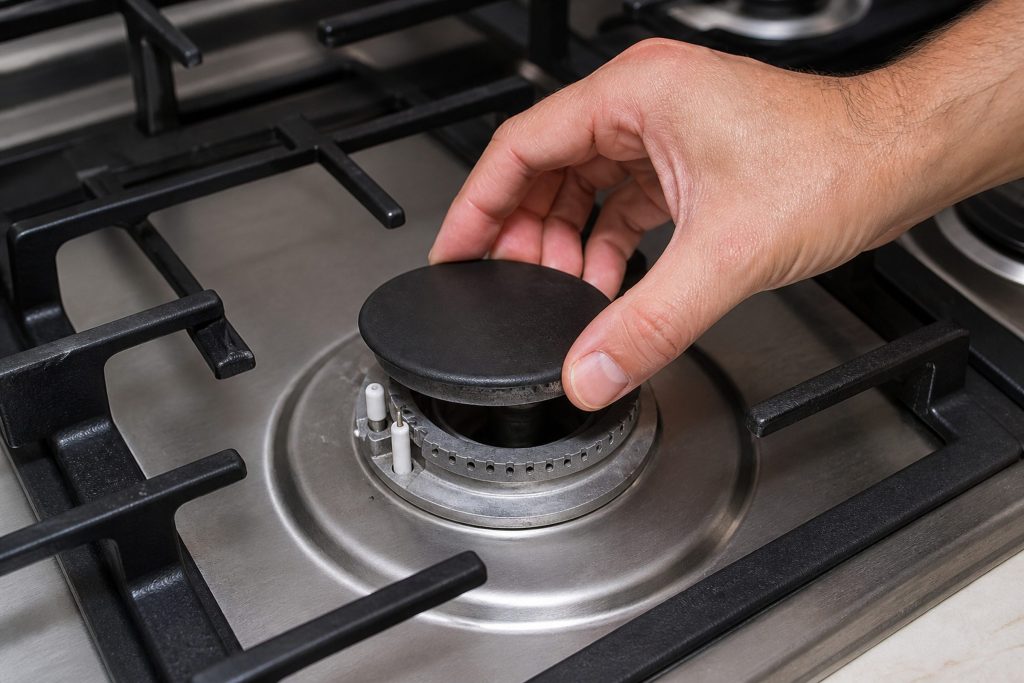
Sparking, no flame Burner clicks and will not light
A burner that sparks and never catches. The good news is in the symptom itself: if it is sparking, the ignition side is alive, and the problem is gas reaching the burner or the burner itself — which is very often something you can put right in five minutes.
- It clicks steadily and nothing lights
- It started right after the cooktop was cleaned
- One burner only, or all of them
-
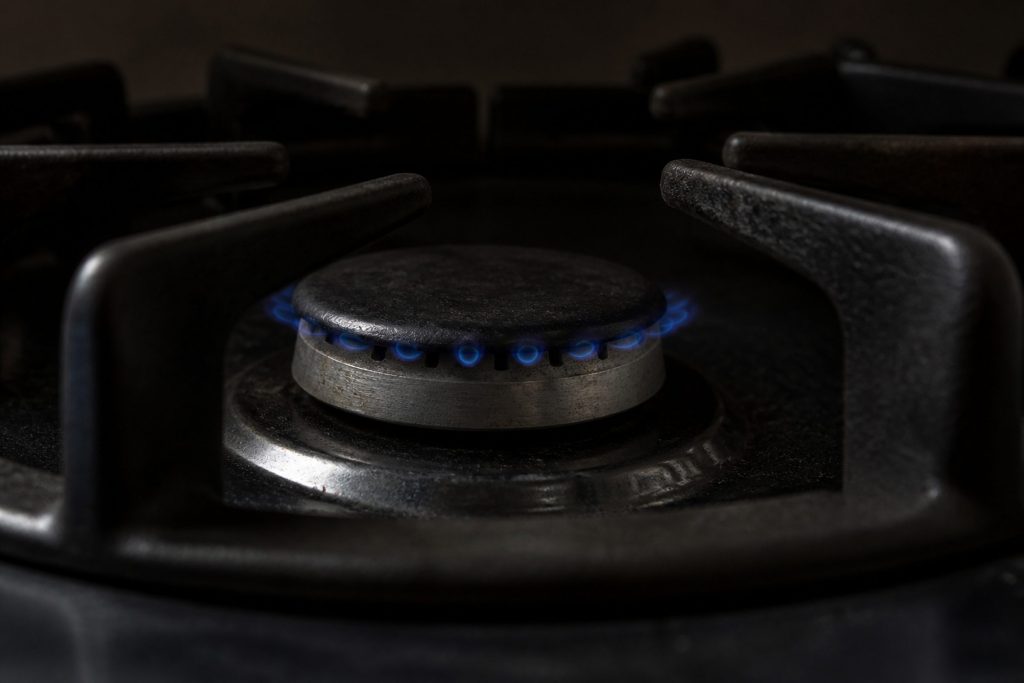
Holds high, dies at simmer Flame goes out on the low setting
The most-linked freestanding cooker article this maker publishes. A burner that is perfect on high and will not stay lit turned down is telling you something specific, and it is not the gas supply.
- Full flame is fine, simmer goes out
- It relights and then dies again
- It got worse over months
-
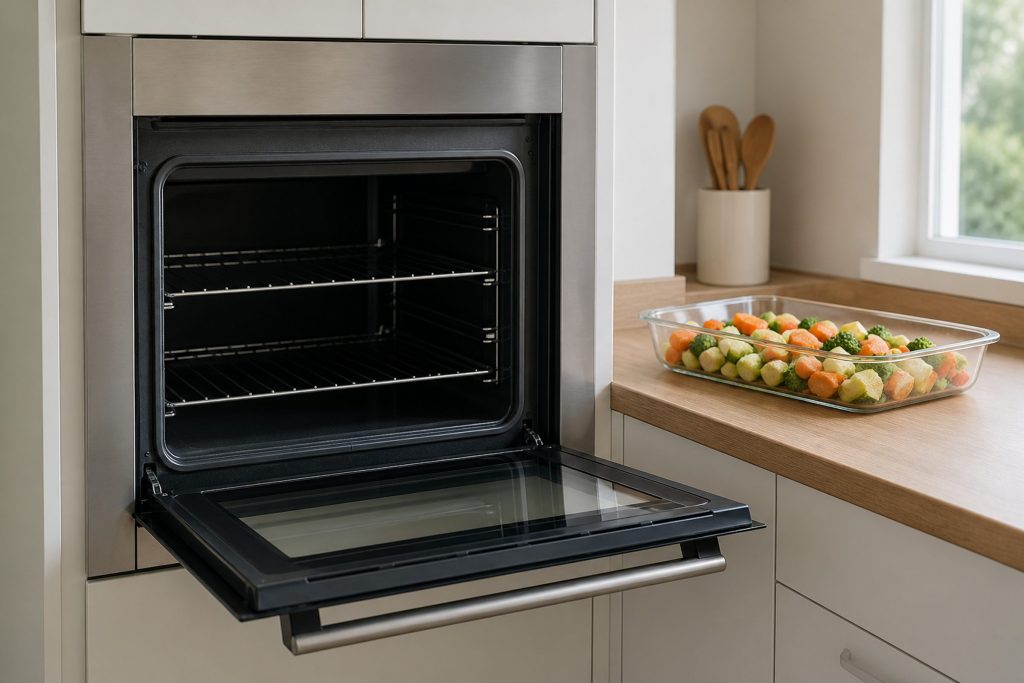
Live panel, cold cavity Oven display is on but it does not heat
One of the maker's most-linked oven articles, and a real spread of causes: an element, the temperature sensor, the relay that switches the element, or a thermal cut-out that did its job after a self-clean and has not reset.
- The controls work and nothing gets hot
- It worked until the last clean cycle
- One cavity of a double works and the other does not
-
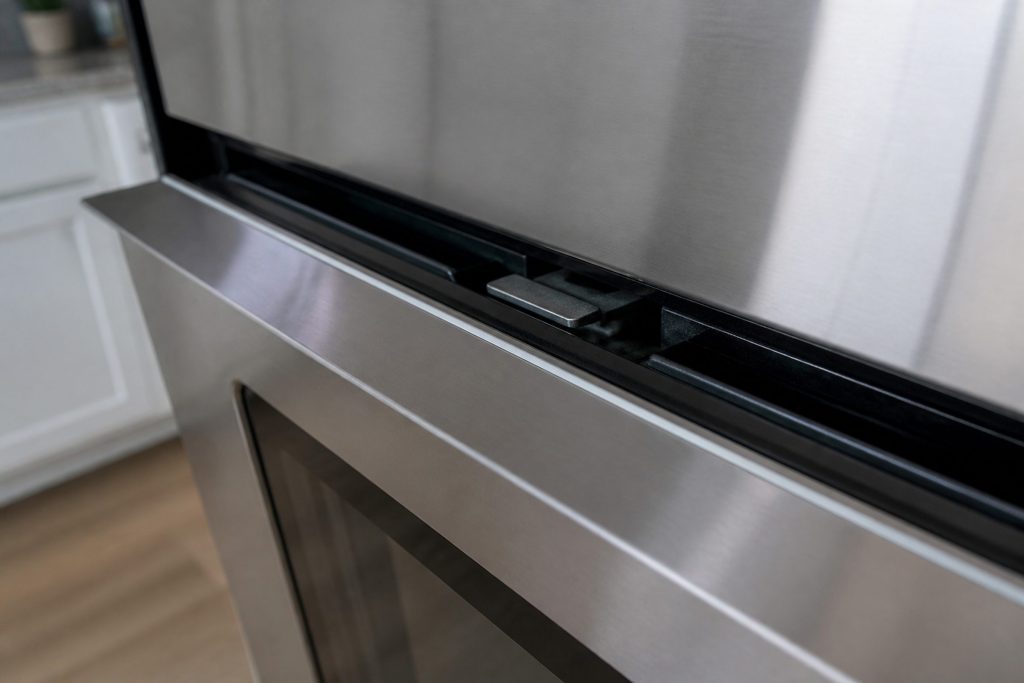
A3, and patience Oven door locked after a self-clean cycle
A door that will not release when the cycle has finished. The lock is driven by temperature rather than by a timer, so the first thing to try is time — and the one thing not to try is force.
- The cycle has ended and the door stays shut
- A3 showing on the display
- The oven feels cool on the outside
-
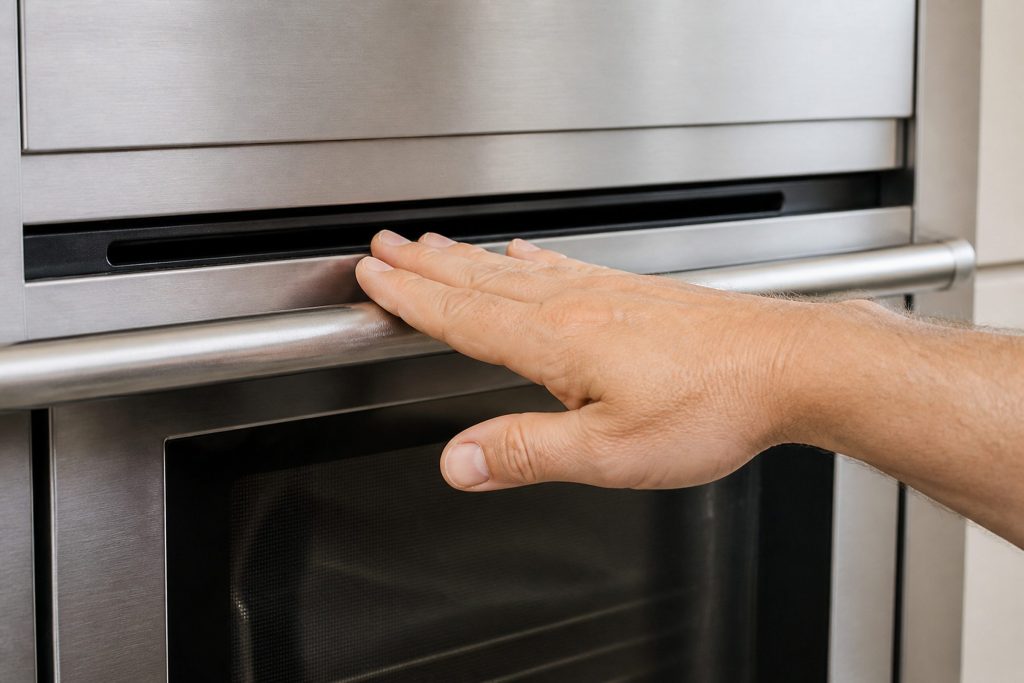
Usually the design Oven fan keeps running after it is turned off
A fan that carries on after the oven is off, sometimes for a long time. The maker publishes an article on it because it worries people, and on a built-in oven it is exactly what should happen — with two exceptions worth knowing.
- The fan runs on after cooking
- It runs for a very long time after a clean cycle
- It has become louder than it was
What we do on it
Repairs we carry out on Fisher & Paykel ranges
Starting figures for this equipment in South Florida. The exact cost is confirmed after an on-site diagnostic — and this is not the whole list of what can go wrong, so call if your problem is not here.
-
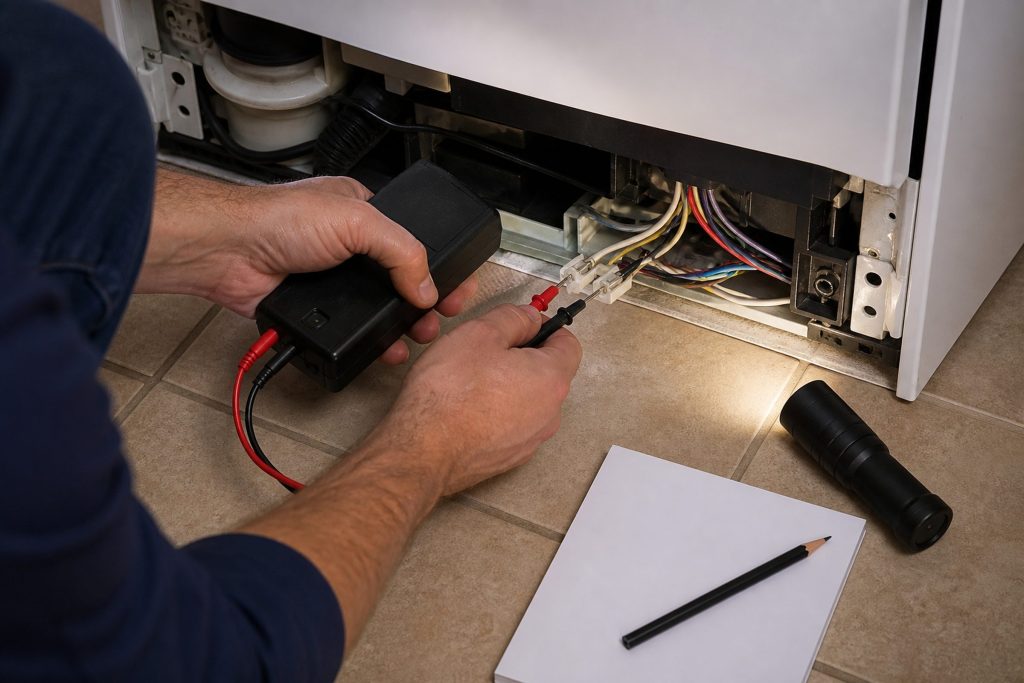
from $95 Diagnostic visit
We read what the appliance is reporting, then measure before saying anything about the repair. On this equipment that also means working out how the machine leaves its opening before anybody touches it. The fee is credited toward the work when you go ahead.
- The code or the light pattern read on site, before anything is cleared
- Measured rather than guessed
- Credited toward the repair
-
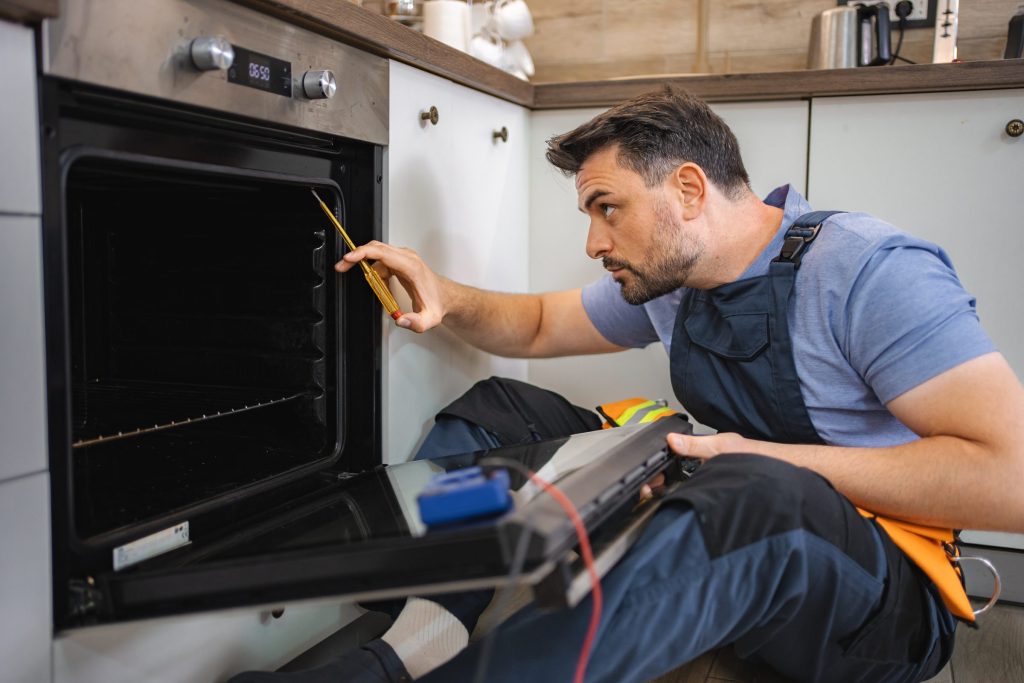
from $185 Oven heating & sensor repair
A display that is on while nothing heats, an oven that runs hot or cold while looking perfectly healthy, or baking that has gone uneven. Element, temperature sensor, relay and — on a machine that has recently run a clean cycle — a thermal cut-out that did its job and has not reset.
- Element and sensor measured, not swapped on suspicion
- The thermal cut-out checked on any oven that has self-cleaned
- Convection fan looked at whenever "uneven" is the word
-
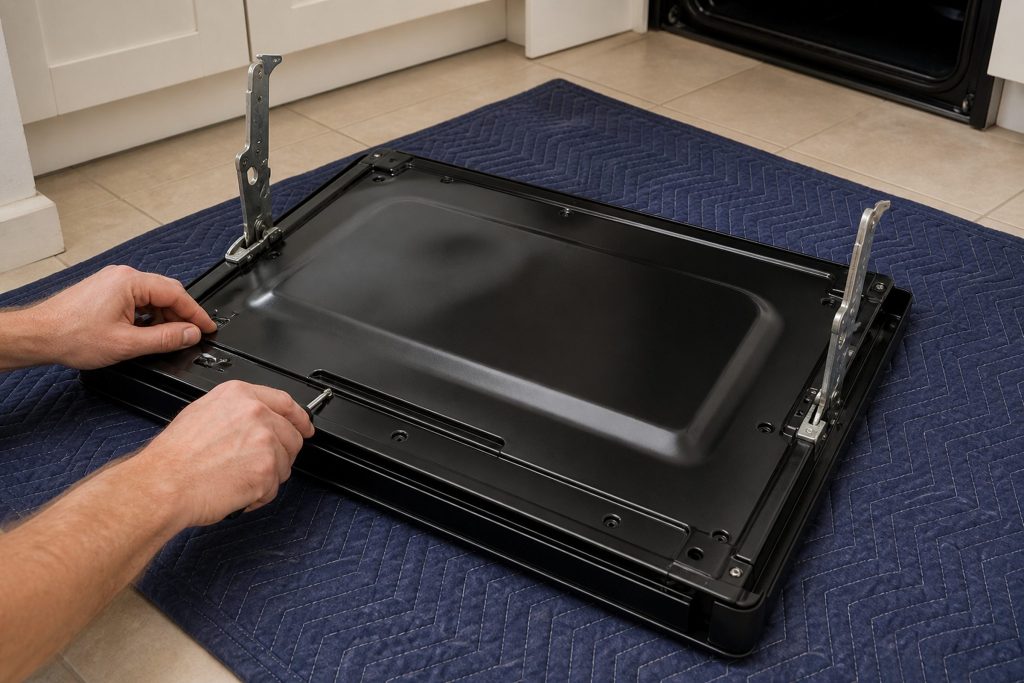
from $165 Oven door & self-clean lock repair
A door locked after a clean cycle and staying locked, a door that will not lock so the cycle will not start, hinges that have carried a heavy door for years, or cracked door glass. On this maker the first two have their own codes — A2 and A3 — and they mean opposite things.
- A2 and A3 told apart before anything is dismantled
- The interlock given time before it is called broken
- Hinges and glass as separate jobs from the latch
-
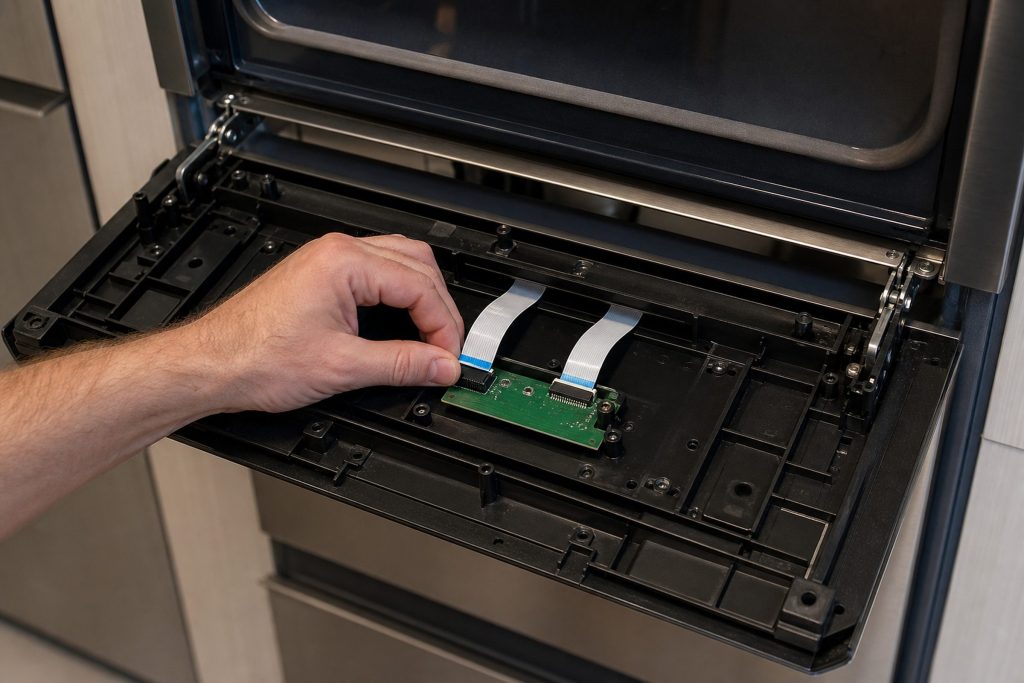
from $215 Oven control & display repair
A display that will not light, controls that do not respond, a clock that will not hold, or an F number the maker prints without an explanation. This is where the oven F codes live, and this page says exactly what is knowable about them and no more.
- F numbers placed in the family the maker publishes, and no further
- Power-event recovery tried before a board is quoted
- Display, control and touch panel as separate parts
-
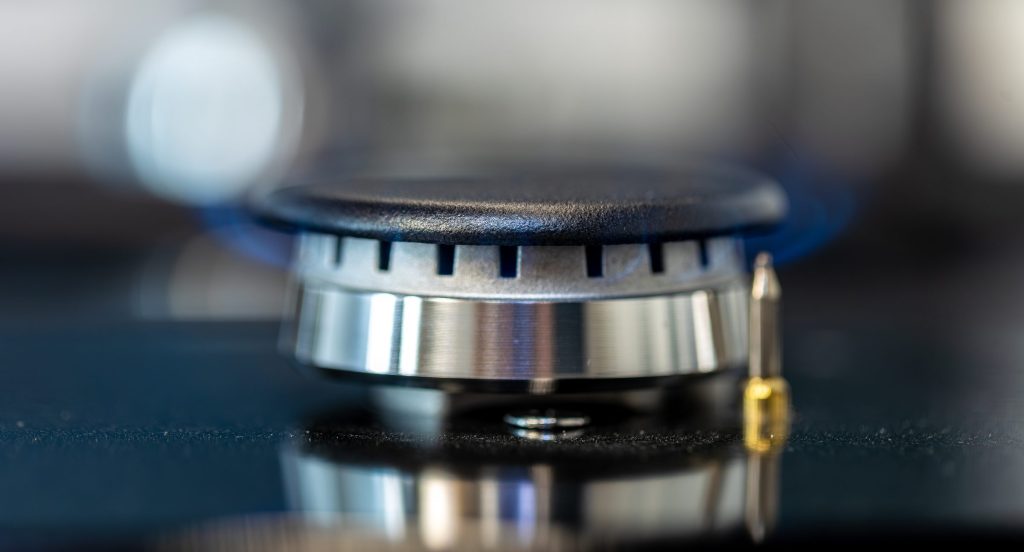
from $155 Range burner & ignition repair
A burner that clicks and will not light, lights and drops out, or holds on high and dies at simmer. Three complaints, three different answers — and on this maker the low-setting one is the article its own owners link most, which tells you where these machines actually fail.
- Spark, gas and flame sensing told apart before anything is ordered
- Caps and ports checked first — the commonest cause by a distance
- Thermocouples tested at a low flame, where they actually fail
-
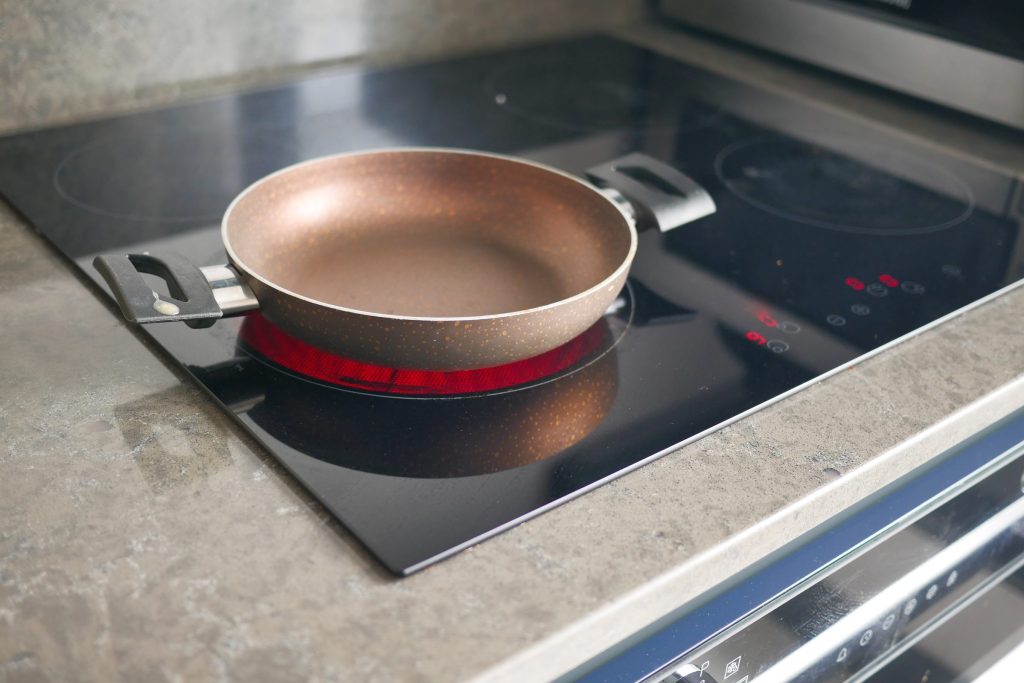
from $225 Induction cooktop repair
Seventeen induction cooktops and seven induction ranges, and one complaint above all others: a zone that cuts out under load while the rest carry on. That is usually heat and installation rather than the coil — which is why this visit starts by looking under the counter.
- Cabinet ventilation checked before a board is quoted
- The same zone tested with a different pan
- Er and E codes placed in the family the maker publishes
-
from $145 Cooktop control & dial repair
Dials that have become hard to turn, touch controls that stop responding, or a cooktop that will not switch on at all. The first of those is the maker's own most-linked cooktop article by a distance, and it is a maintenance repair rather than a breakdown — which is why this row is priced where it is.
- Stiff dials treated as valve-stem service, not a replacement
- Touch controls: wet hands, lock and sleep mode ruled out first
- A cooktop that will not start checked at the supply before the board
-
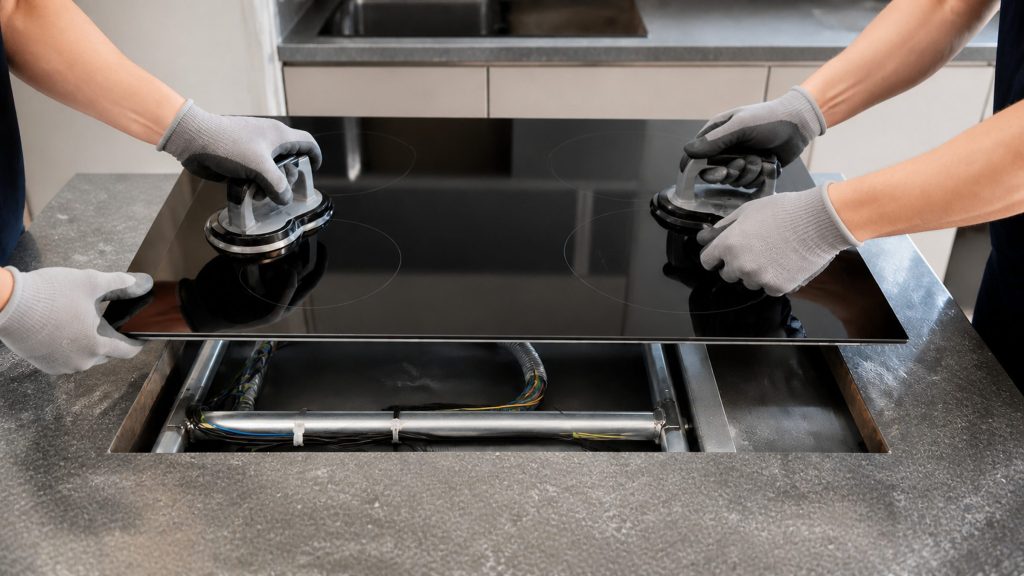
from $295 Cooktop glass replacement
A cracked or shattered induction or radiant surface. This one is a replacement rather than a repair and the page says so plainly, along with the part people least want to hear: stop using it and switch it off at the wall until it is done.
- A safety matter, not a cosmetic one
- Part availability confirmed before anything is committed
- The frame, seal and cabinet cutout checked with it
-
from $135 Appliance maintenance visit
The things this maker's own guides ask an owner to do, done properly and all at once: condensers, filters, seals, descaling, spray arms, ducts. Priced per visit rather than per appliance, which is what makes it worth doing on a kitchen where most of the machines come from one maker.
- Condenser and seals, which are the local weak points
- Steam ovens descaled, which nothing else here does
- One visit, several appliances, one travel charge
-
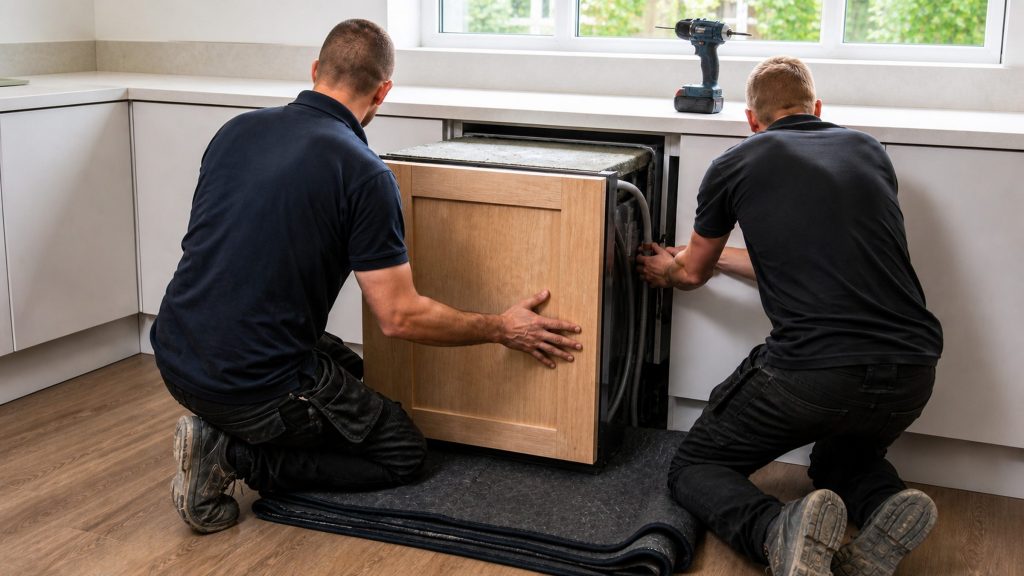
from $175 Appliance installation & re-fit
Putting a built-in machine back into the opening it came out of, aligning a cabinet panel so the kitchen looks right again, and connecting water where there is water. Not a delivery service — this is the re-install after a repair, a kitchen change, or a machine that was never fitted the way its own instructions asked.
- Fitted to the maker's own instructions, and we tell you what they said
- Cabinet panel alignment as a job in its own right
- Ventilation and clearance checked, because it causes later repairs
In more detail
About Fisher & Paykel ranges
What is in the range line
Forty-one machines: sixteen dual fuel, fifteen gas, seven induction and one electric. Twenty-seven are the Professional style, six are Classic and eight Contemporary. Burner counts run from four to eight, and the wider machines carry a griddle between the burner groups. Series 9 accounts for twenty-three of them.
The failures behind the calls
- Ignition: no spark, spark without lighting, or lighting and dropping out. Three different answers to one complaint.
- The low setting, specifically — a flame that holds on high and dies on simmer, which points at flame sensing rather than gas.
- The oven sensor, the commonest reason an oven runs hot or cold while looking entirely healthy, and a cheap part with an accurate diagnosis.
- Elements and the convection fan on the electric side of a dual-fuel machine.
- Induction power boards and their cooling on machines built into a warm run of cabinetry.
- The self-clean lock and the door hinges under a genuinely heavy door.
- The griddle zone, which is its own circuit and its own repair.
Codes on a range
The same short list as the wall ovens — A1 overheat, A2 and A3 door lock, and an F plus a number the maker prints as a technical error with no table behind it. Note the exact code and let the machine cool before you cut power to it: the cooling fans need that power to bring the temperature down.
What to have ready when you call
Model number, fuel — gas, dual fuel, induction or electric — which burner or which oven, and the code if there is one.
This article is based on:
- Official manufacturer documentation
- Internal repair procedures
- Technician repair history
- Company quality standards
Before you book
Questions about Fisher & Paykel ranges
The flame goes out when I turn it down low.
This is the maker's own most-linked complaint on a freestanding cooker, and it is usually the burner rather than the gas supply. A cap sitting a fraction out of place, ports blocked by boil-over, or a flame-sensing thermocouple that no longer holds the valve open at a low flame — that last one is why the flame survives on high and dies on simmer. Take the cap off cold, check it is seated squarely, and clear the ports. If a clean, correctly seated burner still will not hold a simmer, the sensing side is the repair.
What is different about repairing a dual-fuel range?
It is two machines in one cabinet. Gas on top with burners, valves and ignition; electric underneath with elements, a convection fan, a sensor and a control board. A complaint about the top and a complaint about the oven have nothing to do with each other, and a range where the ovens are perfect and one burner is out is a small job. Saying which half is misbehaving when you book is the single most useful thing you can do for the visit.
My induction range cuts a zone out mid-cook.
Usually heat rather than the coil. Every induction position has a power board under it, those boards make heat, and they are cooled by a fan that pulls air through the base of a range built into a run of cabinetry. Check that nothing is stored tight against the back or sides, that the plinth vent is clear, and whether the same zone drops out with a different pan. If one zone fails with everything clear, that zone's board or its sensor is the repair.
Is the griddle repaired on its own?
Yes, and that is good news for the bill. On these ranges the griddle is a separate heated zone with its own control and its own sensor, sitting in the middle of a cooktop that is otherwise fine. The rest of the range keeps working while a part is on order, and nothing about the ovens underneath is involved.
The dial halo stays red when I use the grill function.
The maker publishes an article about exactly this, and on most machines it is behavior rather than a breakdown — the halo indicates the function is engaged and stays lit while the grill element is being driven. What is worth a call is a halo that stays red on a cold, switched-off range, or one that no longer matches what the range is actually doing. That is the control side rather than the cooking side.
Where we do it
Across Miami-Dade, Broward, and Palm Beach
Same terms everywhere we go: an on-site diagnostic first, the price agreed in writing, and the exact figure confirmed once we have seen the unit.
Neighborhoods people ask for by name