Appliance
Fisher & Paykel dishwashers and DishDrawers
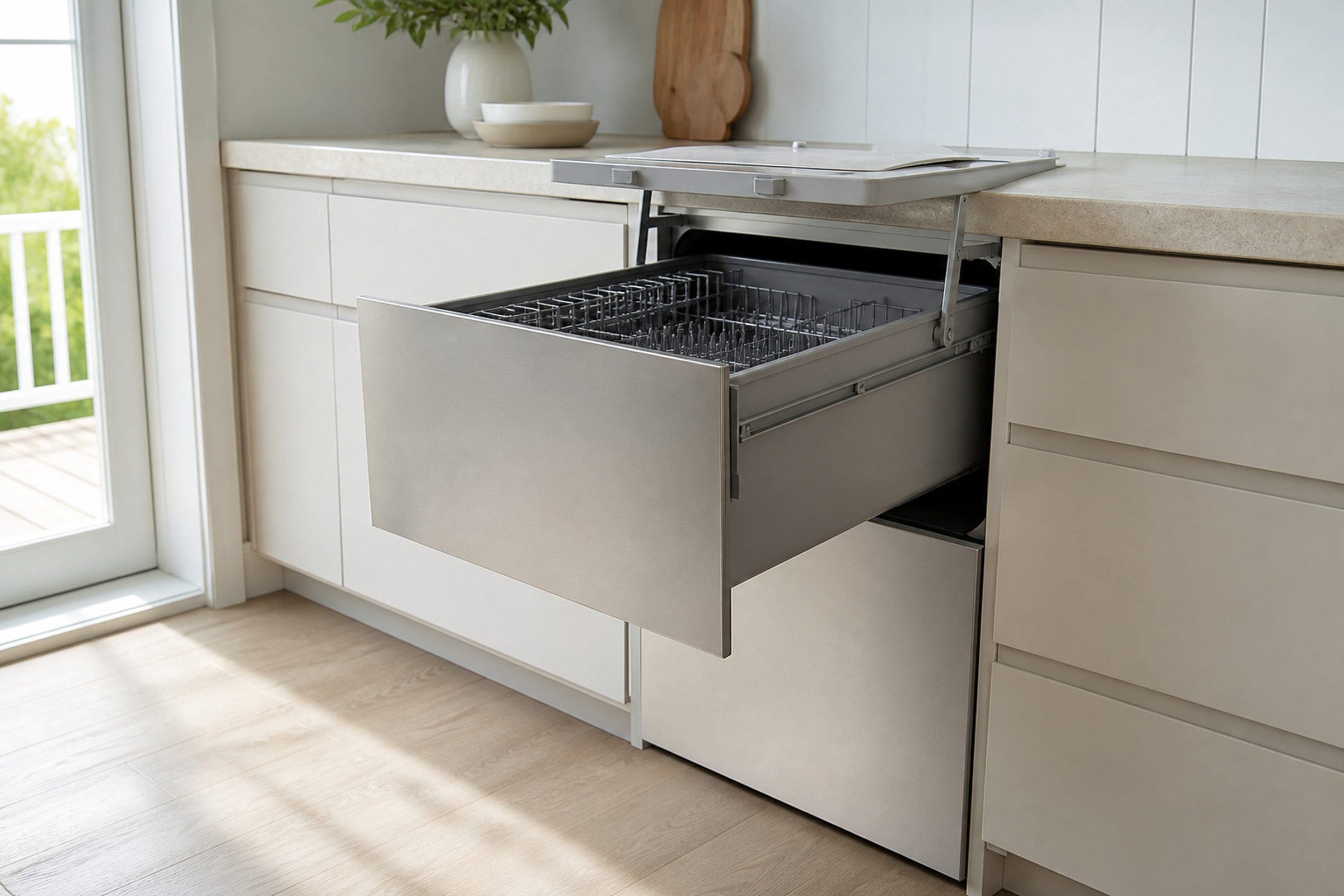
Fifty-one machines, and forty of them are drawers. The DishDrawer is this maker's own invention and nothing else in a South Florida kitchen works the way it does: a lid that seals under motor pressure instead of a door, a wash system per drawer, and on a double, two machines that can run — and misbehave — independently of each other.
- 8 symptoms we are called out to
- From $95 diagnostic, credited to the repair
- 59 cities and neighborhoods covered
- OEM parts available on order
The short version
What this equipment is, for a repair
Configurations
Single DishDrawer · Double DishDrawer · Tall · Drop door · Integrated · Series 5 · 7 · 9 · 11 · 24"
Access
Planned before the visit, not discovered on arrival
Parts
OEM, available on order
Diagnostic
From $95, credited to the repair
What goes wrong with it
Symptoms we are called out to on Fisher & Paykel dishwashers and DishDrawers
Each one covers the likely causes in the order they are worth checking, and what to do in five minutes before booking anything.
-
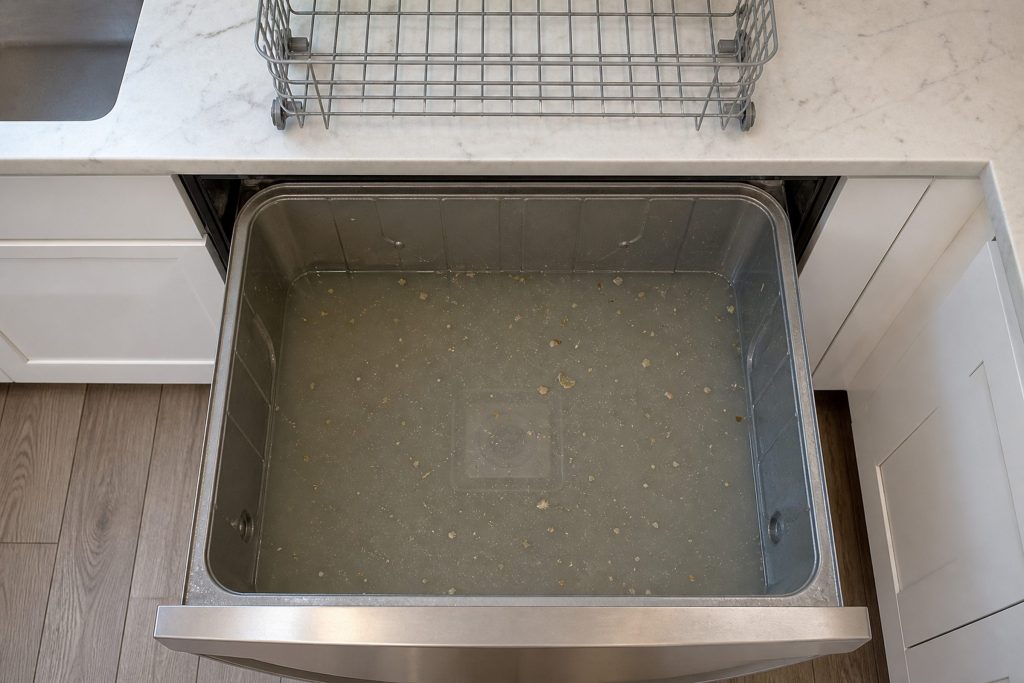
Water standing in the drawer DishDrawer will not drain
A drawer that finishes — or stops and beeps — with water still in it. The maker publishes a code for this and publishes the causes with it, and both of them are things you can look at yourself before anybody is called.
- Water above the filter at the end of a cycle
- The drawer beeps and the modifier lights flash
- It drains if you run it again
-
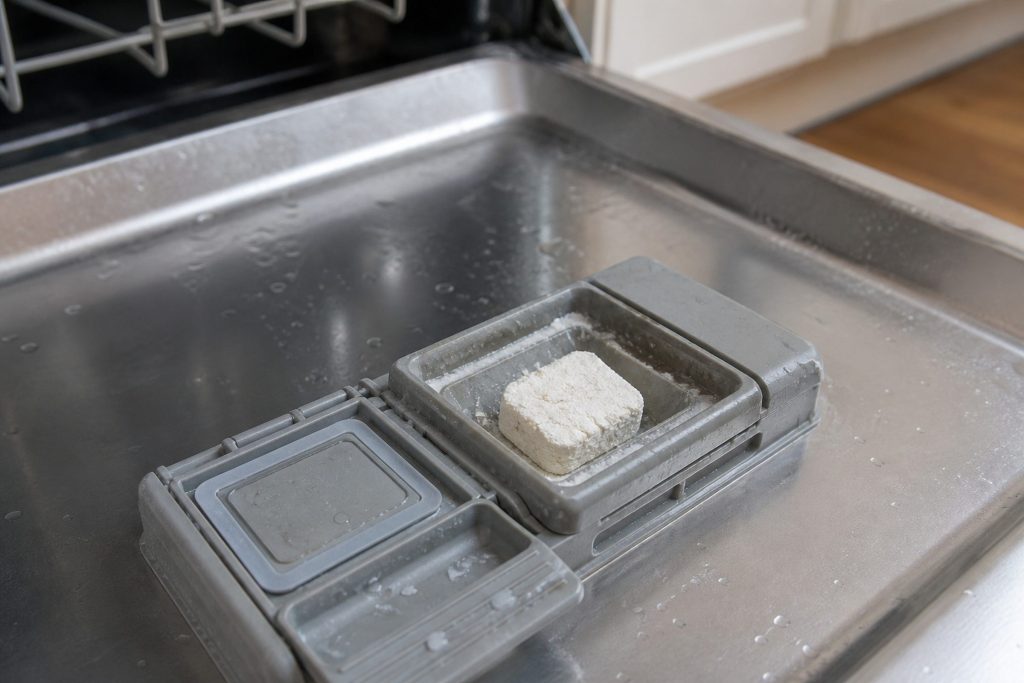
The tablet did not go in Detergent still in the dispenser after a cycle
The most-linked article this maker publishes about its dishwashers — it appears on thirty-three of its models — and three of its four causes cost nothing to fix. Worth ten minutes before it is worth a visit.
- A tablet or powder still sitting in the cup
- Dishes washed but not properly clean
- It happens on some loads and not others
-
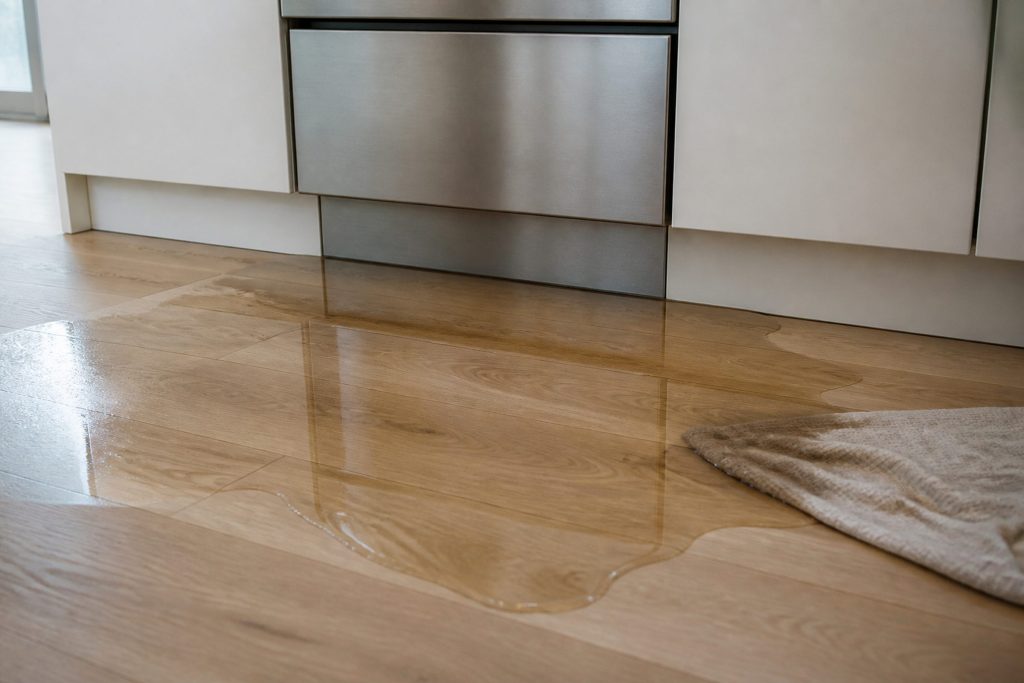
Water on the floor, drawer looks dry DishDrawer is leaking water
Water appearing at the front of the machine while the inside looks perfectly normal. On a drawer that is the expected shape of a leak, because the seal is at the top and whatever escapes it runs down the outside.
- A puddle at the front or under the cabinet
- The drawer interior looks completely normal
- The machine has stopped and will not restart
-
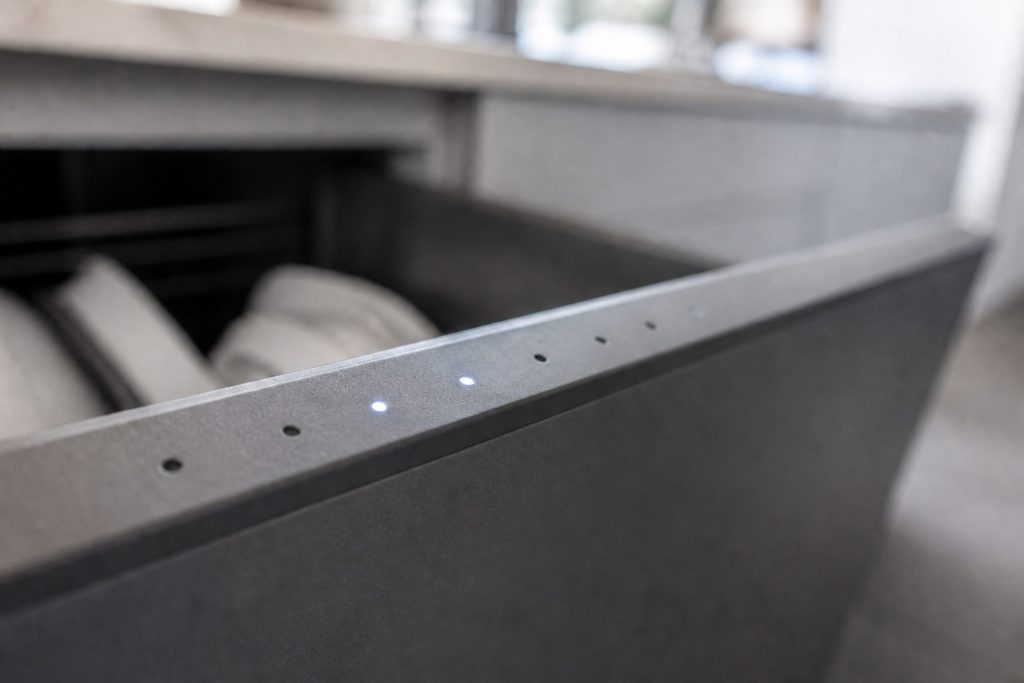
The pattern is the code DishDrawer flashing and beeping with no number
These machines have no numeric display, so they report by flashing. Which lights are flashing is the diagnosis, and it is the one piece of evidence that vanishes the moment somebody switches the machine off.
- Continuous beeping and flashing indicators
- No number anywhere on the panel
- Different patterns on the two drawers of a double
-
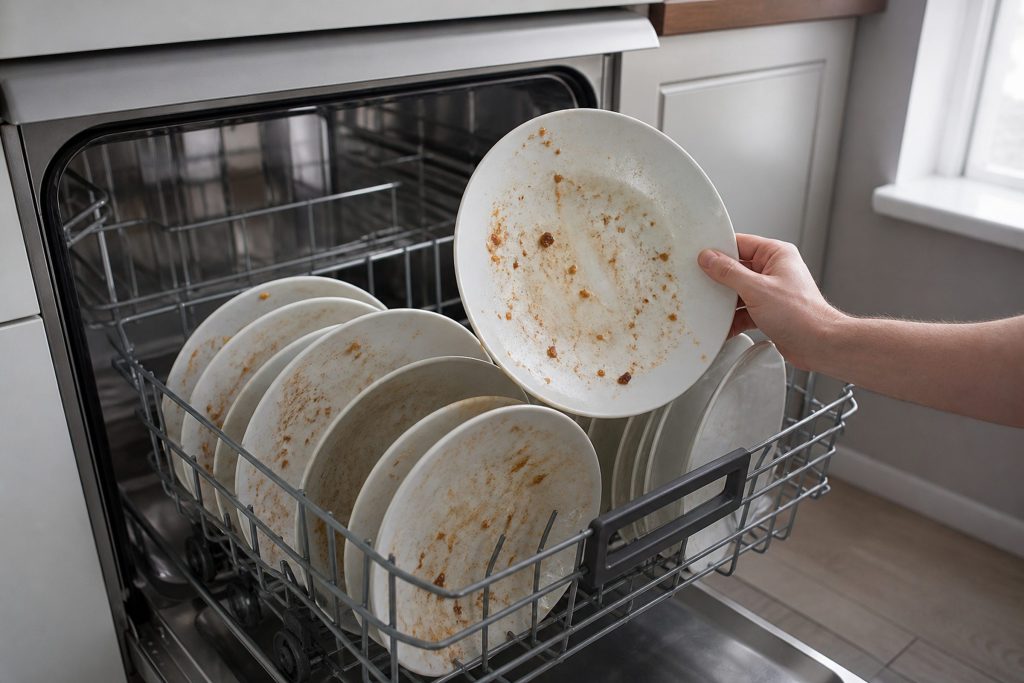
It runs, they are not clean Dishes coming out dirty
A cycle that completes normally and leaves food on the plates. Almost always water — how much arrives, how hot it is, and whether the spray arm can move it around — rather than anything electronic.
- Food left on plates after a full cycle
- The top rack cleans and the bottom does not, or the reverse
- It got gradually worse rather than failing suddenly
-
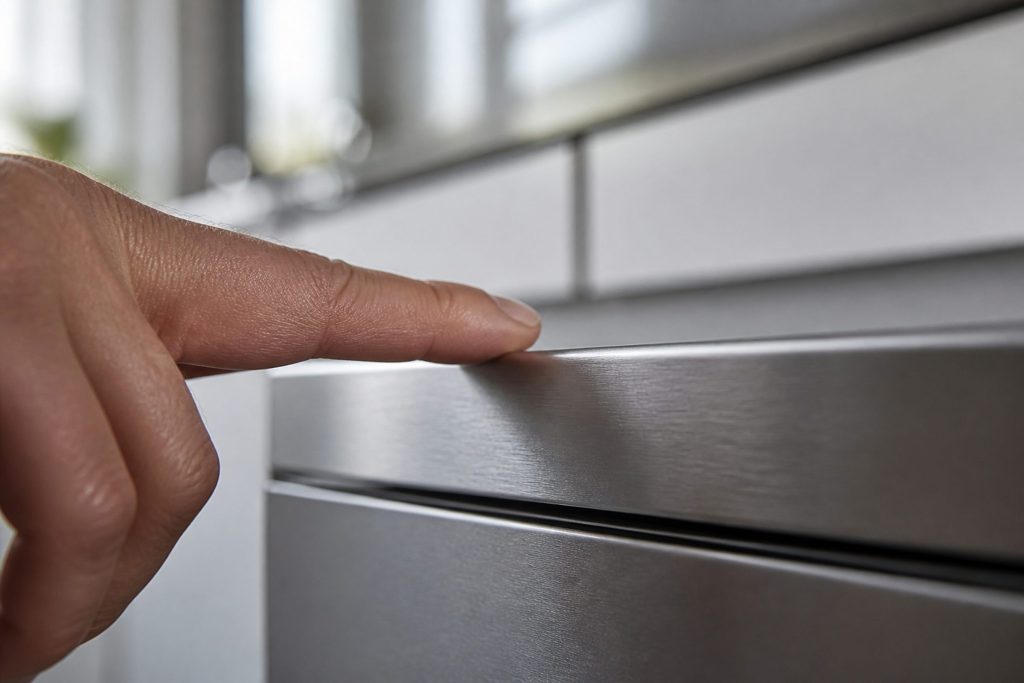
Panel lit, nothing happens DishDrawer will not start
A drawer that lights up and refuses to run, or one that does not light at all. Four free causes before any part, and one of them — the machine having shut itself down on purpose — is the one people never guess.
- The panel responds but the cycle never begins
- It stopped mid-cycle earlier and has not run since
- The controls do not respond at all
What we do on it
Repairs we carry out on Fisher & Paykel dishwashers and DishDrawers
Starting figures for this equipment in South Florida. The exact cost is confirmed after an on-site diagnostic — and this is not the whole list of what can go wrong, so call if your problem is not here.
-
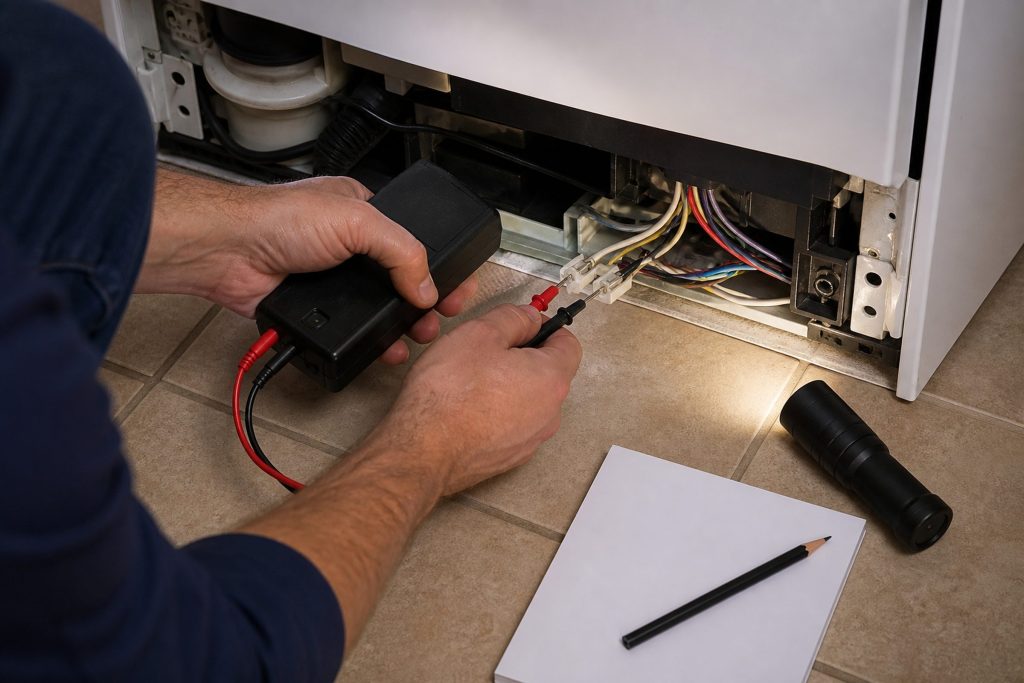
from $95 Diagnostic visit
We read what the appliance is reporting, then measure before saying anything about the repair. On this equipment that also means working out how the machine leaves its opening before anybody touches it. The fee is credited toward the work when you go ahead.
- The code or the light pattern read on site, before anything is cleared
- Measured rather than guessed
- Credited toward the repair
-
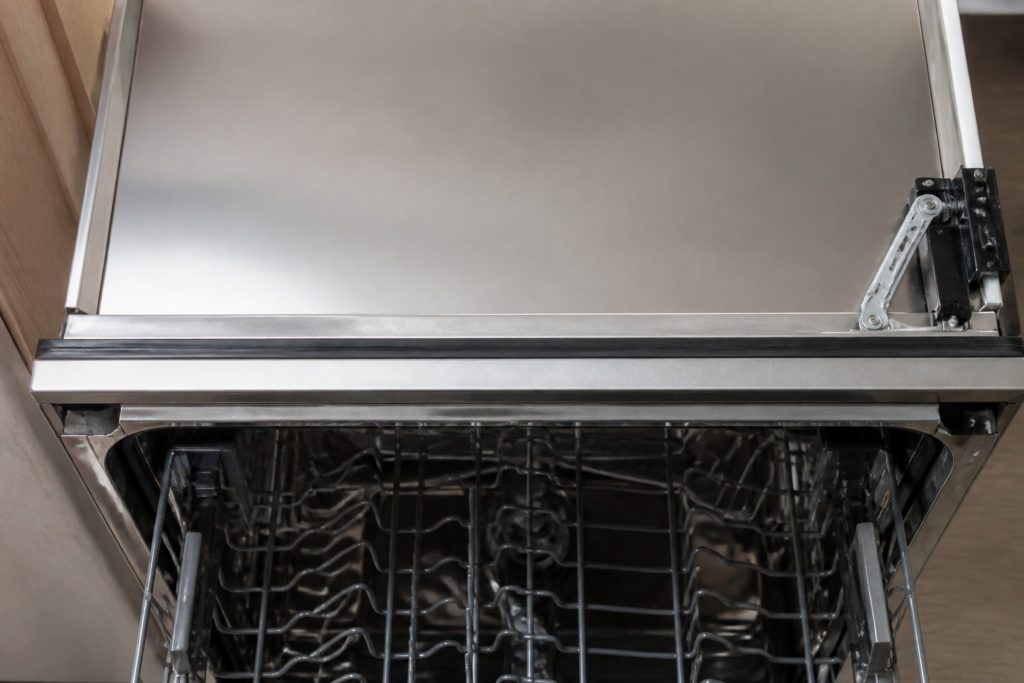
from $185 DishDrawer lid & seal repair
The repair that exists only on this maker. A DishDrawer has no door and no door gasket: a lid motor drives a seal down onto the top of the drawer and holds it there for the whole cycle. When that mechanism stops sealing you get water on the floor, a drawer that will not start, or a drawer that will not open at the end.
- Lid motor and lid seal checked as one mechanism
- Which drawer, on a double — they fail independently
- The drawer runs a full cycle under watch before we leave
-
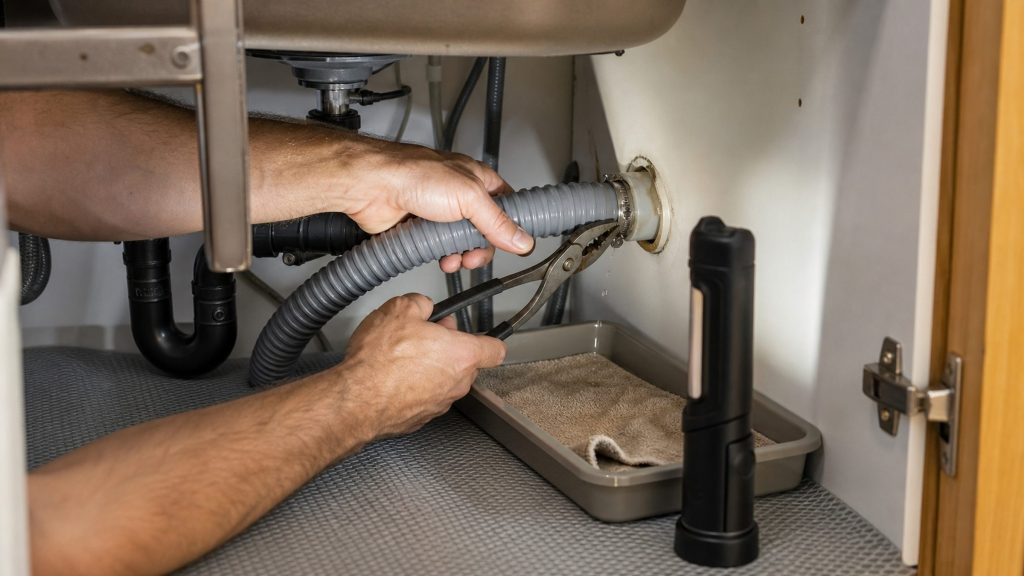
from $145 Dishwasher drain & filter repair
Water standing in the tub at the end of a cycle, or a machine that stops part-way and beeps. On this maker the code for it is published — A3 on a drawer, A20 or E3 on a drop-door — and the maker's own first instruction is the filter, not the pump.
- Filter, filter plate and drain path checked before anything is opened
- The drain hose run and its connection at the sink
- Drain pump tested under load rather than by continuity
-
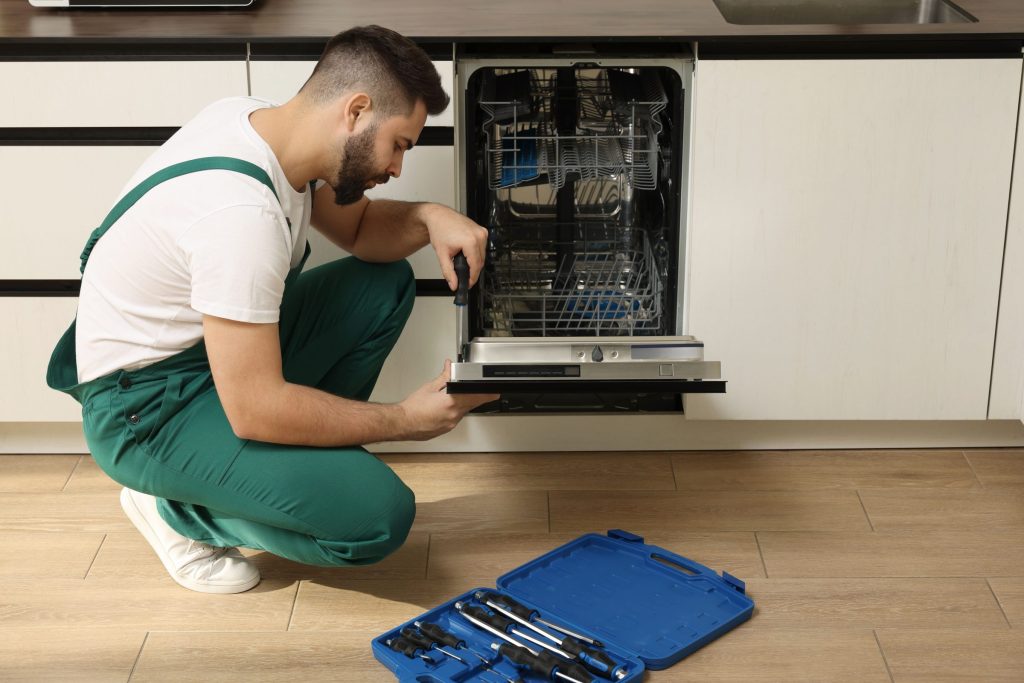
from $165 Dishwasher leak repair
Water on the floor with an interior that looks fine. On a DishDrawer that pattern is normal for a leak, because the seal is at the top of the drawer and what escapes it runs down the outside. On a drop-door machine F30 means the flood switch has already fired, and that one is not a wait-and-see.
- Traced to the source, not mopped and guessed at
- Lid seal, drawer seal and the connections behind, in that order
- Flood detection understood before the board is blamed
-
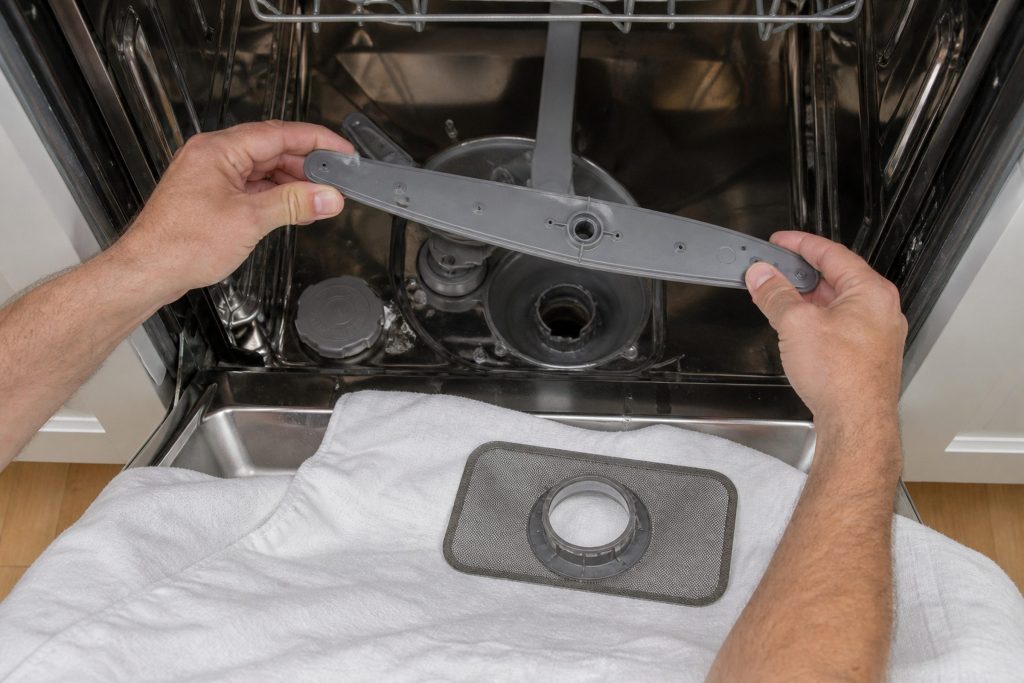
from $135 Dishwasher wash performance repair
Dishes coming out dirty, detergent still sitting in the dispenser, white film on glass, or a load that will not dry. These are the four things owners of this equipment write to the maker about most, and a good share of them are not repairs at all — which is exactly why the visit starts with what does not cost anything.
- The maker's own four causes for a full dispenser, checked first
- Spray arm, filter plate and water temperature measured
- What is a repair separated from what is a habit, plainly
-
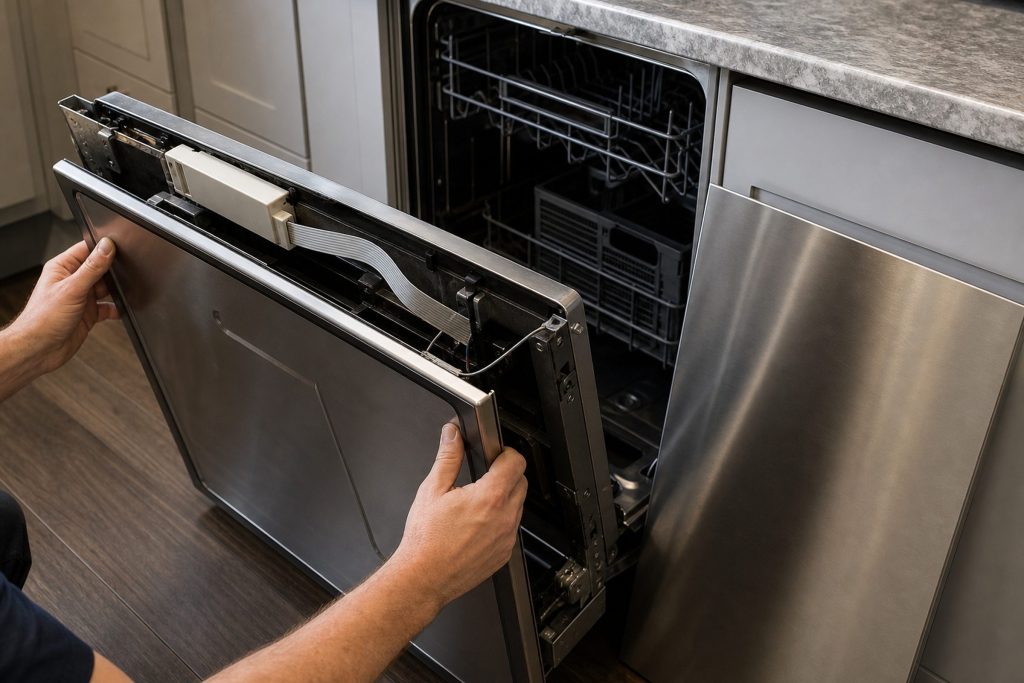
from $265 Dishwasher control & motor repair
The end of the list rather than the beginning: a wash controller, a motor controller, a rotor or a communication error between two drawers. On this maker these are the conditions that report as an F — a flashing pattern on a drawer, an F30 to F90 on a drop-door — and the maker says outright that most of them need somebody.
- F conditions read properly before a board is quoted
- Rotor and lid motor checked before either controller
- On a double, which controller — they are separate
-
from $135 Appliance maintenance visit
The things this maker's own guides ask an owner to do, done properly and all at once: condensers, filters, seals, descaling, spray arms, ducts. Priced per visit rather than per appliance, which is what makes it worth doing on a kitchen where most of the machines come from one maker.
- Condenser and seals, which are the local weak points
- Steam ovens descaled, which nothing else here does
- One visit, several appliances, one travel charge
-
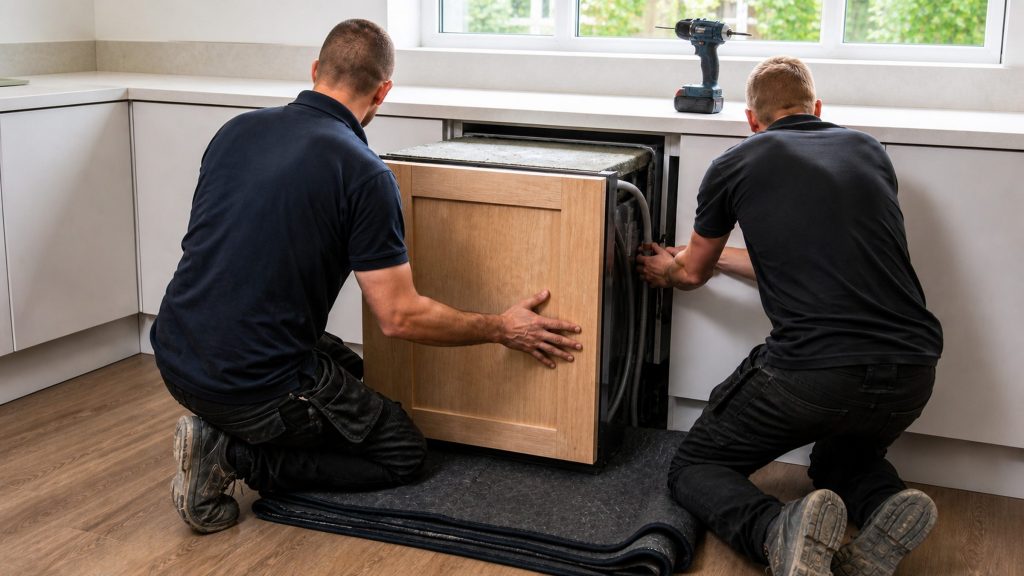
from $175 Appliance installation & re-fit
Putting a built-in machine back into the opening it came out of, aligning a cabinet panel so the kitchen looks right again, and connecting water where there is water. Not a delivery service — this is the re-install after a repair, a kitchen change, or a machine that was never fitted the way its own instructions asked.
- Fitted to the maker's own instructions, and we tell you what they said
- Cabinet panel alignment as a job in its own right
- Ventilation and clearance checked, because it causes later repairs
In more detail
About Fisher & Paykel dishwashers and DishDrawers
Forty drawers and eleven doors
Of the fifty-one dishwashing machines this maker lists for the United States, forty are DishDrawers — sixteen tall doubles, fifteen tall singles, five doubles and four singles — and eleven are conventional drop-door dishwashers, built-in and integrated. All are 24 inches. Twenty-two of the fifty-one are Integrated, which means the front you see is your own cabinetry.
What we are called out for
- Detergent left in the dispenser, the maker's own most-linked article, and mostly not a repair.
- Not cleaning properly: filter, spray arm, water temperature, or a load that blocked the arm.
- Not draining, which on a drawer is the filter and the drain path far more often than the pump.
- Leaking, which on a drawer means the lid seal, the drawer seal or the connections behind — a different list from a door machine.
- The lid motor, which is specific to a drawer and has no equivalent in any other dishwasher.
- Controls not responding, wet fingers and a locked panel being the first two things to rule out.
- The fan running after the cycle, which is the drying fan and is meant to.
The codes, and why they are on two separate lists
A DishDrawer publishes A conditions — water supply, drainage, spray arm, foam recovery, sanitize temperature, element overheat — with instructions an owner can follow, and F conditions reported as a flashing pattern, covering the rotor, the lid motor, the heating element, the drying fan, the fill valve and the two controllers. The drop-door machines use an entirely different E and F set. Our code pages are keyed to the machine, not to the number, because the same number means different things on the two.
What to have ready when you call
The model number, whether it is a drawer or a door, which drawer on a double, and — if it is beeping — which indicator lights are on.
This article is based on:
- Official manufacturer documentation
- Internal repair procedures
- Technician repair history
- Company quality standards
Before you book
Questions about Fisher & Paykel dishwashers and DishDrawers
What is actually different about a DishDrawer?
It seals from above rather than in front. Instead of a door with a gasket around it, a lid is driven down onto the top of the drawer by a lid motor and held there for the cycle. Everything follows from that: there is a lid motor to fail, the seal is horizontal and collects what falls on it, and on a double you have two complete wash systems — two rotors, two controllers, two filters — in one cabinet. It is why a double can have one drawer working perfectly while the other is out, and why "my dishwasher is broken" needs the follow-up question of which drawer.
Detergent is still in the dispenser after the cycle.
This is the single most common thing owners of these machines write to the maker about, and three of the four causes cost nothing to fix. Moisture in the dispenser before the tablet went in will make it stick. A dish leaning over the dispenser will stop the cover opening. Low water temperature or a short cycle can end before the tablet has dissolved. What is left — a dispenser latch or its solenoid — is a real repair, but it is worth ruling out the first three before booking anybody.
The drawer is beeping and the lights are flashing but there is no number.
That is the code. A DishDrawer has no numeric display, so it reports by pattern: if the wash modifier and lock indicators flash together it is an F condition, and if only the modifiers flash it is an A condition, with one or more program lights lit alongside. Note which lights are on before you clear it — that pattern is the diagnosis. The A conditions have published meanings and several of them you can clear yourself; the F conditions are the ones that need somebody.
It is producing a lot of foam.
Almost always detergent quantity, and it matters more on a drawer than on a full-size machine because the wash chamber is small. The maker's own instruction is a teaspoon at most for these, and the machine has an auto-recovery program that will run itself to clear foam before it gives up. If foam is still there at the end of a cycle run with the right dose, that is worth looking at — a rinse aid dispenser leaking into the wash is a common cause and an easy one.
Is a drop-door Fisher & Paykel dishwasher a different repair?
Yes, and there are eleven of them in the line. They are conventional in shape — a door, a single tub, two racks — and they use a different code vocabulary from the drawers: an E and F set with a published meaning for each, rather than the drawers' flashing pattern. Both are on this page, and the code pages keep them separate because a number that means one thing on a drop-door means something else on a drawer.
Where we do it
Across Miami-Dade, Broward, and Palm Beach
Same terms everywhere we go: an on-site diagnostic first, the price agreed in writing, and the exact figure confirmed once we have seen the unit.
Neighborhoods people ask for by name