Appliance
Fisher & Paykel dryers
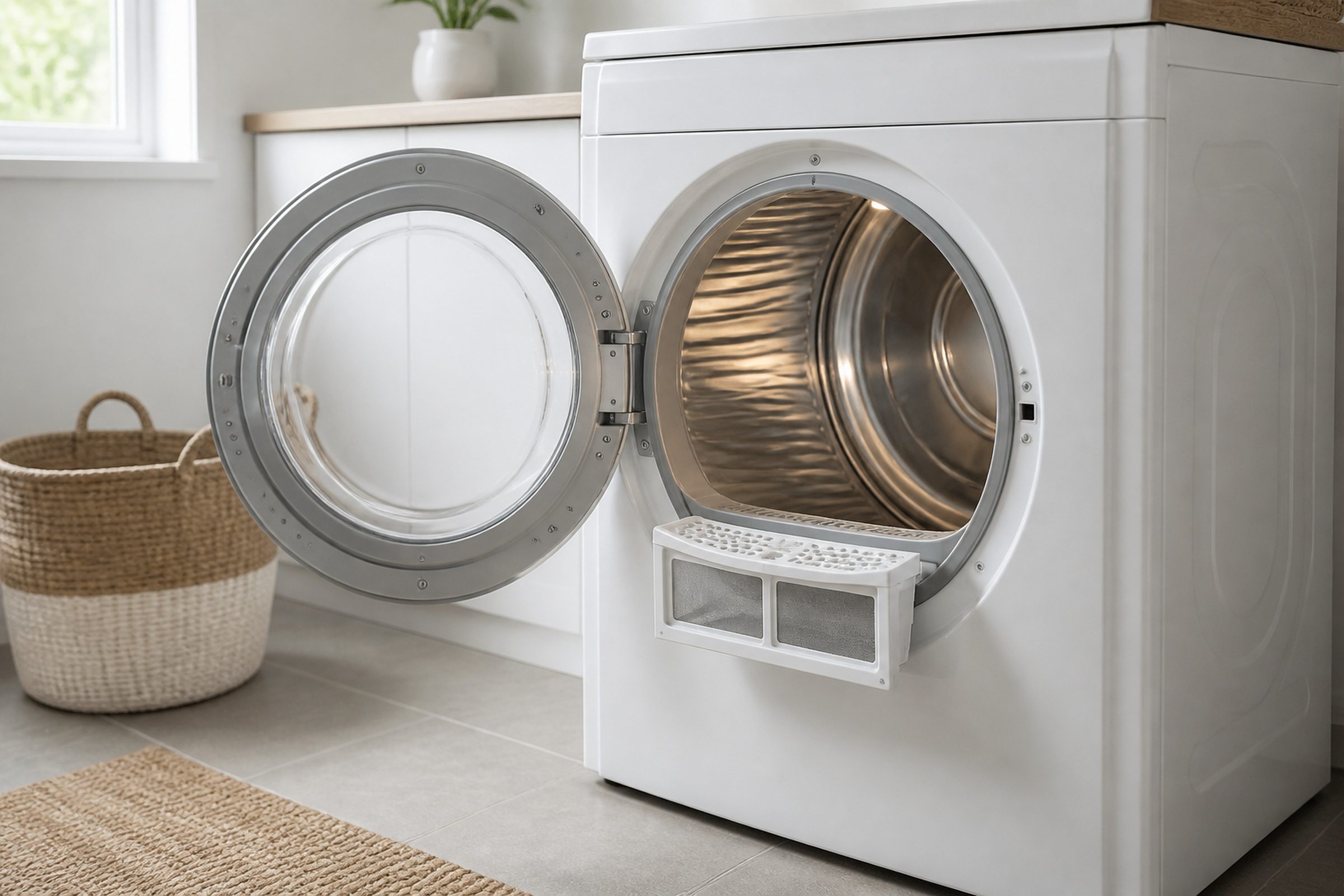
The same situation as the washers: Fisher & Paykel lists no dryer for the United States today, and the ones in South Florida laundry rooms are still working and still repairable. What is worth knowing before you call is which kind you have — vented, condenser or heat pump — because the three fail in completely different places, and only one of them is about a duct.
- 1 symptoms we are called out to
- From $95 diagnostic, credited to the repair
- 59 cities and neighborhoods covered
- OEM parts available on order
The short version
What this equipment is, for a repair
Configurations
Vented · Condenser · Heat pump · Stacked · AeroCare · Laundry closets
Access
Planned before the visit, not discovered on arrival
Parts
OEM, available on order
Diagnostic
From $95, credited to the repair
What goes wrong with it
Symptoms we are called out to on Fisher & Paykel dryers
Each one covers the likely causes in the order they are worth checking, and what to do in five minutes before booking anything.
-
Long cycles, damp clothes Dryer not drying properly
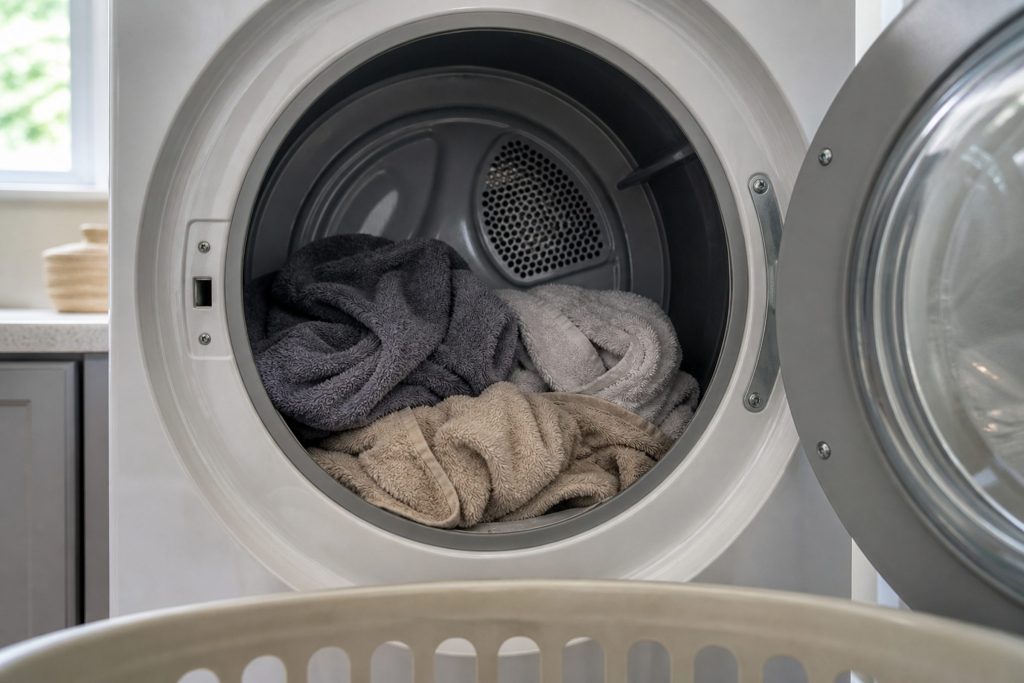
Cycles that take forever, or clothes still damp when the machine says it has finished. Two causes account for nearly all of it — the air cannot get out, or the machine cannot tell the load is dry — and a large share of both is free to check.
- It takes two cycles to dry one load
- Clothes are damp but the machine has stopped
- It has got slower over a year
What we do on it
Repairs we carry out on Fisher & Paykel dryers
Starting figures for this equipment in South Florida. The exact cost is confirmed after an on-site diagnostic — and this is not the whole list of what can go wrong, so call if your problem is not here.
-
from $95 Diagnostic visit
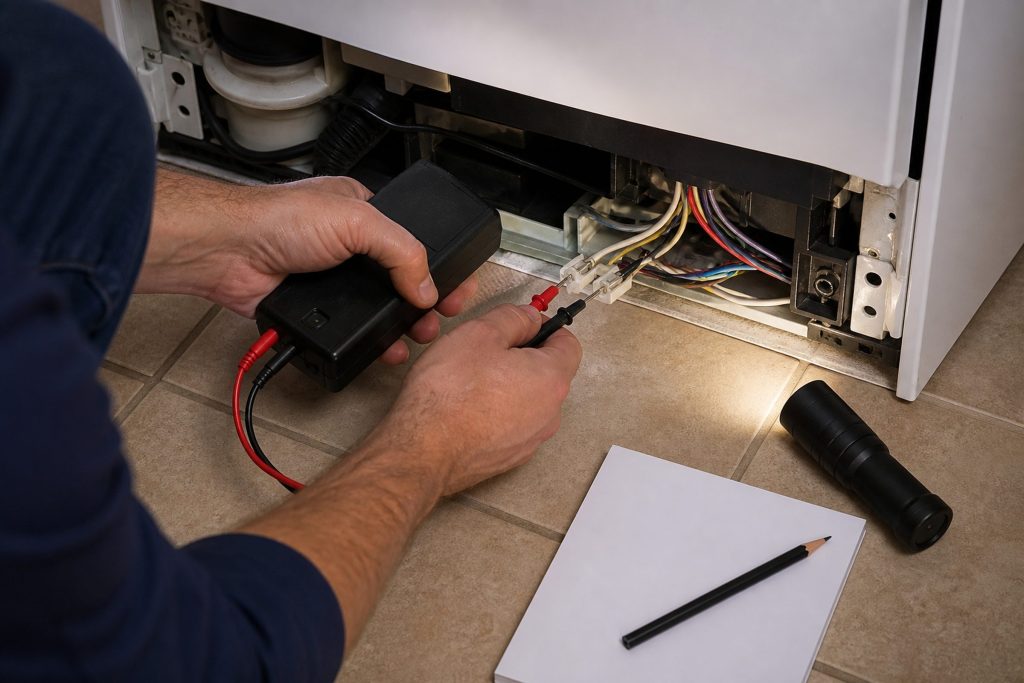
We read what the appliance is reporting, then measure before saying anything about the repair. On this equipment that also means working out how the machine leaves its opening before anybody touches it. The fee is credited toward the work when you go ahead.
- The code or the light pattern read on site, before anything is cleared
- Measured rather than guessed
- Credited toward the repair
-
from $155 Dryer heating repair
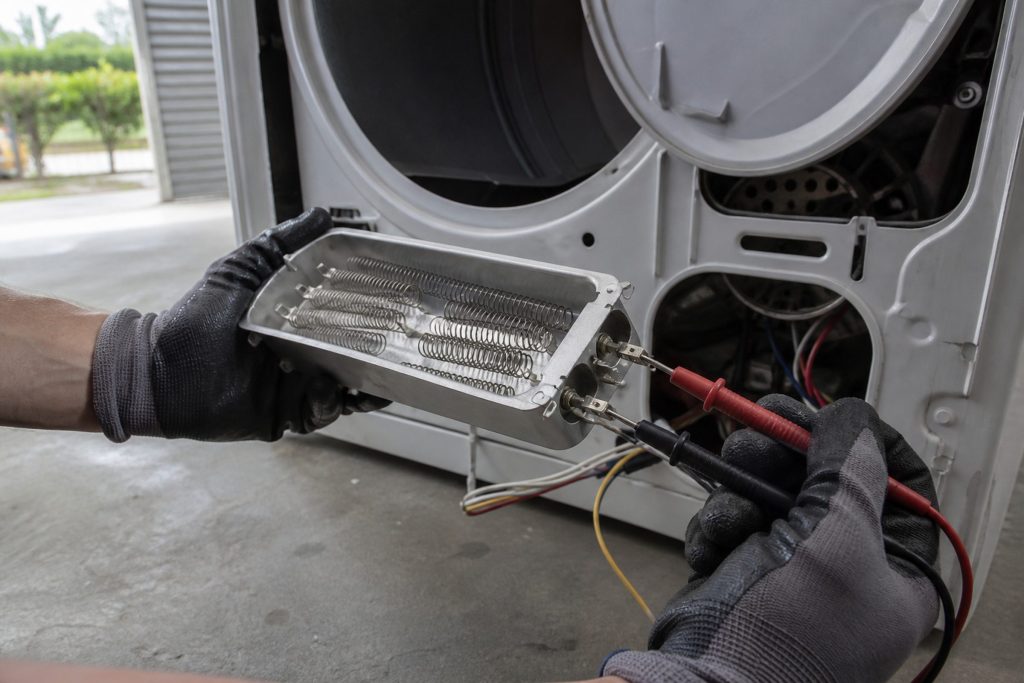
A drum that turns with no heat in it, or heat that cuts out part-way through a cycle. What is behind it depends entirely on which kind of dryer you have — vented, condenser or heat pump — because only one of the three has a heating element in the ordinary sense.
- Which kind of dryer, established before anything else
- Airflow checked before the element is condemned
- Heat pump circuits diagnosed rather than quoted blind
-
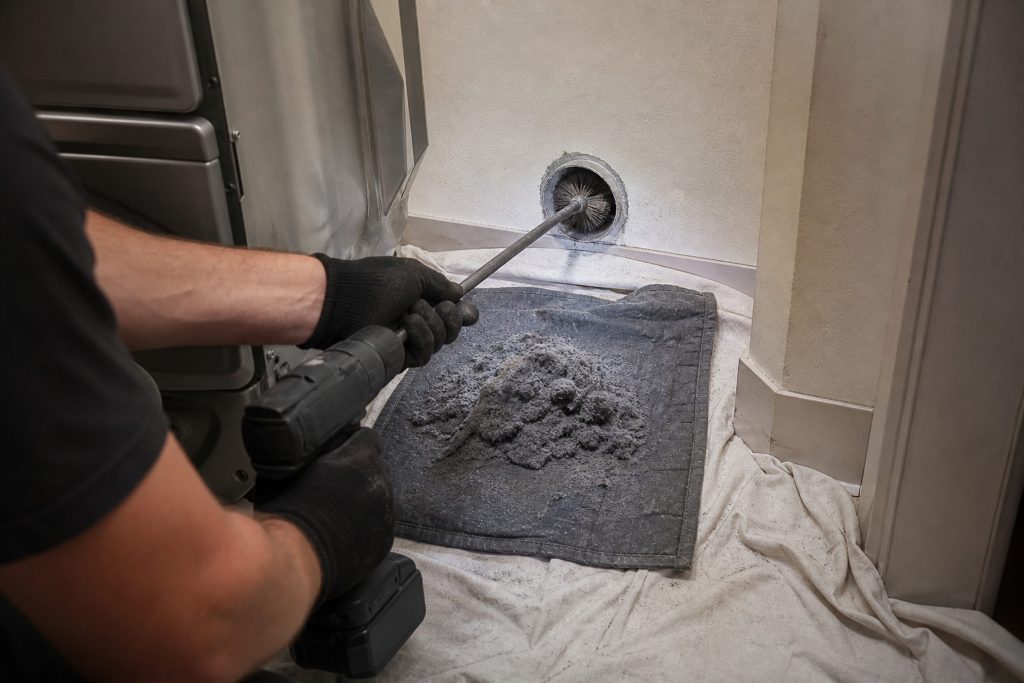
from $135 Dryer airflow & moisture sensing repair
Long cycles, clothes still damp when the machine says it has finished, or a dryer that has quietly got slower over a couple of years. Two causes behind almost all of it — the air cannot get out, or the machine cannot tell whether the load is dry — and a real share of both is outside the appliance.
- The whole duct run, not just the filter
- Sensor bars cleaned and tested rather than replaced on sight
- The lowest figure on this site, because most of it is not a part
-

from $135 Appliance maintenance visit
The things this maker's own guides ask an owner to do, done properly and all at once: condensers, filters, seals, descaling, spray arms, ducts. Priced per visit rather than per appliance, which is what makes it worth doing on a kitchen where most of the machines come from one maker.
- Condenser and seals, which are the local weak points
- Steam ovens descaled, which nothing else here does
- One visit, several appliances, one travel charge
-
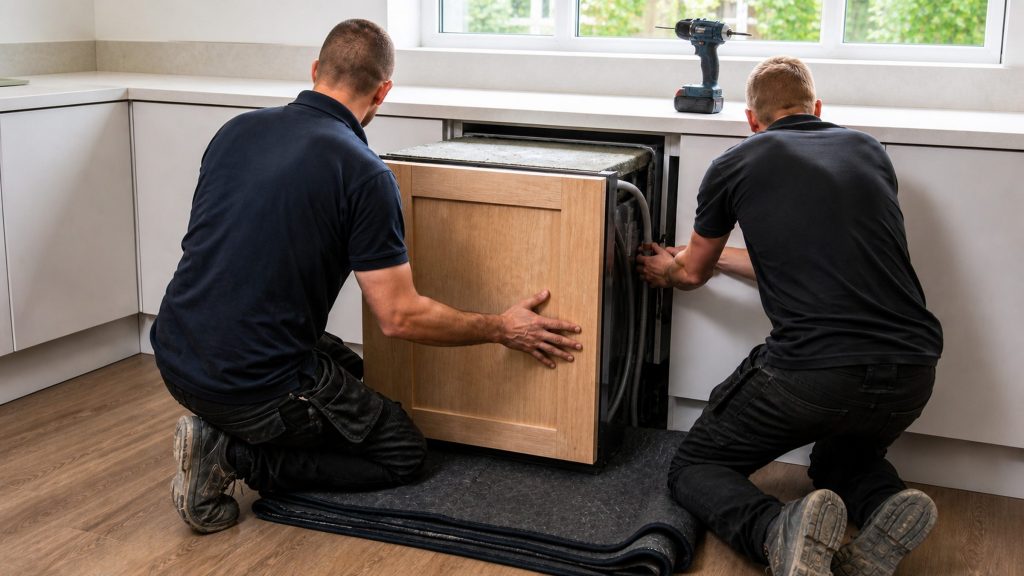
from $175 Appliance installation & re-fit
Putting a built-in machine back into the opening it came out of, aligning a cabinet panel so the kitchen looks right again, and connecting water where there is water. Not a delivery service — this is the re-install after a repair, a kitchen change, or a machine that was never fitted the way its own instructions asked.
- Fitted to the maker's own instructions, and we tell you what they said
- Cabinet panel alignment as a job in its own right
- Ventilation and clearance checked, because it causes later repairs
In more detail
About Fisher & Paykel dryers
Three machines, one word
Vented dryers push hot, wet air out through a duct. Condenser dryers cool that air down inside the machine and collect the water in a container or send it to a drain. Heat pump dryers do the same, but move the heat around a refrigerant circuit instead of throwing it away, which makes them slow, cool and efficient by design. Fisher & Paykel built all three, and which one you own decides most of the diagnosis.
What we are called out for
- No heat with a turning drum — element, thermostat or thermal cut-out on a vented machine; the refrigerant circuit on a heat pump.
- Long cycles and damp loads — airflow first, moisture sensing second.
- Airflow: the lint filter, the internal duct, and on a vented machine the whole run to the outside wall, which is outside the appliance and is where a surprising share of these end.
- Water in the wrong place on condenser and heat pump machines: the container, its seat, the pump, or the drain hose.
- Noise — rollers, belts and bearings on machines with a decade of loads behind them.
- Door catches and switches, which stop a cycle starting and look far more serious than they are.
The South Florida part
A laundry closet with no airflow, a duct run that turns twice before it reaches an outside wall, and eight humid months a year: on a vented machine that combination is the reason for more slow-drying calls than any component failure. It costs nothing to check the duct before you book, and we will ask you about it either way.
This article is based on:
- Official manufacturer documentation
- Internal repair procedures
- Technician repair history
- Company quality standards

Before you book
Questions about Fisher & Paykel dryers
How do I tell which kind of dryer I have?
Look for the duct. A vented dryer has a hose or a pipe going out through a wall. A condenser dryer has no duct and a water container you empty, or a drain hose to the standpipe. A heat pump dryer also has no duct, empties the same way, and runs noticeably cooler and longer than the other two by design. It matters because "my dryer is slow" points at a crushed duct on the first, a blocked condenser on the second, and a filter or a refrigerant circuit on the third.
My heat pump dryer takes forever. Is it broken?
Possibly not. A heat pump dryer is slower than a vented one on purpose — it dries at a lower temperature, which is what makes it gentle on fabric and cheap to run. What is not normal is a machine that has become slower than it used to be. On those, the order is the lint filters, then the heat exchanger or condenser unit behind them, then the sensors. Two of those three are owner-cleanable and are the reason we ask before we quote.
Clothes come out damp and the cycle ended anyway.
That is the moisture-sensing side, and it is a real repair rather than a settings problem. These machines end a cycle when the sensor says the load is dry, so a sensor that reads wrongly — or bars coated in fabric-softener residue — ends the cycle early. Cleaning the sensor bars with a little detergent on a cloth is worth doing before anybody comes out. If it still ends early on a clean sensor, the sensing circuit or the control is the repair.
Are parts still available for these?
For the common wear items, usually. The maker still runs a laundry spare-parts section and stacking kits are still sold. Heating elements, thermostats, belts, rollers, filters and door catches are the parts most likely to be there; model-specific boards and cosmetic parts are the ones that get scarce on a discontinued line. We check before we order and we tell you when a repair is not worth doing.
Where we do it
Across Miami-Dade, Broward, and Palm Beach
Same terms everywhere we go: an on-site diagnostic first, the price agreed in writing, and the exact figure confirmed once we have seen the unit.
Neighborhoods people ask for by name