Service
Fisher & Paykel oven door & self-clean lock repair
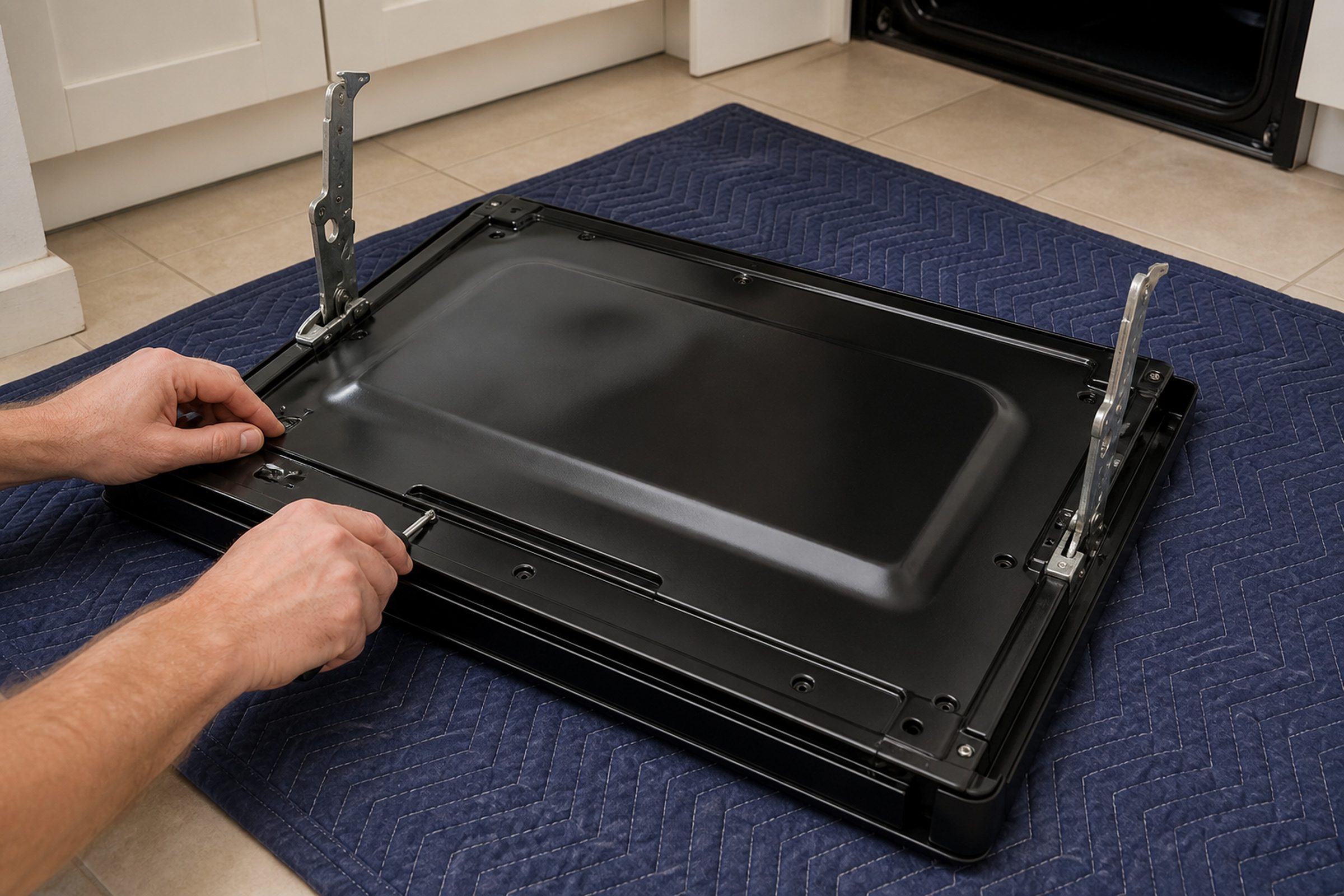
A door locked after a clean cycle and staying locked, a door that will not lock so the cycle will not start, hinges that have carried a heavy door for years, or cracked door glass. On this maker the first two have their own codes — A2 and A3 — and they mean opposite things.
- From $95 diagnostic, credited to the repair
- 59 cities and neighborhoods covered
- OEM parts available on order
- In writing the price, before anything is opened
Before you read on
What this job costs and how it is agreed
A starting figure, not a quote. What moves it is the model, how the unit is built in and which part it needs — settled after the on-site diagnostic.
Starts at
from $165
After a diagnostic from $95, which comes off the bill when you go ahead.
or call (305) 902-4477
Diagnostic
From $95, credited to the repair
The price
In writing, before anything is opened
Warranty
On the labor we performed
On the visit
How this visit actually goes
The same order every time, so nothing is opened and nothing is charged before you have seen the figure and said yes.
-
01
Which way round it is
A2 means the door could not be locked when a clean cycle started. A3 means it could not be unlocked when one finished. Same mechanism, opposite ends, different searches — and a caller who says "the lock is broken" has told us neither.
-
02
Give the interlock its time
The lock is a temperature interlock rather than a timer: it will not release until the cavity is genuinely cool, and a full clean cycle can take a couple of hours to get there with the door shut. A great many of these calls are made an hour too early.
-
03
The maker's own reset, before the tools
For A2 the published sequence is power off at the wall, ten seconds, power on, set the clock, and start the cycle again with the door closed firmly. For A3 it is power off and on, then touching the door to help the lock disengage. Both are free and both work often enough to try first.
-
04
Then the latch motor and its switch
If a cold oven with a correctly closing door will not release, that is the motor or the switch that reports its position. It is a common repair rather than an alarming one, and it is far smaller than the door repair that follows forcing it.
-
05
Hinges, springs and glass as their own work
A door that drops, sits proud, or has cracked inner glass is a different job with a different figure, and it is quoted separately rather than folded into a latch.
The money
What this usually costs in South Florida
The starting figure, the range the market quotes around it, and what pushes a job to either end.
-
Oven door & self-clean lock repair cost
Latch motors, position switches, hinges and door glass. The figure assumes nobody has pulled on a locked door — if somebody has, that changes the job from a latch to a door and we would rather know before we arrive.
- Researched market range for South Florida: latch and hinge work $160–$400
- A2 and A3 are opposite ends of one mechanism
- The free reset tried before the tools come out
Applies to
The Fisher & Paykel units we carry this work out on
-
Self-cleaning · Combi-steam · Convection speed · Double · Minimal · Contemporary · Professional · 24" · 30" Fisher & Paykel oven repair in Miami
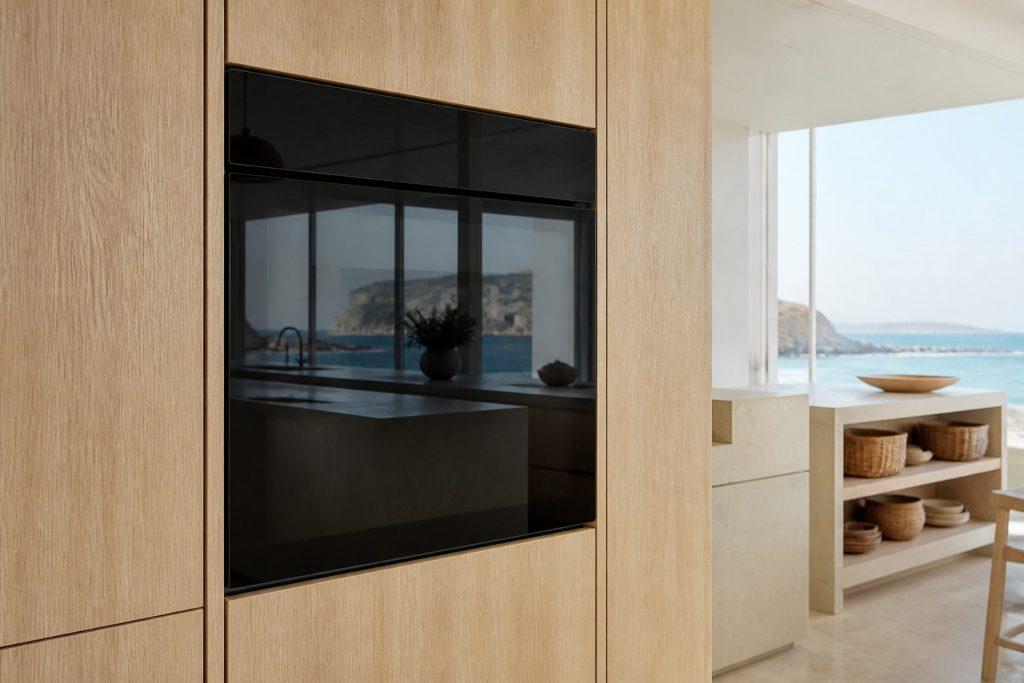
The largest row on this site: a hundred and ten wall ovens, and a third of them cook with steam. Forty-five are self-cleaning ovens, thirty-eight are combi-steam machines, twenty-eight are compact convection-speed ovens with a microwave system inside them, and six are doubles. A steam oven is a plumbed appliance with a boiler in it, and it does not fail the way an oven fails.
- A display that is on while the oven does not heat
- A door locked after a self-clean cycle and staying locked
- A steam oven that will not fill, or leaves water where it should not
-
Professional gas · Dual fuel · Induction · Classic · 4 · 5 · 6 · 8 burner · Griddle · 30" · 36" · 48" Fisher & Paykel range repair in Miami
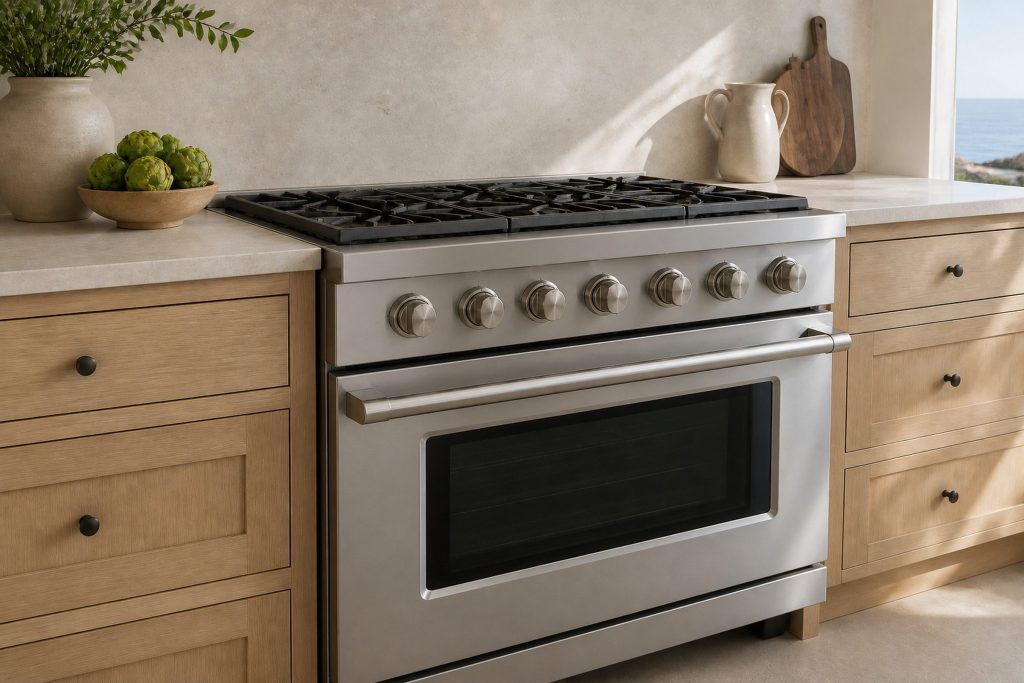
Forty-one freestanding ranges, and the split tells you what this maker is: sixteen dual fuel, fifteen gas, seven induction and one electric. Twenty-seven of them are Professional — heavy grates, dual-flow burners, four to eight of them, and on the larger machines a griddle let into the top. On a 48-inch range, "the oven is not heating" means one of two ovens, and which one narrows the part before anybody drives anywhere.
- A burner that will not light, or lights and drops out at low setting
- The oven running hot or cold while looking perfectly healthy
- An induction zone that cuts out under load while the others carry on
In more detail
About Fisher & Paykel oven door & self-clean lock repair
One mechanism, two opposite complaints
A2 is a door that would not lock so the clean cycle never started. A3 is a door that would not unlock when the cycle finished. They come from the same latch motor and the same position switch, and they need different things done first, which is why the code matters more here than almost anywhere else on this site.
Why patience is the first repair
The interlock is driven by temperature. A cavity that has been at self-clean temperature holds heat for hours behind a closed door, and the lock will not move until it is genuinely cool. A real share of these calls resolve themselves during the drive.
What else is on the page
- Latch motors and position switches, the actual repair when patience does not work
- Hinges and springs on doors that are genuinely heavy
- Door glass, inner and outer, including cracked panes
- Alignment on a door that no longer closes square
This article is based on:
- Official manufacturer documentation
- Internal repair procedures
- Technician repair history
- Company quality standards
Before you book
Questions about Fisher & Paykel oven door & self-clean lock repair
The door will not open after a self-clean.
Wait, and do not force it. The lock releases on temperature, not on time, and a cavity that has run a full clean cycle stays hot inside long after the front feels cool. If the oven is genuinely cold and it still will not release — or if A3 is showing — the latch motor or its position switch is the repair. Forcing the door turns a latch job into a door job and it is the most expensive mistake available on this page.
The clean cycle will not start at all.
That is A2, the other end of the same mechanism: the oven tried to lock the door and could not confirm it. Try the maker's own sequence first — power off at the wall for ten seconds, back on, set the clock, and restart the cycle with the door pushed firmly closed. If it still refuses, the lock or its switch is the repair.
The inner glass has cracked.
That is a replacement rather than a repair, and it is worth doing rather than living with: the inner pane is part of how the door holds heat, and an oven with one missing runs differently and gets the outside of the door far hotter than it should. It is also a safety matter on a machine that self-cleans.
My oven shows 12:00 and the door is locked after a power cut.
The maker publishes an article for exactly this, which tells you how common it is in a storm season. A cut during or just after a clean cycle leaves the control without a clock and the lock where it was. Setting the clock is usually the whole fix — the lock will not act on an instruction from a control that does not know what time it is.
Where we do it
Across Miami-Dade, Broward, and Palm Beach
Same terms everywhere we go: an on-site diagnostic first, the price agreed in writing, and the exact figure confirmed once we have seen the unit.
Neighborhoods people ask for by name