Common Problems
DishDrawer Will Not Drain: the Filter, the Hose and the A3 Code
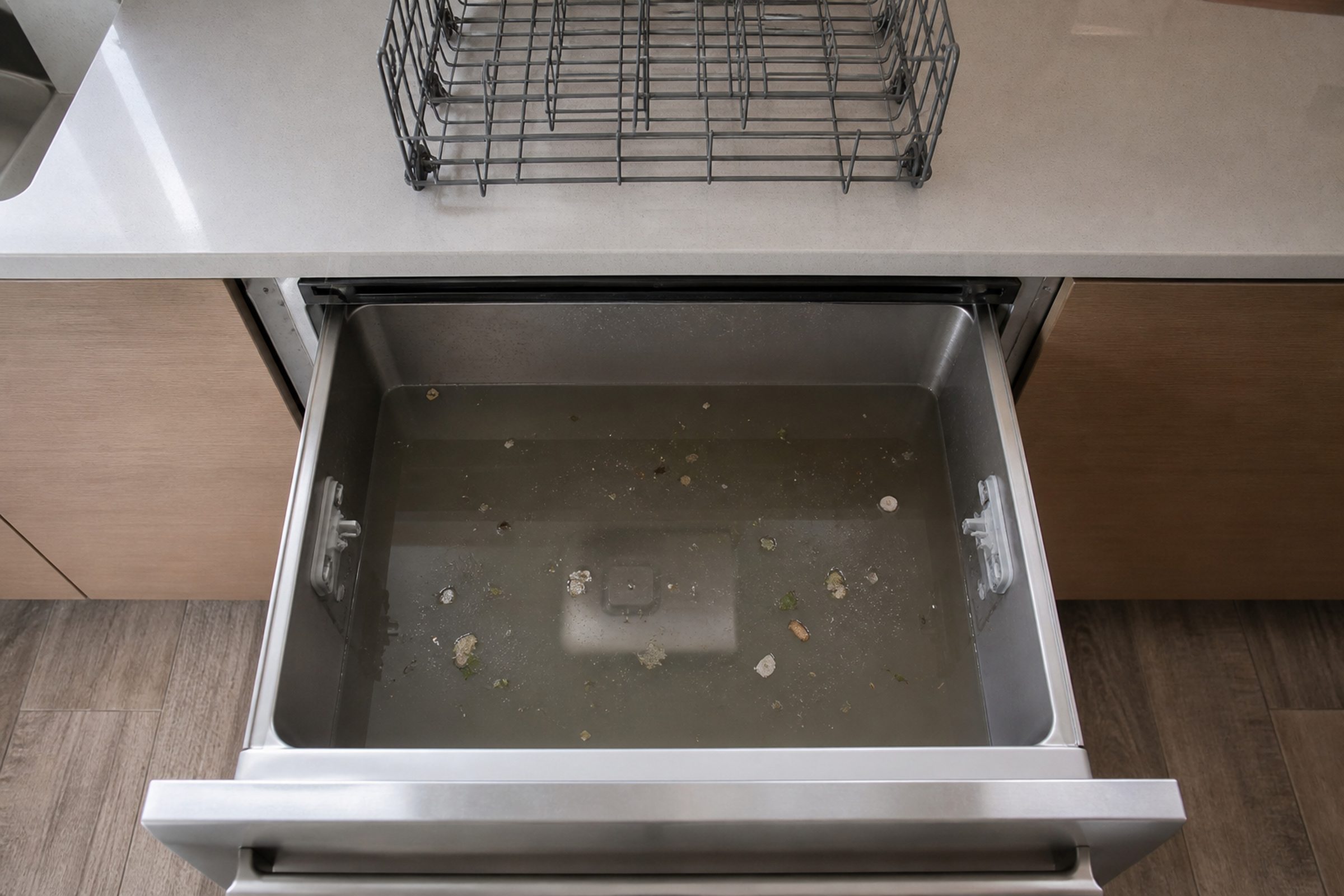
Take the filter out first, and take the filter plate out with it. On a DishDrawer both lift from the floor of the drawer by hand, and a filter that looks clean on top is very often packed underneath — this is the first cause the maker names for a drainage condition and the commonest thing we find. Next follow the drain hose: behind the machine for a kink, then under the sink to where it joins the trap, the waste tee or the standpipe, and if a garbage disposal was fitted at the same time as the dishwasher, check that its knock-out plug actually came out. Those are outside the appliance and free to look at. Only after all of that is it the drain pump. The machine reports A3 on a drawer and A20 on a drop-door model, and the published way to clear it is to press once to stop the beeping, press again to clear the code, then press to resume the program — after the cause has been dealt with, not before.
The full guide
Fisher Paykel dishwasher not draining: start where the maker starts
There is a real advantage to this particular complaint on this particular make: the manufacturer publishes both the code and the order of causes behind it, and the first two things on its list cost nothing and take ten minutes.
The code is A3 on a DishDrawer and A20 on one of the drop-door machines. Both mean the same thing — the machine could not get the water out — and both have published owner steps.
:::
Step one: the filter and the filter plate
On a DishDrawer these lift out of the floor of the drawer by hand. There are two parts, not one, and that is where people go wrong: the cylinder comes out, gets rinsed, goes back, and the flat filter plate underneath it — the one that was actually blocked — never moves.
- Scoop the standing water out with a cup and a towel first. It makes everything below possible and stops the drawer smelling by tomorrow.
- Lift the filter out and rinse it under a tap.
- Lift the filter plate underneath it out and rinse that too. Look at what comes off it.
- Put both back seated squarely. A filter that is not properly home will not do its job and can foul the spray arm.
The maker's own wording for A3 names the filter first, and names it as either clogged or installed incorrectly — both. That second half is worth remembering the next time somebody cleans the drawer.
Step two: the path out to the sink
If the filter was clean, the water is being stopped after it leaves the machine. Four places, in order of how easy they are to check:
- the drain hose behind the drawer, for a kink where the machine was pushed back;
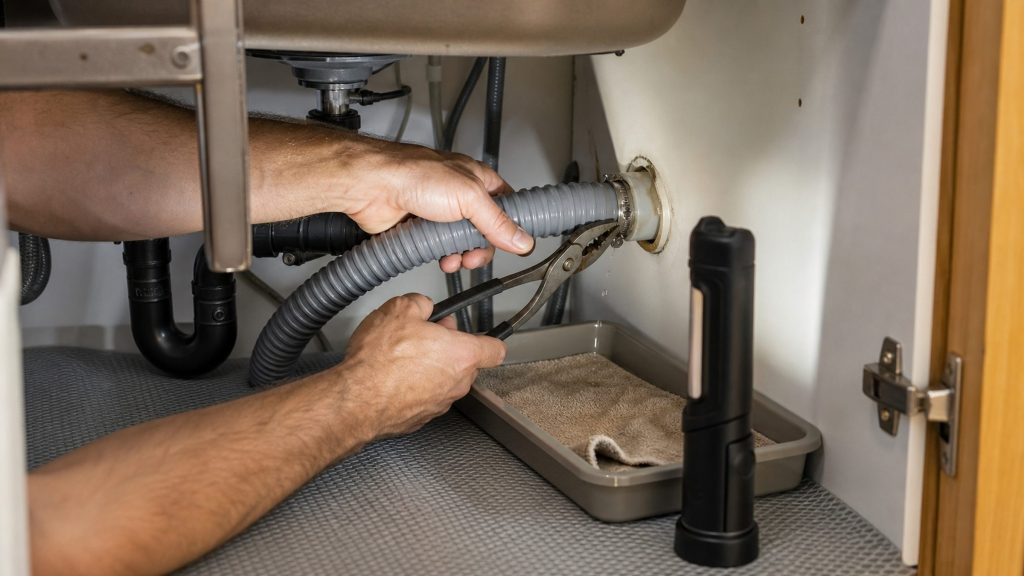
- the connection at the sink — the trap, the waste tee or the standpipe, all of which silt up with the same debris the sink sees;
- the high loop, which should rise close to the underside of the counter before it drops to its connection. If something stored under the sink has flattened it, that is your answer;
- the disposal knock-out plug. If a garbage disposal was installed at the same time as the dishwasher and the machine has never drained properly since day one, this is very often it. The plug is a cast disc inside the disposal inlet and it has to be knocked out at installation. Plenty are not.
Three of those four are not the appliance at all.
On the drop-door machines the same idea arrives as A20, and the maker adds one more cause: the turbidity sensor, which reads how dirty the water is, coated with build-up. It cleans with a soft brush.
Step three: clearing the code properly
Deal with the cause first. A code cleared on a machine that still cannot drain simply comes back, and you have thrown away the evidence.
The published sequence on a DishDrawer is:
- Press once to stop the beeping.
- Press again to clear the code.
- Press to resume the wash program.
If the code returns immediately, that is information rather than a failure — it means the machine is still seeing the condition, so the blockage has not gone or the problem is downstream of everything you can reach.
When it is the pump, and what that looks like
If the filter and the filter plate are clean, the hose is straight and the sink connection is clear, the search moves inside the machine. Two things get tested and they are not the same:
- the drain pump, under load rather than by continuity — a pump can pass a resistance test and still move nothing;
- the check valve, which stops water flowing back into the drawer. A machine that empties and then refills itself has a valve problem, not a motor problem, and it is a smaller repair.
There is also a condition that looks like a drainage problem and is not: F2, the rotor. Debris around the rotor stops the wash system rather than the drain, and it very often comes out by hand rather than on an invoice.
What it costs, and what it usually does not
Dishwasher drain work across South Florida sits in a researched market range of roughly $120 to $300 parts and labor, and our starting figure is at the low end of it on purpose — because on these machines the filter and the drain path end a large share of the calls before the pump is ever reached.
If it does end at the filter, the visit is the whole cost, and we would rather tell you that on the phone than in your kitchen. Exact cost is confirmed after an on-site diagnostic, and the scope and the figure are in writing before anything is opened.
If it turns out to be a repair
What this leads to, and what it costs
Every job on this site is priced the same way: an on-site diagnostic first, the figure agreed in writing before anybody starts.
-
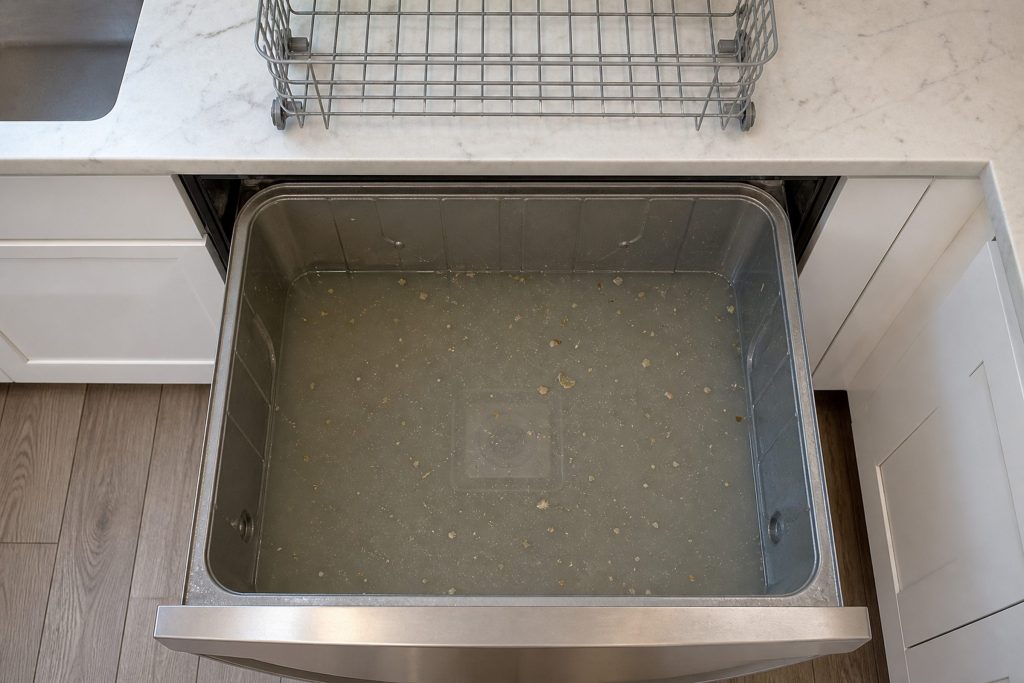
Water standing in the drawer DishDrawer will not drain
A drawer that finishes — or stops and beeps — with water still in it. The maker publishes a code for this and publishes the causes with it, and both of them are things you can look at yourself before anybody is called.
- Water above the filter at the end of a cycle
- The drawer beeps and the modifier lights flash
- It drains if you run it again
-
from $145 Dishwasher drain & filter repair
Water standing in the tub at the end of a cycle, or a machine that stops part-way and beeps. On this maker the code for it is published — A3 on a drawer, A20 or E3 on a drop-door — and the maker's own first instruction is the filter, not the pump.
- Filter, filter plate and drain path checked before anything is opened
- The drain hose run and its connection at the sink
- Drain pump tested under load rather than by continuity
Questions people ask about this
It drains if I run it a second time.
That is a partial blockage rather than a stopped pump, and it is the cheapest version of this problem. Something is slowing the water enough that the drawer times out on the first attempt and gets there on the second. Start at the filter and the filter plate, then the hose. A pump that is genuinely failing does not usually succeed on the second try.
Is a little water in the bottom normal?
A small amount in the very bottom of the sump is normal and is meant to be there — it keeps the seals from drying out between cycles. Water covering the floor of the drawer, or standing above the filter, is not.
One drawer drains and the other does not.
Entirely possible, and useful. Each drawer has its own filter, its own pump and its own drain path, so a blockage on one side says nothing about the other. Keep using the working drawer while the other waits, and tell us which one when you book.
Can I run it while it is doing this?
Better not to. A machine that cannot drain refills on top of dirty water, and on a drawer a partial drain leaves standing water where the seal sits. It will not damage anything overnight, but it makes the next cycle worse and washes away the evidence that would have made the diagnosis quick.
The drawer smells even though it drains.
That is the filter and the sump rather than a drainage problem. Debris that gets past a filter sits in the bottom of the drawer between cycles, and in a warm kitchen that is enough. Clean the filter and the filter plate properly and run a hot cycle with nothing in the drawer.
What if the filter is clean and the hose is clear?
Then it is worth a visit, and you have already done the useful half of the diagnosis. The pump is tested under load rather than by continuity, and the check valve is looked at with it — a pump that empties the drawer and lets it fill straight back is a valve rather than a motor, and they are different figures.
Common Problems
More guides like this one
-
Why Is My Oven Door Locked? A2, A3, and Two Hours of Patience
The lock is a thermometer, not a timer. It releases when the cavity is genuinely cool, and the single most expensive mistake available is pulling on the door before it does.
Read more -
Your Fisher & Paykel Refrigerator Is Beeping: Count Before You Clear It
There is no error number on the display, because on much of this line there is no display. The machine counts beeps and flashes an LED instead — and the count is the code.
Read more -
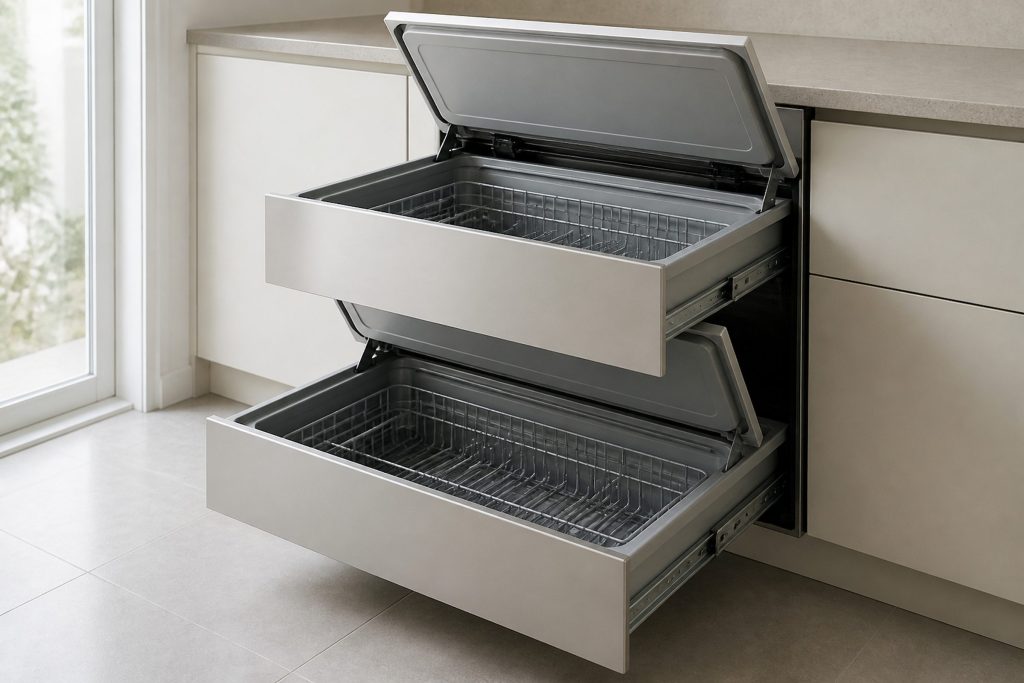
DishDrawer Problems: What Goes Wrong on a Dishwasher That Is a Drawer
A DishDrawer has no door and no door gasket. It seals from above, under a motor, which changes where it leaks, what fails, and why one drawer of a double can be perfect while the other is out.
Read more
Tell us the model number and what it is doing.
This article is based on:
- Official manufacturer documentation
- Internal repair procedures
- Technician repair history
- Company quality standards