Troubleshooting
Resetting a Fisher & Paykel Dryer, and the Three Things to Check First
Check three things before resetting anything. The door: these machines will not start unless the catch has properly engaged, and a door that looks shut and is resting on a towel is the single commonest cause of a dryer that does nothing. The airflow: a restricted machine trips its own thermal cut-out, and a tripped cut-out gives you a drum that turns with no heat, or nothing at all — clean the lint filter, the housing under it, and on a vented machine feel for airflow at the outside vent while it runs. And the supply: a dryer on its own circuit with a tripped breaker looks exactly like a dead appliance. If all three are clear, the reset is a power cycle at the circuit breaker rather than at the machine's own controls — a full minute, then restore power and try a short cycle. What a reset does not do is clear a thermal cut-out that has opened, because that is a one-time device and a message about airflow rather than a glitch.
The full guide
How to reset Fisher Paykel dryer: three checks that usually make it unnecessary
Almost every page on this subject starts with the reset. On a dryer that is the wrong order, because the three commonest reasons one will not start or will not heat are not things a reset touches.
Check one: the door
These machines will not run unless the catch has properly engaged, and a door that looks closed and is resting against a towel hanging over the drum is the single most common cause of a dryer that does absolutely nothing.
Push it until it clicks rather than swinging it. If it clicks and the machine still does nothing, the switch behind the catch is a candidate — a small part, and one that fails quietly on any machine with a decade of use.
Check two: airflow
This is the one that matters most, and it explains a set of symptoms that look electrical and are not.
A restricted dryer runs hotter than it was designed to. When it gets too hot, a thermal cut-out opens. That gives you either a drum that turns with no heat at all, or a machine that heats for a while and then goes cold part way through every cycle.
:::
A thermal cut-out is a one-time device. It does not close again when things cool down, and no reset closes it. It is a message about airflow, and replacing it without clearing the restriction gets you a second one.
So, in order:
- the lint filter — and the housing it sits in, which almost nobody vacuums;
- on a vented machine, the whole duct run to the outside wall. Run the dryer and feel for airflow at the outside vent. Weak air with a clean filter is your answer;
- on a condenser or heat pump machine, the second filter and the heat exchanger behind the lint filter, which most owners do not know is there.
:::
Check three: the supply
A dryer on its own circuit with a tripped breaker looks exactly like a dead appliance. Push the breaker fully off and back on rather than glancing at it — a breaker can trip into a position that looks normal.
On a machine that shares a circuit with something else, whatever else is on it is worth a look too.
Then, and only then, the reset
- Cut power at the circuit breaker, not at the machine's own controls.
- Wait a full minute. Sixty seconds.
- Restore power.
- Run a short cycle and watch what happens.
That is the whole of it. There is no dedicated reset button on these, and the thing people sometimes mean by "reset" — canceling a running program — is a different action that just stops the cycle.
What the outcome tells you
It runs normally. The control had locked up rather than failed. Common after a storm or an outage, and it costs nothing.
It behaves exactly as before. The machine is reporting something real. That is a useful answer rather than a failure, and it means the next step is a visit rather than another attempt.
It runs and then stops part way through, again. Go back to airflow. That pattern is thermal, and thermal on a dryer is nearly always the air.
The heat pump exception
If yours is a heat pump machine — no duct, empties into a container or a drain hose, runs cooler and longer than a vented one — two things are different and neither is a failure:
- it will not restart immediately after being interrupted. A refrigerant circuit needs its pressures to equalize, and a delay of several minutes is the design protecting itself;
- it is slower by design. That is the trade for drying at a low temperature.
:::
What is not normal on one of these is a machine that has become slower than it used to be. That is the filters and the heat exchanger, then the sensors — and only then anything a technician needs to be present for.
Do not keep going
Two proper resets is plenty. Cycling power repeatedly on a machine that has flagged an overheat is cycling something that already told you it was too hot, and every attempt erases whatever the display was showing.
If two attempts do not hold, write down what it does and when, and book it. You have already done the useful half.
If it turns out to be a repair
What this leads to, and what it costs
Every job on this site is priced the same way: an on-site diagnostic first, the figure agreed in writing before anybody starts.
-
Long cycles, damp clothes Dryer not drying properly
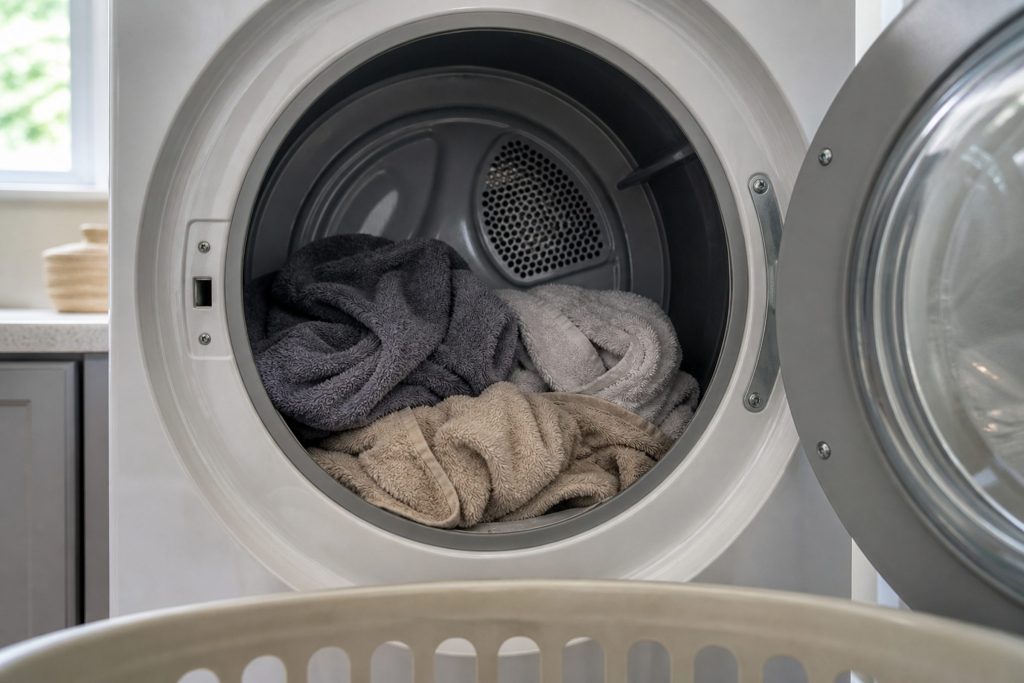
Cycles that take forever, or clothes still damp when the machine says it has finished. Two causes account for nearly all of it — the air cannot get out, or the machine cannot tell the load is dry — and a large share of both is free to check.
- It takes two cycles to dry one load
- Clothes are damp but the machine has stopped
- It has got slower over a year
-
from $155 Dryer heating repair
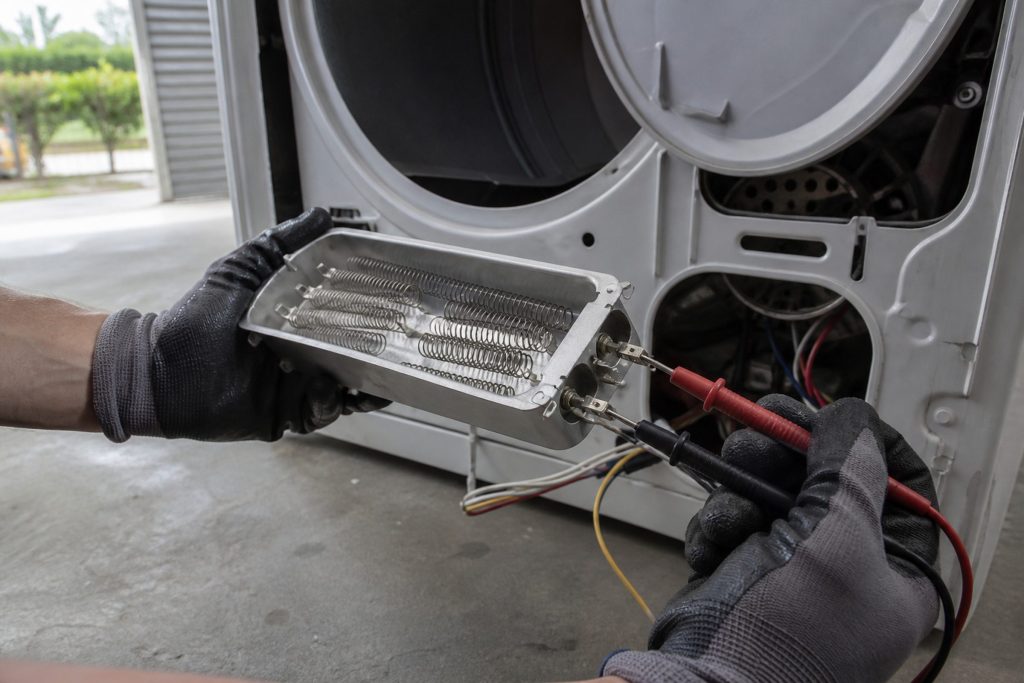
A drum that turns with no heat in it, or heat that cuts out part-way through a cycle. What is behind it depends entirely on which kind of dryer you have — vented, condenser or heat pump — because only one of the three has a heating element in the ordinary sense.
- Which kind of dryer, established before anything else
- Airflow checked before the element is condemned
- Heat pump circuits diagnosed rather than quoted blind
-
Vented · Condenser · Heat pump · Stacked · AeroCare · Laundry closets Dryers
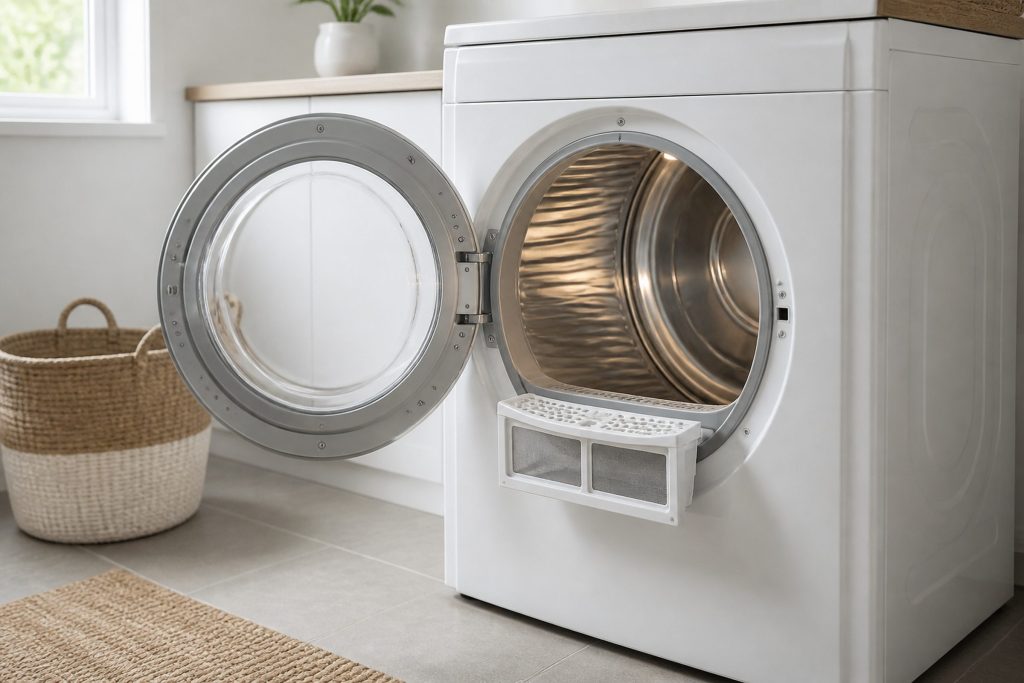
The same situation as the washers: Fisher & Paykel lists no dryer for the United States today, and the ones in South Florida laundry rooms are still working and still repairable. What is worth knowing before you call is which kind you have — vented, condenser or heat pump — because the three fail in completely different places, and only one of them is about a duct.
- Long cycles, or clothes still damp at the end of one
- A drum that turns with no heat, or heat that cuts out part-way
- Water where a condenser or heat pump machine should be emptying itself

Questions people ask about this
The drum turns but there is no heat. Will a reset fix it?
Almost never, and it is worth understanding why. On a vented machine no heat usually means an element, a thermostat, or a thermal cut-out that has opened — and a cut-out is a one-time device that does not close again. It opened because the machine got too hot, which is nearly always airflow. Reset the machine all you like; the cut-out stays open.
It will not start at all and the panel is lit.
Then it is receiving power and declining to run, which is a much better position than a dead panel. Door catch first — push the door until it clicks rather than swings shut. Then any child lock or delay start that has been set by accident. Then the breaker, fully off and on, because a partly tripped circuit can produce exactly this.
Is there a reset button on the machine?
Not a dedicated one. What people call the reset is a power cycle at the circuit, and separately a cancel that stops a running program. On a heat pump machine there is often a delay before it will restart after being interrupted, which is by design and not a failure — give it a few minutes before deciding it is dead.
It stops part way through every cycle.
That is the thermal signature of restricted airflow: the machine heats normally until trapped heat trips a protective thermostat, then runs cold or stops for the rest of the cycle. Filter, filter housing, and the whole duct run on a vented machine. It is free to check and it is the commonest cause of exactly this complaint.
My heat pump dryer will not restart straight away.
Normal. A heat pump machine has a refrigerant circuit, and like any refrigeration system it needs pressures to equalize before the compressor starts again. A delay of several minutes after an interruption is the design protecting itself rather than a failure.
Should I keep resetting it?
No. Two attempts is plenty. Repeatedly cycling power on a machine that has flagged an overheat is cycling something that has already told you it was too hot, and each attempt erases whatever the display was showing. If two proper resets do not hold, the machine is reporting something real.
Troubleshooting
More guides like this one
-
Resetting the Ice Maker, and Why It Almost Never Is the Ice Maker
Four complaints arrive as one — no ice, slow ice, small cubes, bad taste — and three of them start at the filter and the water pressure rather than at the machine that makes the ice.
Read more -

A Noisy Refrigerator: What the Sound Means Depends on When It Happens
Every noise page is a list of sounds. This one is organized by when — on opening, continuously, in bursts, or a change in the hum — because three of those four are usually normal.
Read more -
Testing a Freezer Thermistor: the Cheapest Part, Measured Rather Than Guessed
A thermistor is a resistance at a known temperature. Measuring it takes minutes and it is what separates a cheap part from a sealed-system conversation.
Read more
Tell us the model number and what it is doing.
This article is based on:
- Official manufacturer documentation
- Internal repair procedures
- Technician repair history
- Company quality standards