
Troubleshooting
A Noisy Refrigerator: What the Sound Means Depends on When It Happens
Sort it by when rather than by what. A creak or a suction sound on opening a door is the seal releasing, and the maker publishes an article about it because it is reported so often — that is a good seal doing its job. A noise in bursts several times a day is the ice maker harvesting; turn the ice maker off for a day and if the noise goes, that was it. A continuous noise that has become louder than it used to be is the one to act on: a fan bearing gives exactly this warning before it seizes, and a stopped evaporator fan takes the cooling with it. And a change in the background hum — the machine sounding different rather than louder — is worth a call promptly, because that is the compressor. Beyond those, a great deal of refrigerator noise is not the appliance at all: bottles touching on a door shelf, a machine slightly out of level, or an integrated cabinet resting against the cabinetry beside it and transmitting every vibration into the room.
The full guide
How to fix a noisy refrigerator: sort it by when, not by what
Every article on this subject is a list of sounds — hum, buzz, click, gurgle — and it is almost impossible to match your kitchen to somebody else's adjective.
When the noise happens is a much better sorting key, and it splits this into four cases that need four different responses.
:::
On opening a door: the seal
A creak, a sucking sound, or a soft thump as a door comes open. This is the gasket letting go of the frame, and Fisher & Paykel publishes an article about it on forty-nine of its models — which tells you how often it is reported.
A seal that grips is a seal that is working. It is one of the very few complaints where the correct answer is that nothing is wrong.
In bursts, a few times a day: the ice maker
A knock, a rattle, a short mechanical whirr, several times a day and never on demand. That is a harvest cycle: cubes releasing from the mold and dropping into a bin.
In a quiet house at night it carries remarkably well, and people describe it as something breaking.
The free test: switch the ice maker off for a day. If the noise goes with it, that was it.
Continuously, and louder than it used to be: a fan
This is the one worth acting on.
A refrigerator has an evaporator fan moving air inside the cabinet and a condenser fan moving air over the coil. Both run for long periods, and a bearing on the way out gives you months of gradually getting louder before it seizes.
That warning is worth using, because a stopped evaporator fan takes the cooling with it. A modest part becomes a warm cabinet, a wasted load of food, and an emergency instead of an appointment.
Louder is the right moment to call. Not stopped.
A changed hum: the compressor
Not louder — *different*. A machine that has always hummed and now hums at a different pitch, or cycles differently, or has become noticeably quieter.
Quieter deserves a mention, because it is counter-intuitive: a compressor with less refrigerant to move does not sound the same, and people rarely report a machine for being too quiet.
This one is worth a prompt call rather than a note in a diary.
The noises that are not the appliance
Before any of the above, three free checks. They solve more of these than people expect:
- Empty the door shelves. Bottles touching each other on a shelf produce a remarkable amount of noise and cost nothing to separate.
- Check the machine is level, and that nothing inside is resting against the rear wall. A shelf touching the back transmits every vibration.
- On an integrated column, check it is not touching the cabinetry. A machine fitted tight against a side panel turns the whole run of units into a soundboard.
:::
Why quiet machines get more noise calls
This is a real effect rather than an excuse.
These are quiet appliances, and a great deal of this maker's line is built into cabinetry in hard-surfaced kitchens — stone, glass, tile. A fan that would be inaudible in a freestanding machine in a garage is very audible in an integrated column ten feet from a sofa.
That does not make the noise imaginary. It makes changes noticeable, and a change is exactly the thing worth reporting.
What to send us
Ten seconds of audio from a phone, held as close to the machine as you can get, plus one line about what the appliance was doing.
A noise that happens twice a day is very hard to catch during a visit, and a recording turns a description into evidence.
If it turns out to be a repair
What this leads to, and what it costs
Every job on this site is priced the same way: an on-site diagnostic first, the figure agreed in writing before anybody starts.
-

New sounds, not loud ones Refrigerator making an unfamiliar noise
These machines are quiet, which means a new sound stands out — and the maker publishes articles on gasket noise, fan noise and ice maker noise because most of what gets reported is normal. What matters is whether the sound is new, not whether it is loud.
- A creak or suck when the door opens
- A fan that has become louder
- Knocking or grinding during ice harvest
-
from $185 Refrigerator cooling & defrost repair
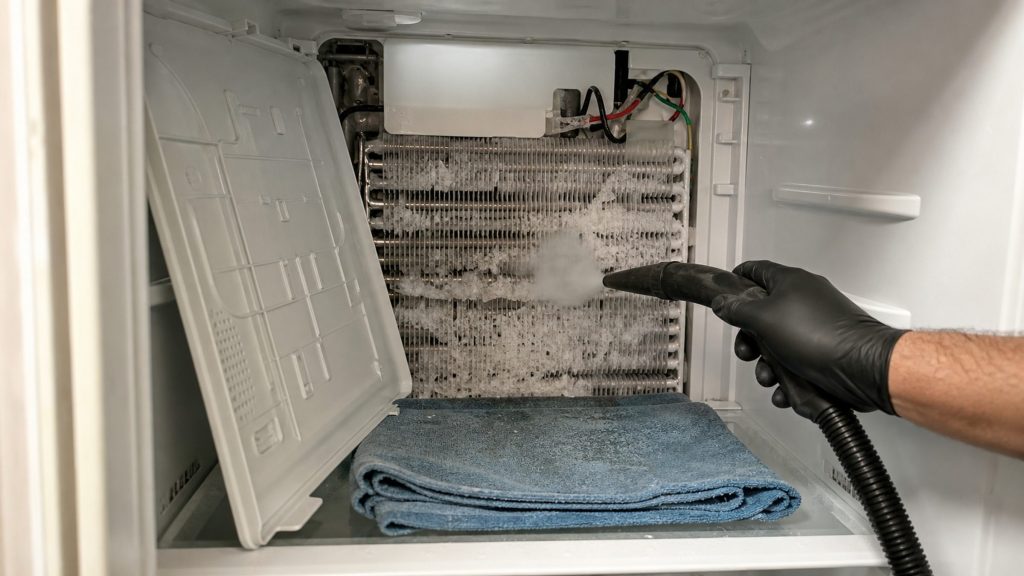
A fresh-food side drifting warm while the freezer stays cold, food softening in a freezer that still makes ice, or frost building on a back wall. Airflow and defrost long before refrigerant — and on an integrated column, most of the appointment is reaching the part rather than replacing it.
- Airflow, damper and defrost circuit before anything is opened
- Condenser read for salt and dust, which is a local cause
- Integrated access planned at the diagnostic, not discovered later
-
from $95 Diagnostic visit
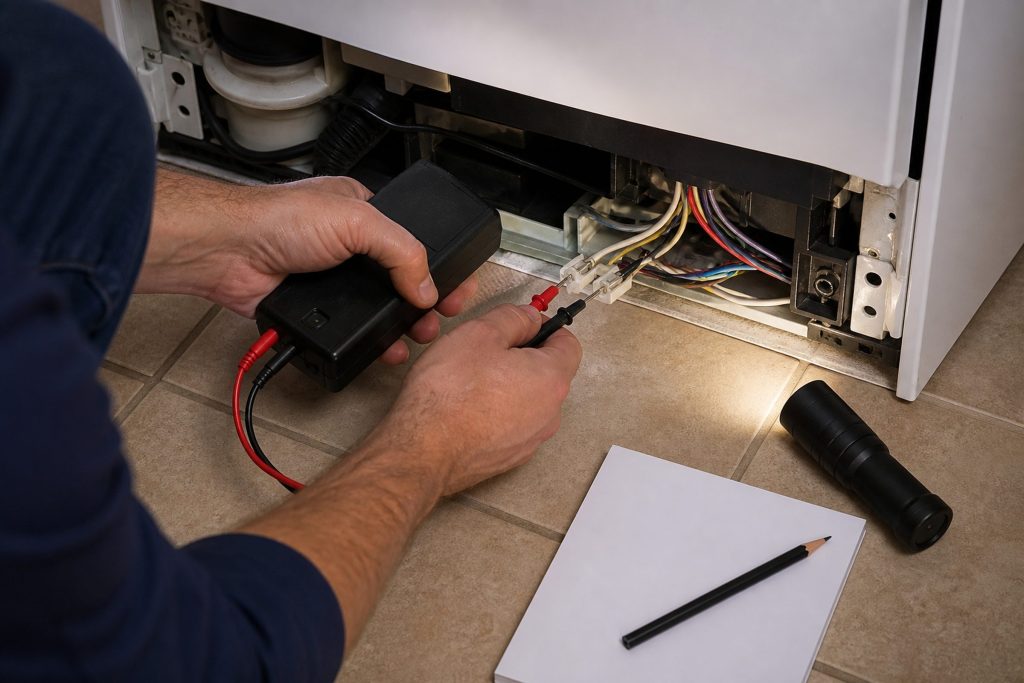
We read what the appliance is reporting, then measure before saying anything about the repair. On this equipment that also means working out how the machine leaves its opening before anybody touches it. The fee is credited toward the work when you go ahead.
- The code or the light pattern read on site, before anything is cleared
- Measured rather than guessed
- Credited toward the repair

Questions people ask about this
It creaks when I open the door.
That is the seal letting go, and Fisher & Paykel publishes an article about it on forty-nine of its models because people report it constantly. A good gasket grips the frame, and releasing makes a noise. It is one of the few complaints where the honest answer is that the appliance is working.
The fan has got louder. Is that urgent?
It is the one on this page worth acting on quickly, and it is a warning rather than a failure. A fan bearing gives you months of getting louder before it seizes, and a stopped evaporator fan takes the cooling with it — which turns a modest part into a warm cabinet and a wasted load of food. Louder is the right moment to call.
It knocks a few times a day.
Almost certainly ice harvest: cubes releasing from the mold and dropping into a bin, which carries a long way in a quiet house. Switch the ice maker off for a day. If the noise goes with it, that is your answer and it is not a repair.
It buzzes and I cannot tell from where.
Start outside the appliance. Bottles touching on a door shelf, a shelf resting against a rear wall, or an integrated cabinet touching the cabinetry beside it will all transmit a buzz that sounds like it comes from inside the machine. Emptying the door shelves and checking the machine is not in contact with anything either side costs nothing and solves a surprising number of these.
Is a quiet appliance more likely to sound noisy?
In a real sense, yes. These are quiet machines in hard-surfaced kitchens, and a great deal of this line is built into cabinetry that transmits sound rather than absorbing it. A fan that would be inaudible in a garage is very audible in an integrated column in a Miami kitchen. That does not make the noise imaginary — it makes small changes noticeable, which is useful.
What should I record?
Ten seconds of audio on a phone, taken as close to the machine as you can get, plus a note of what the appliance was doing at the time. It is worth more than any description, and it survives the drive to the appointment. A noise that only happens twice a day is otherwise very hard to catch during a visit.
Troubleshooting
More guides like this one
-
Resetting the Ice Maker, and Why It Almost Never Is the Ice Maker
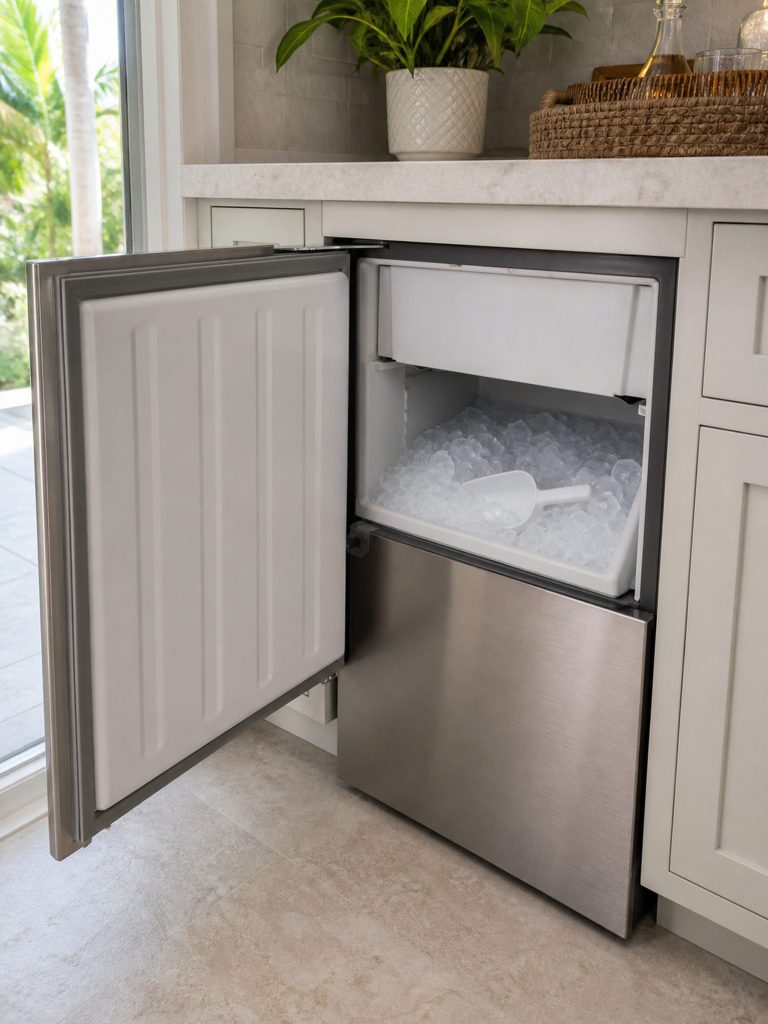
Four complaints arrive as one — no ice, slow ice, small cubes, bad taste — and three of them start at the filter and the water pressure rather than at the machine that makes the ice.
Read more -
Testing a Freezer Thermistor: the Cheapest Part, Measured Rather Than Guessed
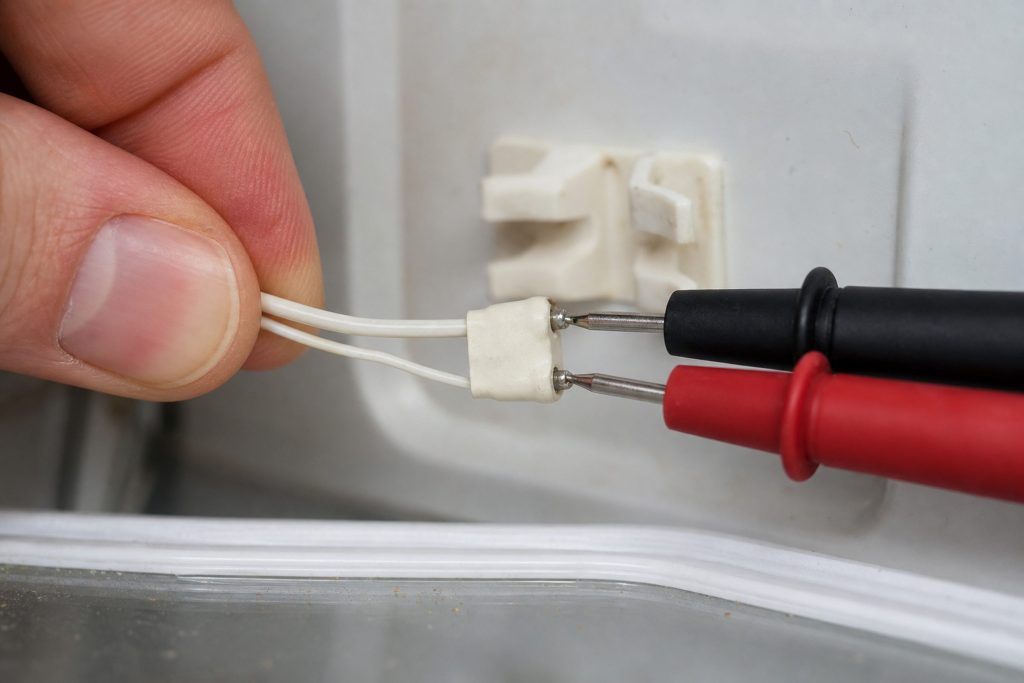
A thermistor is a resistance at a known temperature. Measuring it takes minutes and it is what separates a cheap part from a sealed-system conversation.
Read more -
Resetting a Fisher & Paykel Dryer, and the Three Things to Check First
A dryer that will not start is a door switch, a thermal cut-out or an airflow problem far more often than it is something a reset fixes. So the reset comes third here, not first.
Read more
Tell us the model number and what it is doing.
This article is based on:
- Official manufacturer documentation
- Internal repair procedures
- Technician repair history
- Company quality standards