Troubleshooting
Testing a Freezer Thermistor: the Cheapest Part, Measured Rather Than Guessed
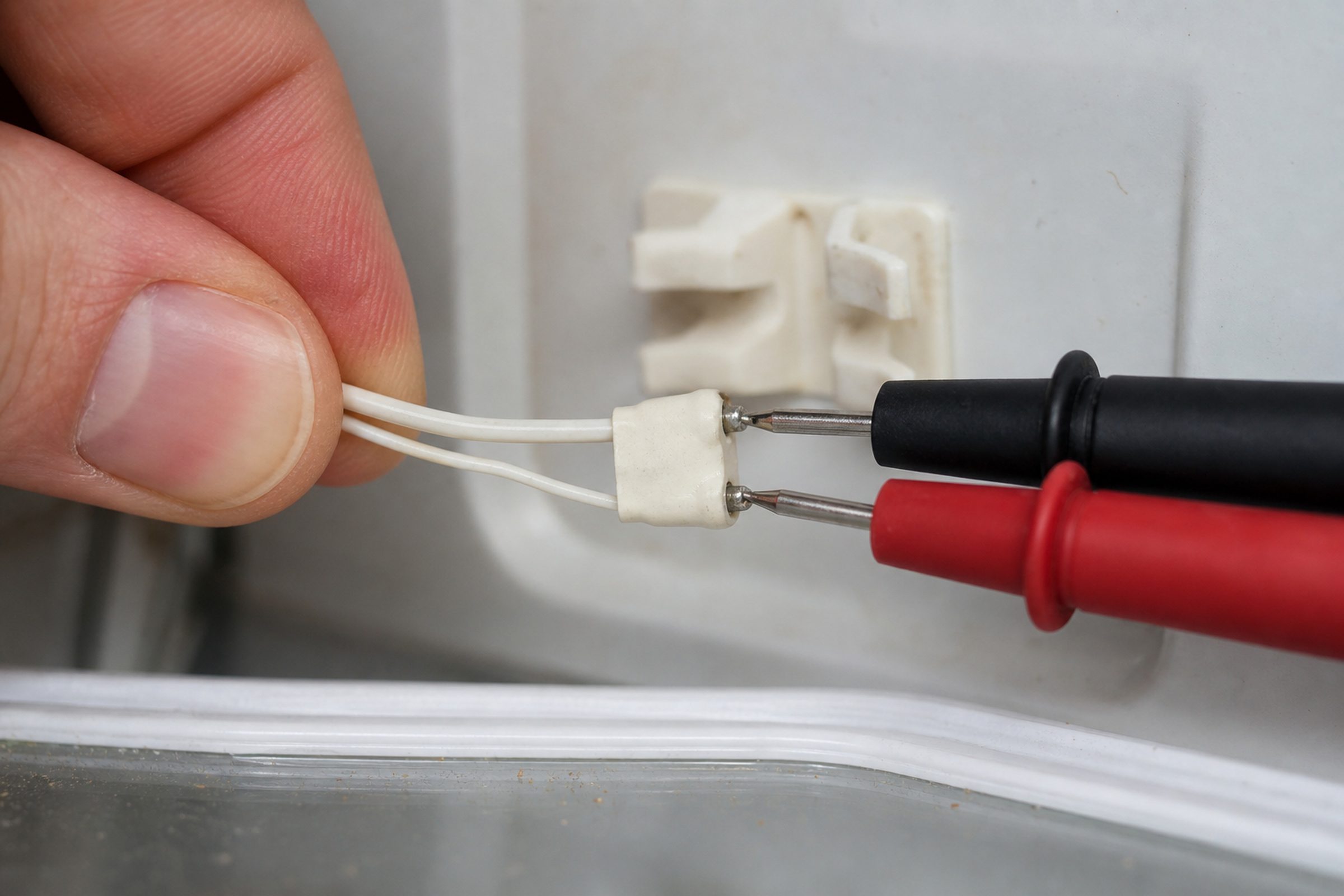
A thermistor is a resistor whose value changes predictably with temperature, and testing it means comparing what it reads against what it should read at a known temperature. With the appliance isolated at the circuit, unplug the sensor and put a multimeter across it on the resistance range. Then give it a temperature you can trust: a glass of ice and water, stirred and left to settle, is very close to 32°F, and a thermistor sitting in it should read the value its specification gives for that point — commonly in the region of five kilohms on domestic refrigeration, though the number varies by manufacturer and must be checked rather than assumed. What matters more than the exact figure is behavior: the resistance should change smoothly as the temperature changes, and warming it in your hand should move it in the direction the specification says. An open circuit, a dead short, or a value that does not move with temperature is a failed sensor. A reading that is stable and simply wrong is the same conclusion arrived at differently.
The full guide
How to test freezer thermistor, and why it is worth knowing about
This is the most technical page on this site, and it earns its place for a commercial reason rather than a technical one.
A thermistor is the cheapest part in a refrigerator. A sealed-system repair is the most expensive thing on the list. And a sensor reporting a compartment wrongly produces symptoms that look exactly like the expensive problem: food softening, a compartment that will not hold, a machine that runs and runs or one that barely runs at all.
Measuring the sensor takes minutes. Not measuring it is how people end up being quoted for a compressor.
What a thermistor actually is
A resistor whose resistance changes predictably with temperature. That is the whole of it — there is no electronics inside, no signal, nothing to program.
The control applies a small voltage, reads the resistance, and converts it into a temperature. If the resistance is wrong, the control believes the wrong temperature and acts on it perfectly correctly.
That is the key idea on this page. A refrigerator with a drifted sensor is not misbehaving. It is doing exactly what it is told, based on a number that is not true.
The measurement
Isolate the appliance at the circuit breaker first. Not at the control panel, which leaves the board live. This is a measurement on a disconnected component, not a live test.
- Isolate the appliance at the breaker.
- Unplug the sensor at its connector. On most machines it is a two-wire plug near the evaporator or in the compartment wall.
- Meter on resistance, probes across the two pins.
- Give it a temperature you can trust. A glass of ice and water, stirred and allowed to settle for a couple of minutes, is very close to 32°F and it is free. Put the sensor tip in it, not the connector.
- Read it, and compare against the value the specification gives for that temperature.
- Then warm it in your hand and watch the reading move.
:::
Reading the result
| What the meter does | What it means |
|---|---|
| No reading at all, or infinite | Open circuit — a failed sensor or a broken wire |
| Near zero, or a dead short | Failed sensor, or a wiring failure |
| A value that does not move as the temperature changes | Failed sensor |
| A smooth change in the right direction, at the right value | The sensor is fine — look elsewhere |
| A smooth change, but the value is consistently off | Drifted. This is the confusing one, and it is a failure |
That last row deserves its own sentence. A stable but wrong reading is a failure, and it is the version that fools people, because everything about the appliance looks healthy. It is the cause of the classic "the display says 37 and the milk is frozen".
What number should it be?
It depends on the sensor, and it has to be checked rather than assumed.
The family commonly used in domestic refrigeration reads in the region of five kilohms at 32°F, but several types are in use and a figure taken from the internet and applied to the wrong one produces a confident wrong answer. The specification for the machine settles it.
What is universal, and what you can rely on without a specification, is the behavior: the resistance should change smoothly with temperature and move in the direction the sensor type dictates.
Do not forget the wiring
A sensor sits at the end of a harness that runs through a cabinet where doors have opened and closed thousands of times, often past a hinge, sometimes through a damp environment.
A chafed wire or a corroded connector reads exactly like a failed sensor. Measuring at the board and then at the sensor separates the two, and it is the step that gets skipped.
Why this matters more on this make
Fisher & Paykel's refrigeration does not print a numeric code on a screen. It counts beeps and flashes an LED, and the maker groups the codes behind those into families — temperature and sensor being one of them.
So the machine will tell you which half of the problem to look in, and no more.
That is honest, and it puts the weight on the measurement. A diagnosis on this equipment that names an expensive component without anybody having put a meter on the sensors has skipped the cheap half of the job.
The question worth asking
You do not need to do any of this yourself. What this page is really for is one sentence you can say on the phone or in your kitchen:
"Was the sensor measured?"
If the answer is vague, the diagnosis is vague.
If it turns out to be a repair
What this leads to, and what it costs
Every job on this site is priced the same way: an on-site diagnostic first, the figure agreed in writing before anybody starts.
-

The freezer is losing it Frozen food going soft
Ice cream that will not set, bags that have gone pliable, or a freezer that is holding a few degrees too warm without ever alarming. It rarely fails all at once — it drifts, which is why people notice it in the food before they notice it in the machine.
- Ice cream soft, everything else looks frozen
- Frost inside bags that were dry
- The freezer has never alarmed
-
from $195 Refrigerator control & sensor repair
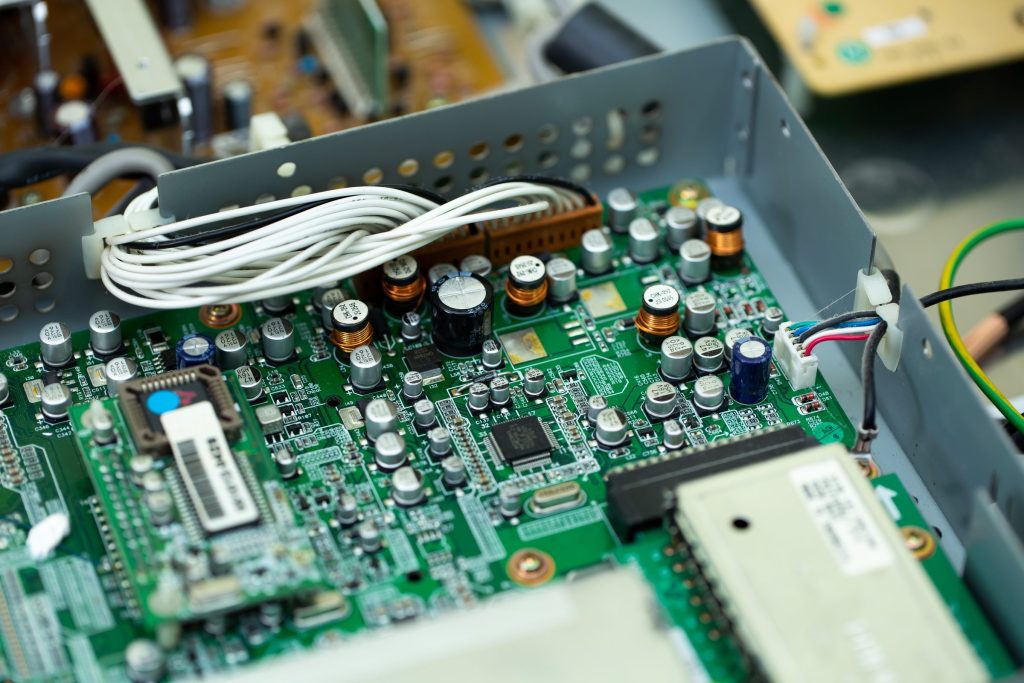
A cabinet that reports an error, holds the wrong temperature while insisting it is right, or will not respond to its controls at all. On this maker the reporting is beeps and flashing LEDs rather than a number on a screen, and reading it correctly is a real part of the job.
- The beep count or LED pattern read before anything is cleared
- Sensors measured against temperature, not swapped on suspicion
- Board quoted last, and only when the sensor side is proved good
-
from $95 Diagnostic visit
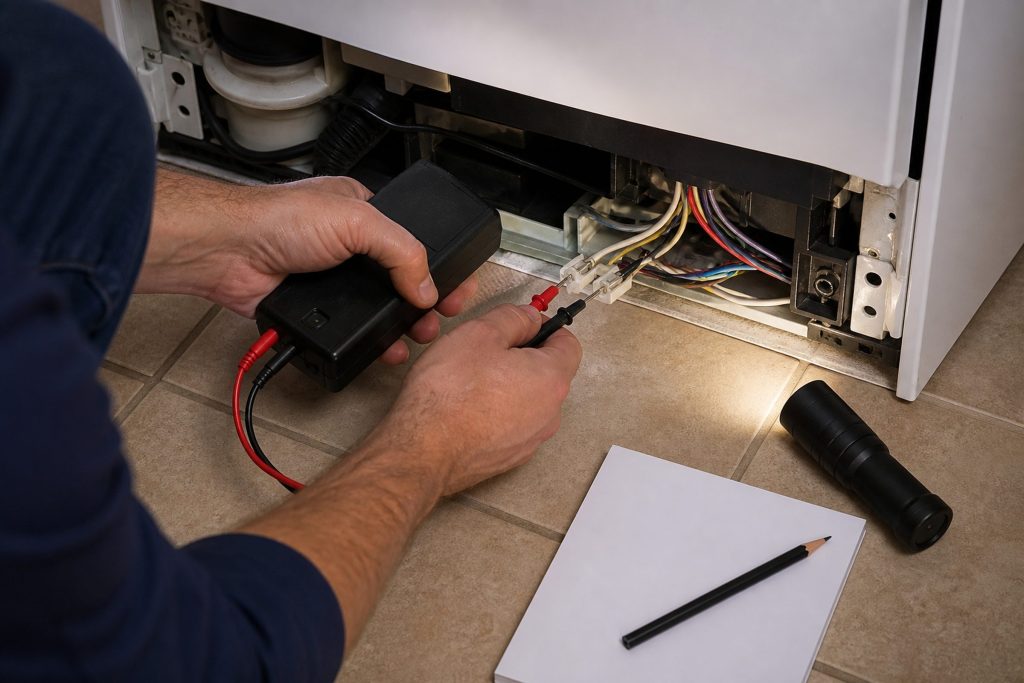
We read what the appliance is reporting, then measure before saying anything about the repair. On this equipment that also means working out how the machine leaves its opening before anybody touches it. The fee is credited toward the work when you go ahead.
- The code or the light pattern read on site, before anything is cleared
- Measured rather than guessed
- Credited toward the repair

Questions people ask about this
Do I need to do this myself?
No, and most people should not — it means isolating the appliance and getting at a sensor that on a built-in machine is behind a panel. The reason this page exists is so you can ask whether it was done. A refrigerator quoted for an expensive repair without anybody putting a meter on the sensors is a refrigerator that was guessed at.
What number should I be looking for?
That depends on the sensor and it must be checked rather than assumed — the common family used in domestic refrigeration reads in the region of five kilohms at 32°F, but manufacturers use several types and a figure from the internet applied to the wrong one produces a confident wrong answer. What is universal is the behavior: smooth change with temperature, in the right direction.
The reading is stable but wrong. Is that a failure?
Yes, and it is the version that causes the most confusion, because everything looks healthy. A sensor that reports a compartment as colder than it is makes the control stop cooling too early, and the display shows the temperature the machine believes rather than the one in the cabinet. That is exactly the 'it says 37 and the milk is freezing' complaint.
Can I test it in place?
You can measure it in place and compare it against a thermometer in the same compartment, which is a useful sanity check. What you cannot do in place is give it a known reference temperature, which is what the ice-water method is for. Doing both is better than doing either.
Is the wiring worth checking too?
Very much so, and it is missed constantly. A sensor is at the end of a harness that runs through a cabinet where doors open and close thousands of times, and a chafed or corroded connection reads exactly like a failed sensor. Measuring at the board rather than at the sensor, and then at the sensor itself, separates the two.
How does Fisher & Paykel report a sensor problem?
By counting beeps and flashing an LED rather than printing a number, and the maker groups its refrigeration codes into families — temperature and sensor being one of them. So the machine will tell you which half of the problem to look in and no more, which is precisely why the measurement matters here more than on a make that publishes a specific code.
Troubleshooting
More guides like this one
-
Resetting the Ice Maker, and Why It Almost Never Is the Ice Maker
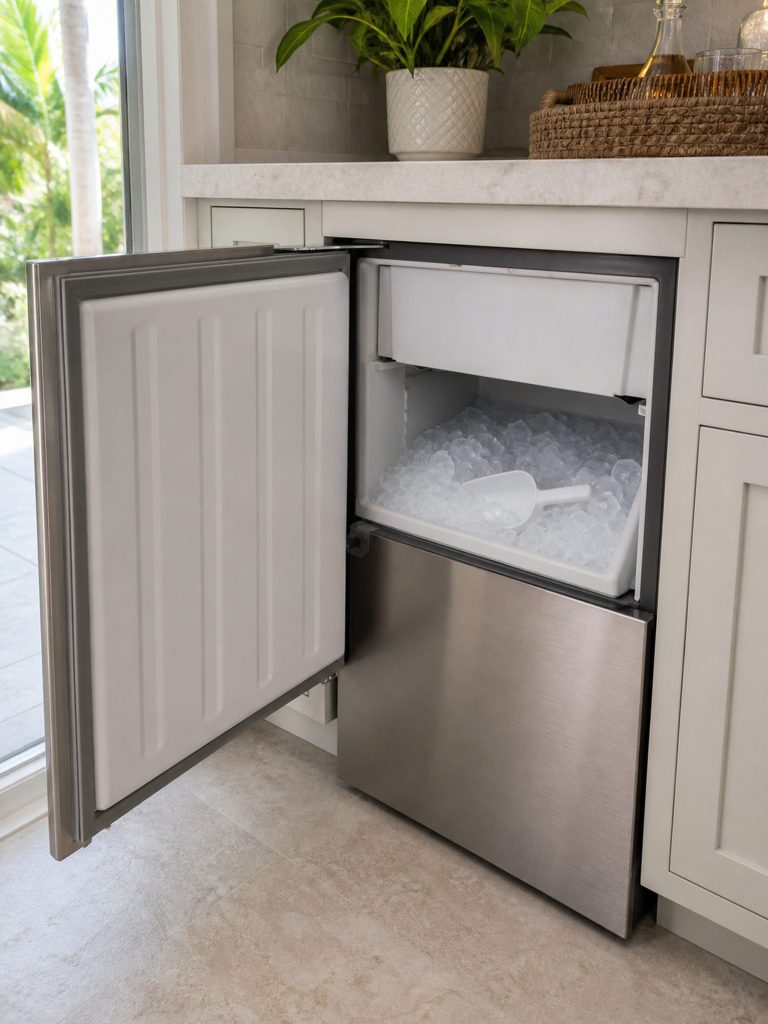
Four complaints arrive as one — no ice, slow ice, small cubes, bad taste — and three of them start at the filter and the water pressure rather than at the machine that makes the ice.
Read more -

A Noisy Refrigerator: What the Sound Means Depends on When It Happens
Every noise page is a list of sounds. This one is organized by when — on opening, continuously, in bursts, or a change in the hum — because three of those four are usually normal.
Read more -
Resetting a Fisher & Paykel Dryer, and the Three Things to Check First
A dryer that will not start is a door switch, a thermal cut-out or an airflow problem far more often than it is something a reset fixes. So the reset comes third here, not first.
Read more
Tell us the model number and what it is doing.
This article is based on:
- Official manufacturer documentation
- Internal repair procedures
- Technician repair history
- Company quality standards