Common Problems
Your DishDrawer Is Flashing and There Is No Number. The Pattern Is the Code
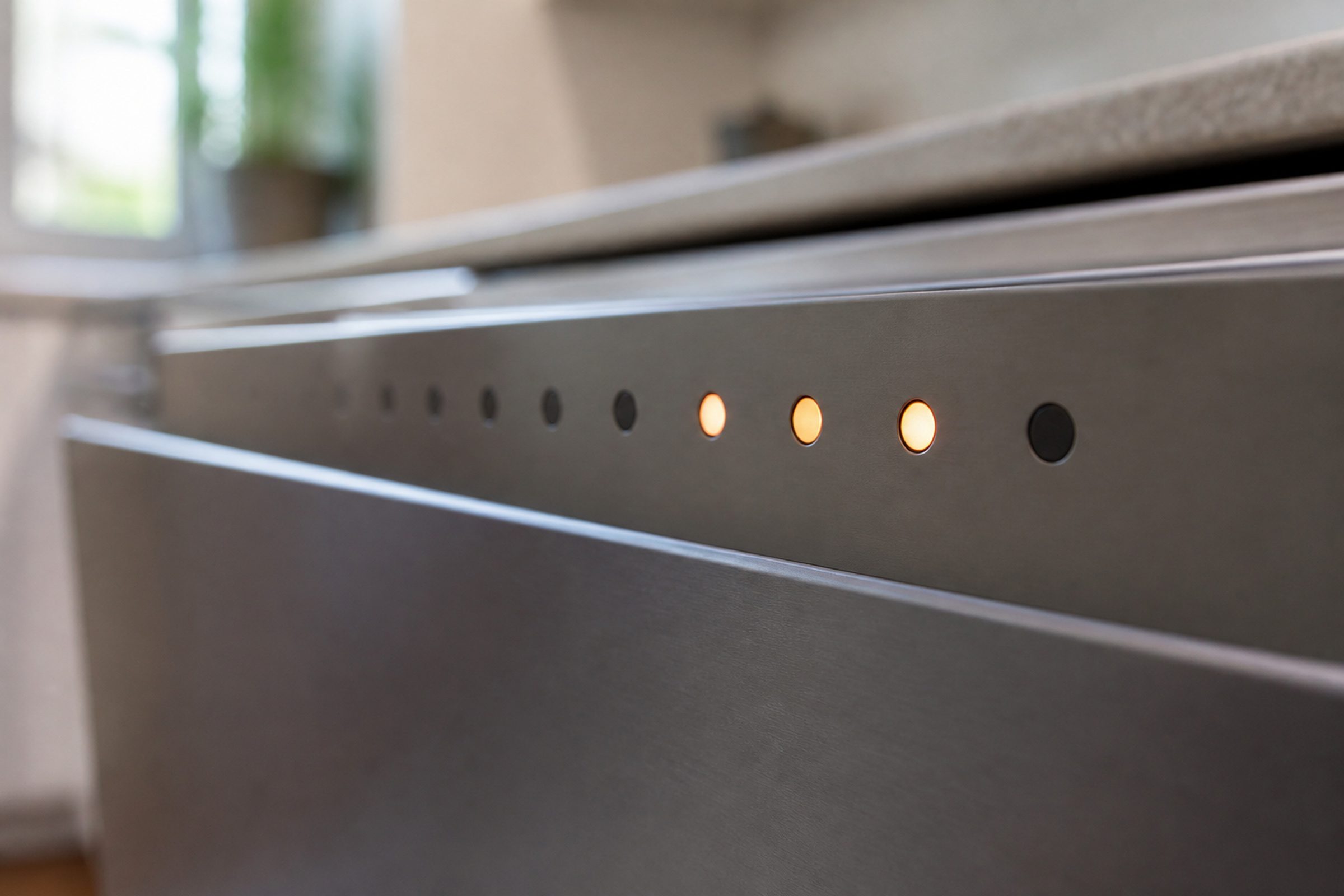
Look at which lights are flashing before you touch anything. If the wash modifier indicators and the lock indicator are flashing together, it is an F condition. If only the wash modifier indicators are flashing, it is an A condition. In both cases one or more program lights will also be lit, and which ones they are identifies the specific code. That distinction matters more than anything else you can write down, because the A conditions are the ones with published owner steps — water supply, drainage, the spray arm, foam recovery, the sanitize temperature and an overheated element — and several of them you can clear yourself. The F conditions cover the rotor, the lid motor, the heating element, the drying fan, the fill valve and the two controllers, and most of them need somebody. Photograph the panel before switching the machine off: the pattern is the code, and cycling the power erases it.
The full guide
Fisher Paykel dishwasher lights flashing: there is no number to find
People spend a long time looking for a display on a DishDrawer, and there is not one. It is not hidden behind a flap and it is not a menu you can reach by holding two buttons. The machine reports through the lights on its control strip, and that pattern is the code.
There is a reason for it that has nothing to do with cost-cutting. Twenty-two of this maker's fifty-one dishwashing machines are integrated, which means the front is your own cabinetry. A numeric display would be behind a wooden panel and useless. So the reporting happens on the strip along the top edge, which is the only part of the machine you can see when the drawer is closed.
Reading the pattern
Two families, and telling them apart takes one look:
- wash modifier lights flashing *with* the lock light — an F condition;
- wash modifier lights flashing *alone* — an A condition.
In both cases, one or more of the program lights stays lit alongside, and which ones are lit identifies the specific number behind the family.
That single distinction is worth more than anything else on this page, because it separates *you can probably deal with this* from *this needs a technician*.
:::
Photograph the panel before you switch the machine off. Not after. The pattern disappears the moment power is cycled, and with it the only evidence the machine produced. Ten seconds with a phone camera is the most useful thing you can do on this entire page.
The A conditions — the ones with published steps
These have meanings the maker prints, and most of them have an owner-side action:
| Code | What it means | What you can do |
|---|---|---|
| A1 | Water supply — the drawer did not fill | Check the water is turned on, clear the code, resume |
| A3 | The drawer cannot drain | Filter and filter plate, then the drain hose at the sink |
| A6 | The spray arm has loosened or come off | Open the drawer, refit the arm so it turns freely |
| A7 | Excess foam — auto recovery has started | Let the recovery program finish, then use less detergent |
| A09 | The sanitize cycle did not reach temperature | Check the supply was not turned off, run it again |
| A11 | The element has overheated on soil build-up | Clean the element, the rack, the arm and the filter |
The published way to clear any of them is the same: press once to stop the beeping, press again to clear the code, press to resume the program — after you have dealt with the cause. Clearing first and investigating later simply brings the code back and throws away the evidence.
The F conditions — and the two that are not repairs
The F family covers the machinery: the rotor, the lid motor, the heating element, the drying fan, the fill valve, and the two controllers a drawer has. Most of them are a technician's job, which is what the maker prints.
Two are not, and they are worth trying before anybody is called:
F1 — flood detected or excess foaming. The maker's own instruction: turn the power off at the supply, leave the machine overnight, then run a cycle with no detergent at all. If the condition clears, use no more than a teaspoon in future. Only if water is actually visible on the floor does this become a service call — and then it becomes an urgent one, with the water and the power turned off.
F2 — the rotor. Debris around the rotor stops the wash system. It very often comes out by hand.
Between them, those two account for a real share of the F codes people book visits for.
A DishDrawer with a genuine F condition can also refuse to open, because the lid mechanism has not returned to its rest position. Do not pull on it — switch the machine off and on at the wall first and give it a moment.
The drop-door machines speak a different language
If your Fisher & Paykel dishwasher has a door rather than drawers, none of the above applies to it. Those eleven machines use an E and F vocabulary with a published meaning for each number — E1 or F1 for a door alarm, E5 for no water, E6 for a flood switch, F30 to F90 for flooding, flow, electronics and data errors.
This is the reason every code page on this site names the machine in its title. On this maker the same number genuinely means different things on different appliances, and a table that only knew the number would send half its readers to the wrong answer.
What to send us
Three things, and they take a minute:
- A photograph of the flashing panel, before it is switched off.
- Which drawer, on a double — and whether the other one is behaving.
- What happened just before: a boil of foam, a cycle interrupted, a power cut, or nothing at all.
With those three, a diagnosis starts narrow instead of starting at the beginning. Without them, the visit is longer and you pay for the difference.
If it turns out to be a repair
What this leads to, and what it costs
Every job on this site is priced the same way: an on-site diagnostic first, the figure agreed in writing before anybody starts.
-
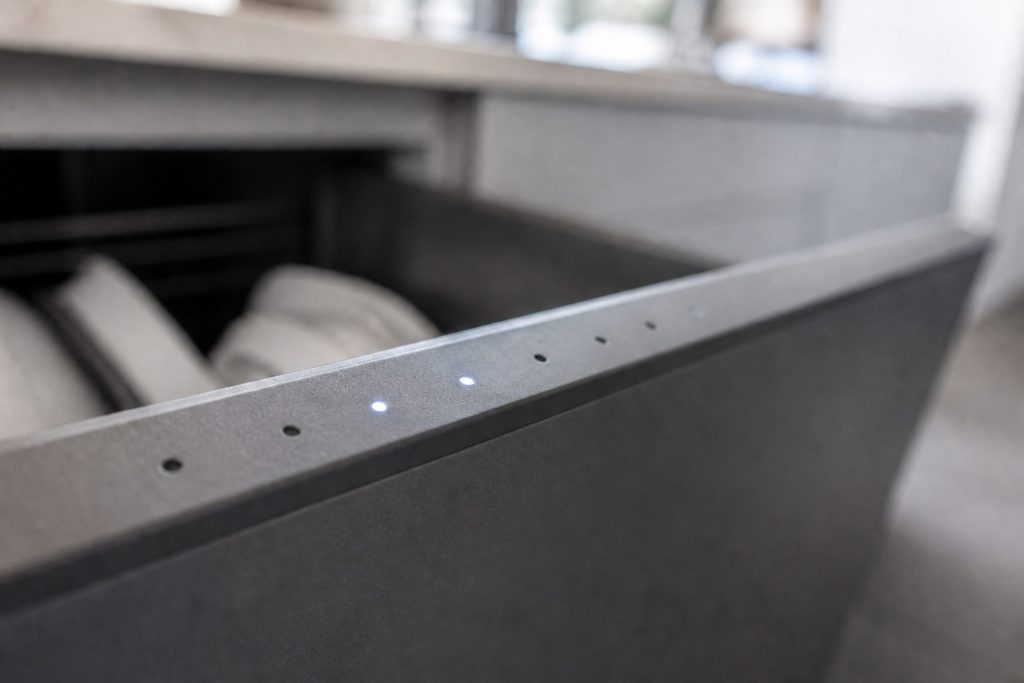
The pattern is the code DishDrawer flashing and beeping with no number
These machines have no numeric display, so they report by flashing. Which lights are flashing is the diagnosis, and it is the one piece of evidence that vanishes the moment somebody switches the machine off.
- Continuous beeping and flashing indicators
- No number anywhere on the panel
- Different patterns on the two drawers of a double
-
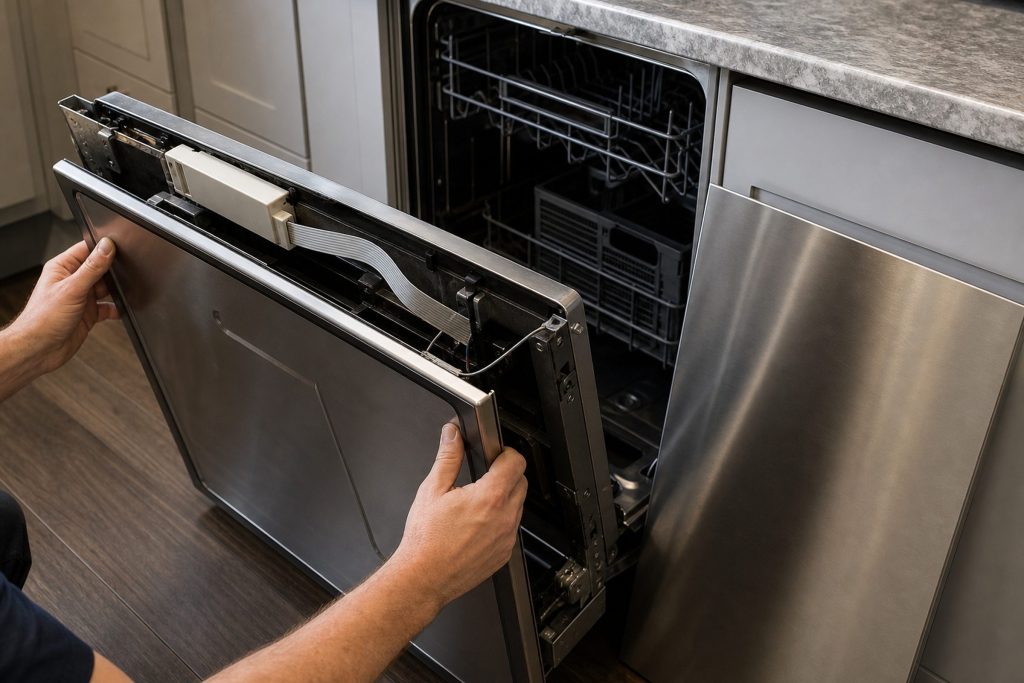
from $265 Dishwasher control & motor repair
The end of the list rather than the beginning: a wash controller, a motor controller, a rotor or a communication error between two drawers. On this maker these are the conditions that report as an F — a flashing pattern on a drawer, an F30 to F90 on a drop-door — and the maker says outright that most of them need somebody.
- F conditions read properly before a board is quoted
- Rotor and lid motor checked before either controller
- On a double, which controller — they are separate
Questions people ask about this
Why does it not just show a number?
Because a great deal of this line is integrated, and an integrated machine has a control strip rather than a screen — a display would be behind your cabinet panel. So the maker reports through the lights it already has. It works perfectly well as long as nobody clears the pattern before writing it down, which is exactly what most people do.
Both drawers are flashing different things.
Expected, and useful. They are two complete machines and they can report different conditions at once. Photograph both panels. If they started flashing at the same moment, that itself points at the communication link between the drawers rather than at either one.
I cleared it and it came straight back.
Then the condition is real rather than a glitch, and that is worth knowing. A code that returns immediately after a clear means the machine can still see whatever it was reporting. Say so when you book — it turns an uncertain symptom into a definite one and it proves the control is working correctly.
It is showing F1. Is that a board?
Usually not. F1 on a DishDrawer is flood detected or excess foaming, and the maker's own instruction is to turn the power off, leave the machine overnight, then run a cycle with no detergent — and if it clears, to use no more than a teaspoon in future. Only if water is actually visible on the floor does it become a service call.
Which lights count as modifiers?
The ones that change how a program runs rather than which program it is — the extra-dry, sanitize, delay and half-load style options along the panel. The program lights are the cycle names. If you are not sure which is which on your model, photograph the whole panel and let us read it; that is a two-second job for somebody who sees these every week.
Can I keep using the other drawer?
Almost always. A condition on one drawer does not stop the other, and on a double that is one of the real advantages. The exception is anything involving water in the base of the machine, because flood detection can hold the whole appliance off.
Common Problems
More guides like this one
-
Why Is My Oven Door Locked? A2, A3, and Two Hours of Patience
The lock is a thermometer, not a timer. It releases when the cavity is genuinely cool, and the single most expensive mistake available is pulling on the door before it does.
Read more -
Your Fisher & Paykel Refrigerator Is Beeping: Count Before You Clear It
There is no error number on the display, because on much of this line there is no display. The machine counts beeps and flashes an LED instead — and the count is the code.
Read more -
DishDrawer Will Not Drain: the Filter, the Hose and the A3 Code
The maker publishes both the code and the order to work through it, and the first two things on its list cost nothing. Most of these end before anybody is called out.
Read more
Tell us the model number and what it is doing.
This article is based on:
- Official manufacturer documentation
- Internal repair procedures
- Technician repair history
- Company quality standards