Troubleshooting
Resetting the Ice Maker, and Why It Almost Never Is the Ice Maker
Do the three free checks first, because they are the answer far more often than a reset is. The water filter and its date: a cartridge past its life restricts flow, and that alone produces slow ice, small cubes and a taste complaint all at once. The shut-off valve behind or under the machine, or beneath the sink: a valve half closed during some other work years ago gives exactly these symptoms and nothing else. And the freezer temperature, measured with a thermometer between packages rather than read off the display, because an ice maker harvests on temperature and a compartment two degrees warm stretches every cycle. If all three are clear, the reset is a power cycle at the circuit for a full minute, with the ice maker switched off and back on afterwards where the model has that control. Expect the first two batches after any change to be small or hollow — that is air in the line and it clears.
The full guide
Fisher Paykel fridge ice reset: the three checks that come first
The reset is at the bottom of this page, deliberately. Almost every ice complaint has a cause upstream of the machine that makes the ice, and going straight to the module is how people end up replacing a working part.
:::
Check one: the filter and its date
If you do not know when it was last changed, change it.
A cartridge works by pushing water through a carbon block, and as it loads up the flow drops before the taste does. That single fact explains three of the four complaints on this page at once: slow ice, small cubes, and eventually a taste.
Fisher & Paykel fits a filter indicator for exactly this reason. Six months, or when the light asks, whichever comes first.
After changing it, flush a couple of gallons through the dispenser and expect the next two batches of ice to be small, cloudy or hollow. That is air in the line, not a failure, and it clears.
:::
Check two: the shut-off valve
Under the sink, or behind or beneath the appliance where the supply line comes out of the wall.
A valve that was partly closed during some other plumbing work — years ago, by somebody who never thought about the refrigerator — produces exactly this set of symptoms and nothing else. Turn it fully open rather than assuming it is.
While you are there, look at the line itself for a kink where the machine was pushed back.
Check three: the freezer temperature
Measured, with a thermometer between packages rather than against a wall, and not read off the display.
An ice maker harvests on temperature. It fills a mold, waits for the mold to reach a set point, and then ejects. A compartment two degrees warm does not stop that — it stretches every cycle, so you get less ice and it arrives slowly, on a machine that looks entirely healthy.
If the freezer is warm, that is the actual problem and the ice is a symptom of it.
Then, the reset
- Switch the ice maker off at its control, where the model has one.
- Cut power at the circuit breaker for a full minute. Not at the appliance's control panel.
- Restore power and set the clock and temperatures if they were lost.
- Switch the ice maker back on.
- Wait a day before judging it, and throw the first two batches away.
On many machines a harvest cycle runs shortly after power comes back — a motor turning, cubes dropping. Hearing that is useful information: it proves the module has power and can move, which points the search at the water side rather than the mechanism.
What a reset can and cannot do
It can clear a control that came back confused after a storm or an outage, which happens often enough here to be worth trying every time.
It cannot make water arrive that is not arriving, cool a freezer that is not cold enough, or clear a filter that is past its life. Those are the three checks above, and they are the reason the reset is last.
The fourth complaint: taste
Not a reset subject at all, and worth separating from the others.
In order: the filter and its date; anything strong and uncovered in the cabinet, because ice absorbs odor over days; and then the bin itself, which holds a smell long after its cause has gone — empty it, wash it, dry it and start again.
If a new filter and a washed bin do not fix it, the supply line is the next candidate. A long run of tubing that has not been used for a while can flavor everything passing through it, and that is a real job rather than a cleaning one.
The honest limitation
Ice is the one repair nobody can prove inside an appointment, because a machine takes hours to fill a bin.
What can be proved on the day is the fill and the harvest — that water arrives in the right quantity and that the module ejects. After that, anybody who tells you it is definitely fixed is guessing. What you should get instead is a clear description of what to expect by evening.
If it turns out to be a repair
What this leads to, and what it costs
Every job on this site is priced the same way: an on-site diagnostic first, the figure agreed in writing before anybody starts.
-
Empty bin, or slow, or small Ice maker not making ice
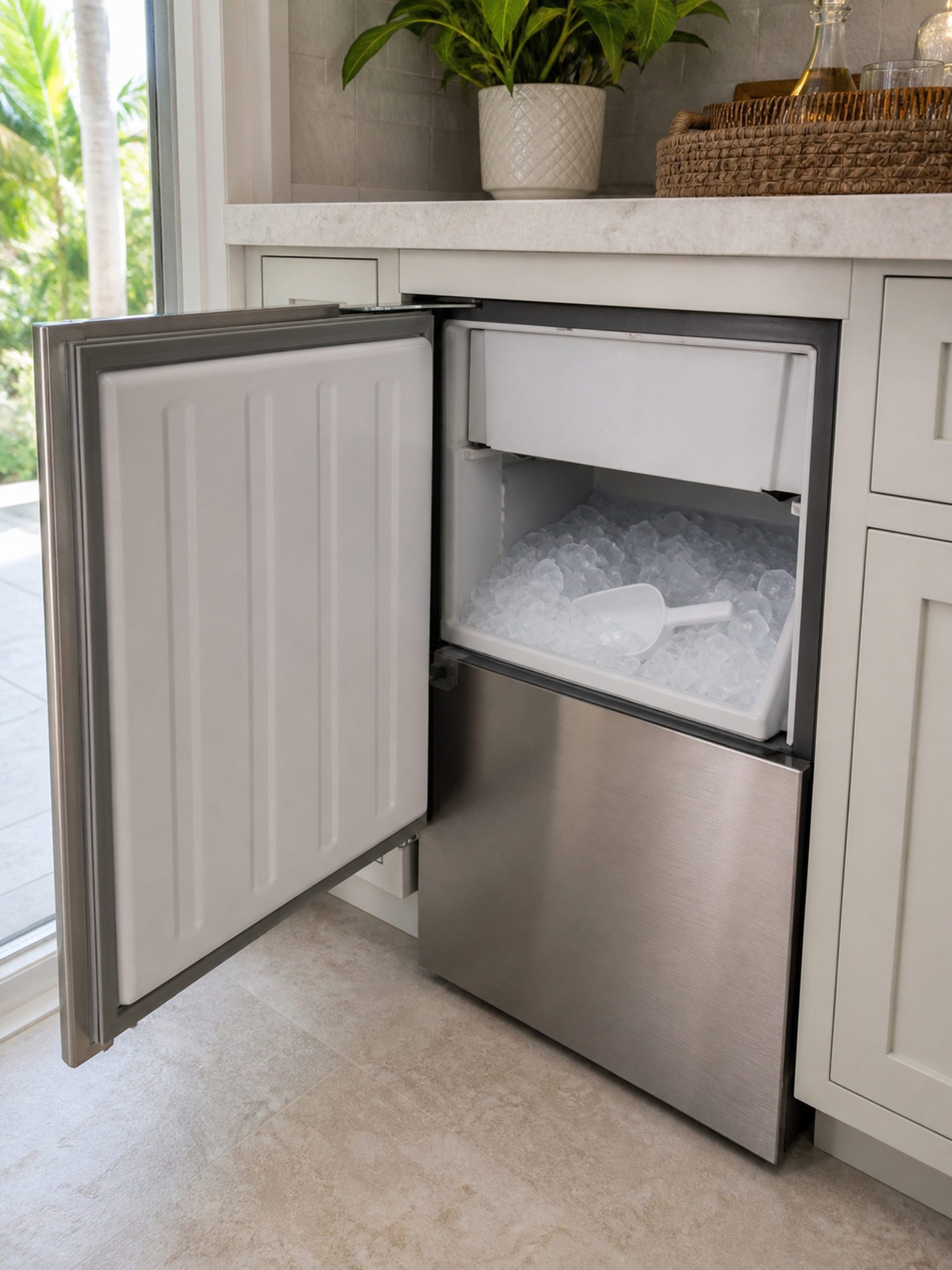
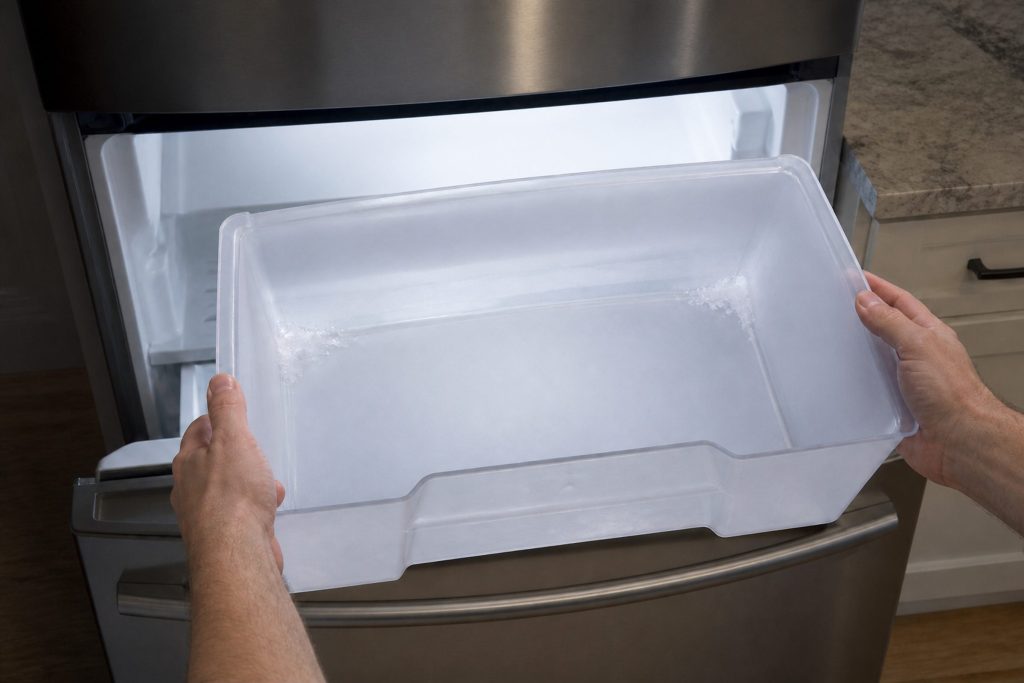
Four complaints that arrive as one: nothing at all, too slowly, cubes too small, or ice that tastes wrong. The first two things to check are the filter and the water pressure reaching the machine, not the ice maker.
- The bin is empty and stays empty
- Cubes have got smaller or hollow
- Production has slowed over weeks
-
from $165 Ice maker repair
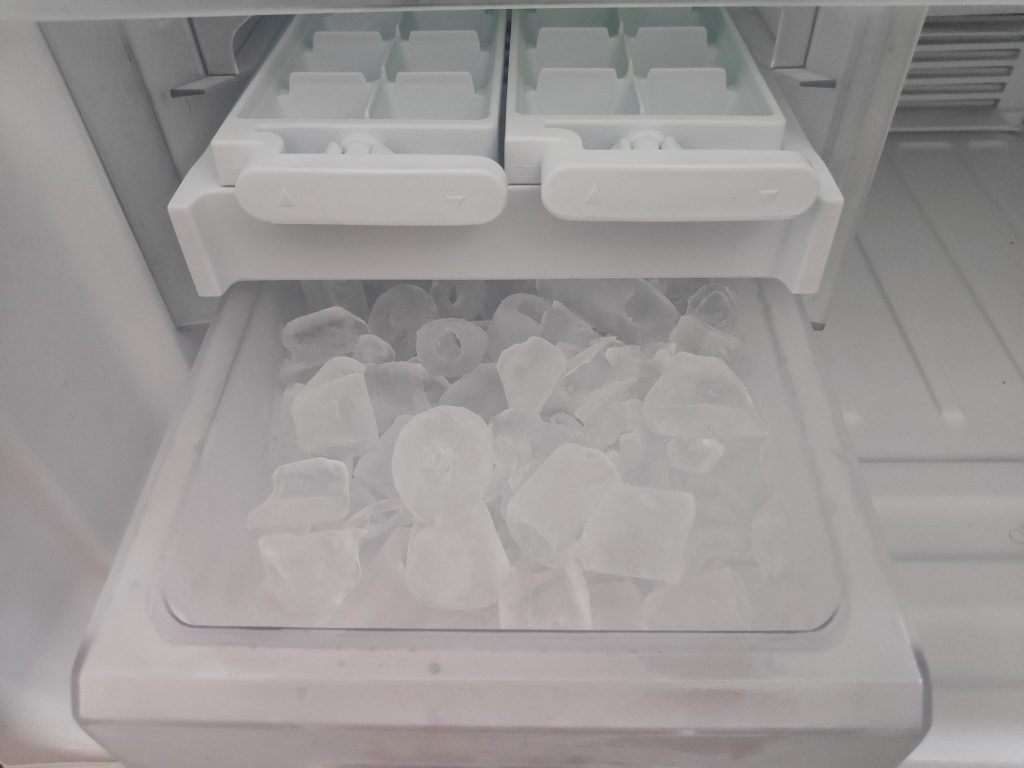
No ice, slow ice, cubes the wrong size, or ice that tastes of the refrigerator. Four complaints, four different repairs, and the first two things to check are the filter and the water pressure reaching the machine rather than the ice maker itself.
- Filter age and water pressure before the ice maker
- Fill valve and module tested separately
- Taste and odor traced to the supply, not deodorized

Questions people ask about this
The cubes have gone small. Is the ice maker failing?
Almost never. Small cubes are how much water arrived, not how it froze — a partly closed valve, a filter at the end of its life, or genuinely low house pressure. The machine freezes exactly what it got. All three cost nothing to check, and a new module fed by a restricted line makes exactly the same small ice.
How long should I wait after a reset?
Give it a full day before judging. An ice maker takes hours to fill a bin, and the first batch after any interruption is often poor because the line is full of air. Discard the first two batches, then see what the third looks like.
Where is the shut-off valve?
Usually under the sink, or behind or beneath the appliance where the supply line leaves the wall. Look for a small valve on a narrow copper or braided line. Turn it fully open rather than assuming — half-closed valves are surprisingly common, and they usually date from some other piece of plumbing work.
There is a bad taste that a new filter did not fix.
Then look at the bin and the supply line rather than the filter. Ice holds odor long after the cause is gone, so an emptied and washed bin is the next step. After that, a long run of tubing that has not been used for a while can flavor everything passing through it, and that is a real repair rather than a cleaning job.
My machine has no ice maker switch.
Some do not, and on those the equivalent is the arm or the sensor that tells the machine the bin is full — on models with a wire arm, lifting it stops production and lowering it resumes. If the arm is stuck up, or a bag of frozen peas is holding the sensor's view, the machine has been told to stop and is doing exactly that.
Should I hear anything when it resets?
On many machines a harvest cycle runs shortly after power is restored, which sounds like a motor turning and cubes dropping. Hearing it is a good sign; it proves the module has power and can move. Hearing it and getting no ice points at the water side rather than the mechanism.
Troubleshooting
More guides like this one
-

A Noisy Refrigerator: What the Sound Means Depends on When It Happens
Every noise page is a list of sounds. This one is organized by when — on opening, continuously, in bursts, or a change in the hum — because three of those four are usually normal.
Read more -
Testing a Freezer Thermistor: the Cheapest Part, Measured Rather Than Guessed
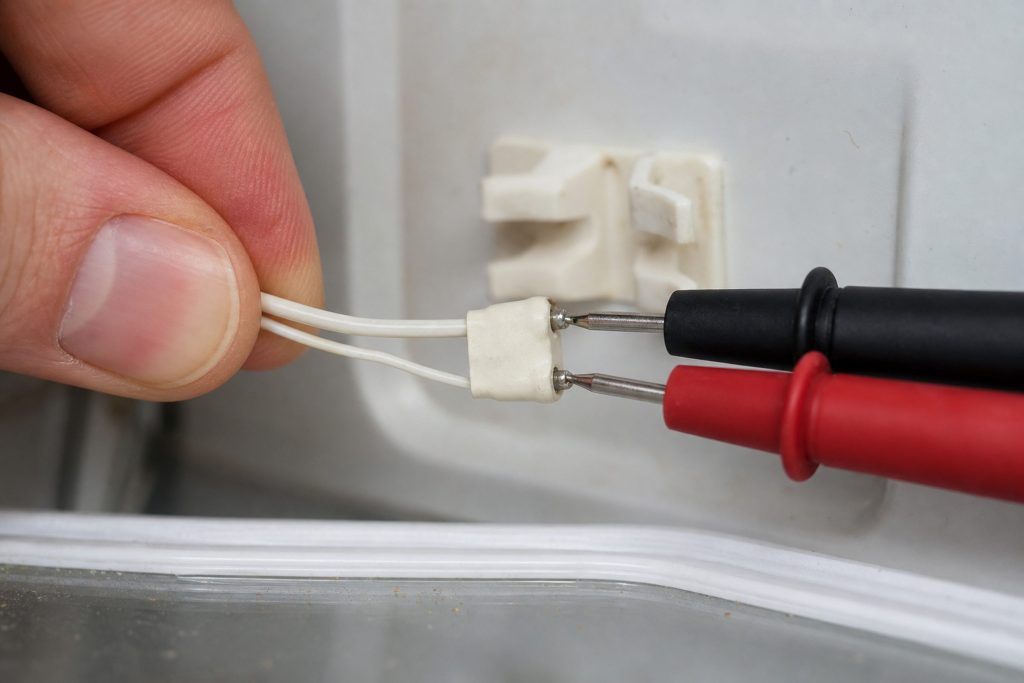
A thermistor is a resistance at a known temperature. Measuring it takes minutes and it is what separates a cheap part from a sealed-system conversation.
Read more -
Resetting a Fisher & Paykel Dryer, and the Three Things to Check First
A dryer that will not start is a door switch, a thermal cut-out or an airflow problem far more often than it is something a reset fixes. So the reset comes third here, not first.
Read more
Tell us the model number and what it is doing.
This article is based on:
- Official manufacturer documentation
- Internal repair procedures
- Technician repair history
- Company quality standards