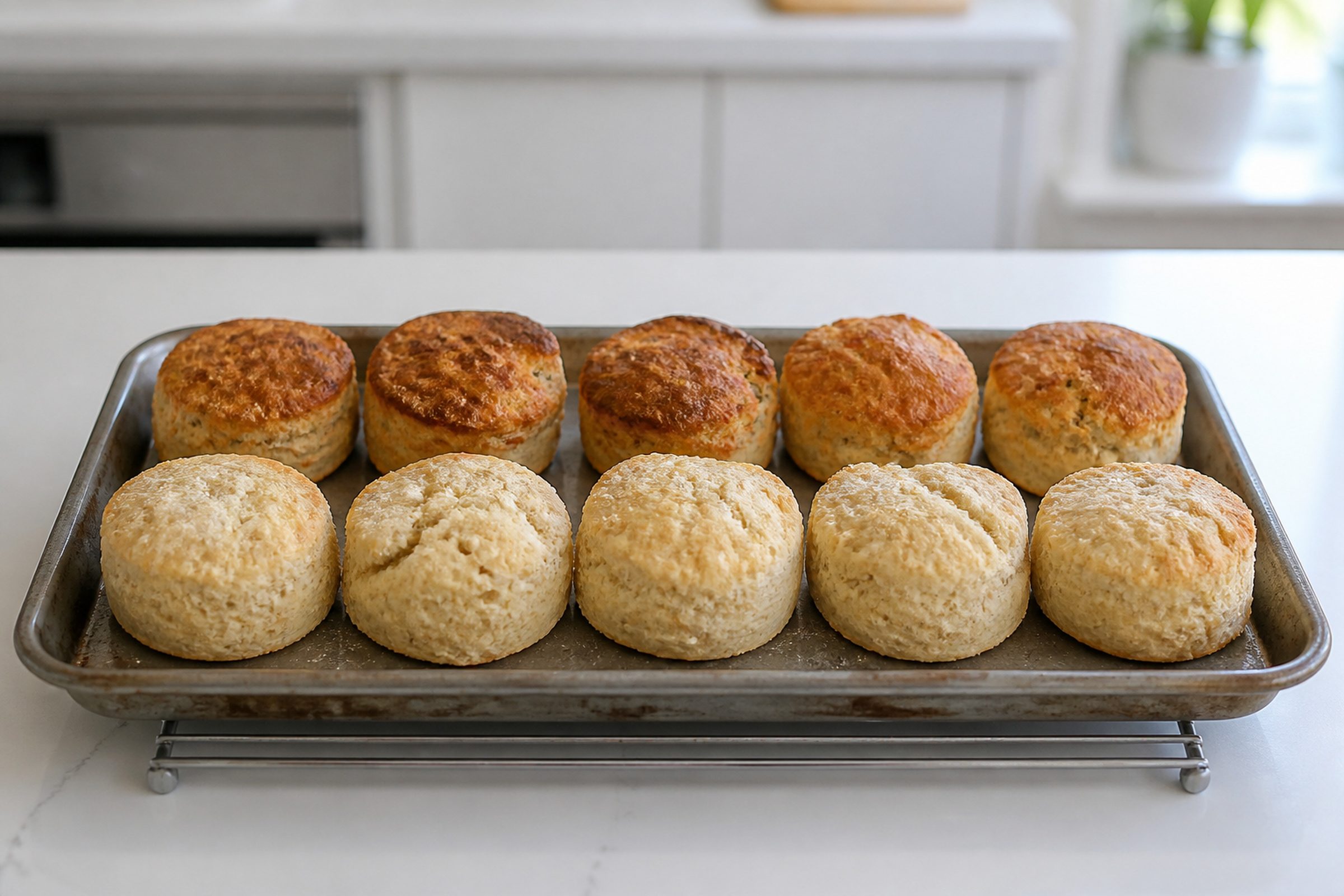
- “One side or one shelf browns faster”
- “Everything takes longer than the recipe says”
- “It crept up rather than failing suddenly”
Symptom
Fisher & Paykel oven baking unevenly
Cakes rising crooked, one tray browning while another stays pale, or an oven that is simply not what it was. Sensor and convection fan long before elements — and some of this is not a repair at all.
- From $95 diagnostic, credited to the repair
- 59 cities and neighborhoods covered
- OEM parts available on order
- In writing the price, before anything is opened
Five ordinary causes
What this usually turns out to be
Cheapest and commonest first, which is also the order we check them in. They sit hundreds of dollars apart, and only the unit settles which one is yours.
-
The temperature sensor
Drifted rather than failed. An oven that reads a few percent low browns badly for a year before it ever fails to heat.
Oven heating & sensor repair from $185 -
The convection fan
Slowed, or an element behind it not heating. Convection is what makes an oven even, and losing it looks exactly like this.
Oven heating & sensor repair from $185 -
The door seal
A seal that lets heat out at one point makes that part of the cavity cooler, permanently and in the same place.
Oven door & self-clean lock repair from $165 -
One element of several
A machine with bake, broil and convection elements can lose one and still get hot. It just gets hot unevenly.
Oven heating & sensor repair from $185 -
Loading and rack position
Heavy dark pans, two trays crowding each other, or foil on a shelf. Not a repair, and worth ruling out before spending anything.
Appliance maintenance visit from $135
In five minutes
Before you call anybody
None of it needs tools, and all of it makes the visit shorter.
-
01
Bake something uniform
One shelf, one tray, nothing else in the oven. The browning pattern is the diagnosis.
-
02
Use an oven thermometer
A cheap one, in the middle. If the oven reads 25 degrees below its setting, that is the answer and it is a small part.
-
03
Listen for the convection fan
On a convection setting it should be audible and steady.
-
04
Paper-test the door
Around the whole frame. A cool corner in the cavity often has a gap in front of it.
-
05
Then book the visit
Bring the browning pattern and the thermometer reading. They shorten the appointment considerably.
How it shows up
What people describe when they call
In more detail
About Fisher & Paykel oven baking unevenly
The fastest diagnosis is the code
Bake a tray of something uniform — plain scones or slices of bread — on one shelf and look at the pattern. Front-to-back unevenness points at the door seal and the airflow; side-to-side points at an element or the convection fan; and everything uniformly pale or dark points at calibration and the sensor. That one test tells us more than any description.
The pattern is the diagnosis
Front to back: airflow and the door seal. Side to side: an element or the convection fan. Uniformly pale or dark: calibration, which means the temperature sensor. One tray of something uniform tells you which, and it costs the price of a bag of flour.
Why the sensor comes first
Because it drifts before it fails. An oven reading a few percent low still heats, still looks healthy, still passes every casual test, and browns badly for a year. It is also the cheapest part on the page, which is a good combination for you.
What is not a repair
Two crowded trays, a heavy dark pan, foil laid on a shelf, or a rack in the wrong position. We would rather tell you that than sell you an element, and the uniform-tray test is what distinguishes them.
This article is based on:
- Official manufacturer documentation
- Internal repair procedures
- Technician repair history
- Company quality standards
Before you book
Questions about Fisher & Paykel oven baking unevenly
Could it just be my recipes?
It can be, and we would rather you tested that first. Ovens do not all behave identically, and a new pan, a change of shelf or a heavier tray shifts results without anything failing. The uniform-tray test settles it: a genuine unevenness shows the same pattern every time, in the same place.
Everything just takes longer now.
That is calibration rather than unevenness, and it is usually the temperature sensor drifting. It is the cheapest part on the oven pages and the commonest cause of "it is not what it used to be". An oven thermometer for a few dollars will confirm it before you call.
It is worse on convection than conventional.
Then look at the convection side specifically: the fan, and the element that sits behind it on machines that have one. An oven whose conventional bake is fine and whose convection is not has told you exactly where to look.
Where we do it
Across Miami-Dade, Broward, and Palm Beach
Same terms everywhere we go: an on-site diagnostic first, the price agreed in writing, and the exact figure confirmed once we have seen the unit.
Neighborhoods people ask for by name