Troubleshooting
How to Reset a Fisher & Paykel Oven, and What a Failed Reset Tells You
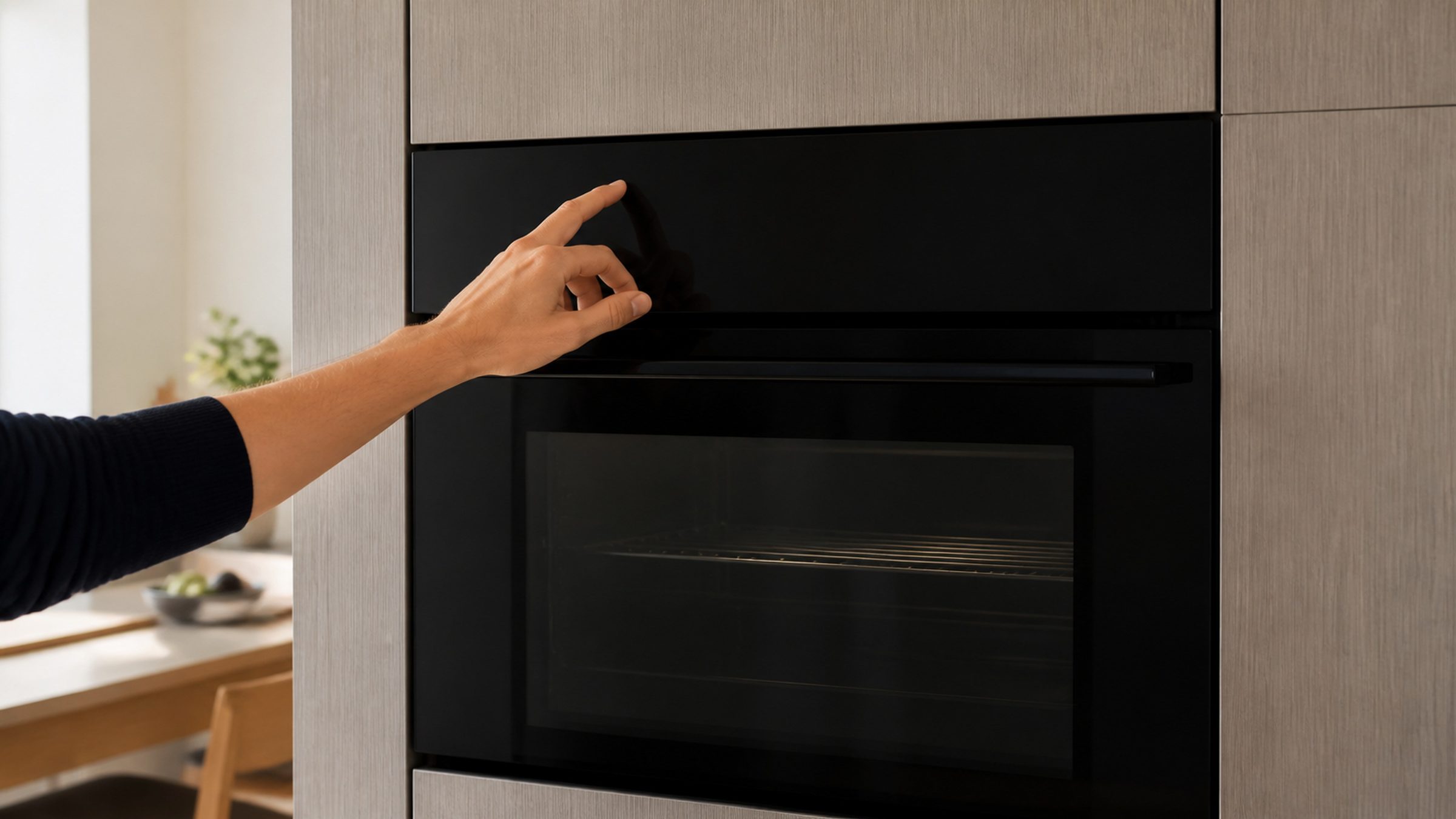
Write the code down first, exactly as shown and with its letters, because every reset erases it and nothing keeps a record afterwards. Then cut the power at the circuit breaker rather than at the oven's own control panel — the control panel stops the oven working and leaves the board powered. Wait a full minute for most conditions, and five full minutes for the lettered ones like FPOT, FDOR, FAdc and FrEL, because the maker is specific about that. Restore power and set the clock: a control that does not know the time will not act on some instructions, which is why an oven showing 12:00 after a power cut can refuse to release a door lock until the clock is set. Then watch what happens. A code that stays away was a control that had locked up rather than failed. A code that returns immediately means the oven can still see whatever it was reporting, and that is a diagnosis rather than a failed reset.
The full guide
How to reset Fisher Paykel oven: the order that matters
:::
1. Write the code down before you do anything.
Exactly as shown, letters included. FDOR is not F, and A3 is not A. Every reset erases the display and nothing on the appliance keeps a record of what it was showing. If it comes back, you want to be able to say whether it is the same one.
Photograph it. It takes two seconds and it survives the phone call.
2. Cut the power at the circuit, not at the oven.
The oven's own control panel switches the appliance off and leaves the board powered — which is why "I turned it off and on and nothing changed" is such a common sentence. The reset that does something is at the breaker or the isolating switch.
3. Wait properly.
- A full minute for the ordinary codes. Sixty seconds, not a flick.
- Five full minutes for the lettered ones — FPOT, FDOR, FAdc, FrEL. The maker is specific about that, and a control that is half reset behaves exactly like a failed one.
4. Restore power and set the clock.
This is the step people skip and it is not decorative. A control that does not know the time will not act on some timed instructions, and a self-clean latch is one of them. Fisher & Paykel publishes an article on an oven showing 12:00 with a locked door after a power cut, and setting the clock is often the entire repair.
5. Then watch.
What the outcome tells you
:::
The code stays away. The control had locked up rather than failed — very common after a storm, an outage or a surge, and this is the cheapest repair in the trade.
The code comes back immediately. The oven can still see whatever it was reporting. That is not a failed reset; it is a diagnosis. It also proves the control is working correctly, which narrows the search considerably.
The code comes back days later. An intermittent condition, and the hardest kind to catch. Note when it happens and what the oven was doing — mid-bake, during preheat, on a clean cycle — because the pattern is most of the answer.
What the code will and will not tell you on this make
Fisher & Paykel publishes three alert codes with meanings — A1 for an overheated cavity, A2 and A3 for the two ends of the self-clean door lock — plus A5 on machines with a microwave system inside them.
Everything else is an F number, and the maker groups around sixty of them into four families: electronic control, model identification, door lock, and sensor or system. It prints one instruction for all of them and no meaning for the individual number.
We publish exactly that. It is less than a full table and it is more than a guess: it tells a technician which half of the machine to begin in, and it stops a control board being quoted against a sensor condition.
The four lettered codes are the exception and they do have meanings: FPOT is temperature sensing, FDOR is door closure detection, and FAdc and FrEL are internal electronics. FDOR in particular has a genuine owner action attached — after the five-minute reset, check that the door closes firmly, that nothing is obstructing it, and that the seals are clean.
Before you assume the worst
Four things that produce a dead-looking oven and are not the control:
- One leg of a two-pole breaker. An electric oven getting half its supply can show nothing or behave very strangely, and the breaker can look normal. Push it fully off and back on.
- The control lock, set by a cloth wiped across a panel or by a child.
- A demonstration or Sabbath setting, easier to enable than to notice.
- A clock that was never set after the last outage.
When a reset stops being the answer
If the same code returns after a proper reset with the clock set, the machine is reporting something real, and the visit starts a long way ahead of the beginning because you have the code.
Do not keep resetting it repeatedly to see whether it holds. All that achieves is erasing the evidence and, on an oven that has flagged a genuine overheat, cycling a machine that has already told you it was too hot.
If it turns out to be a repair
What this leads to, and what it costs
Every job on this site is priced the same way: an on-site diagnostic first, the figure agreed in writing before anybody starts.
-
Live panel, cold cavity Oven display is on but it does not heat
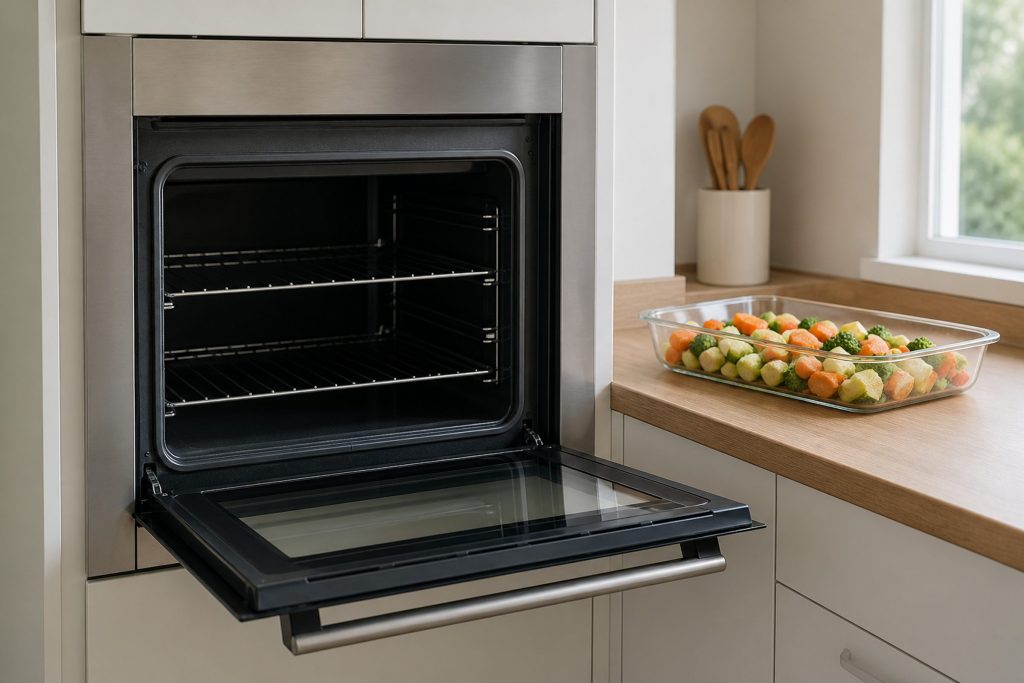
One of the maker's most-linked oven articles, and a real spread of causes: an element, the temperature sensor, the relay that switches the element, or a thermal cut-out that did its job after a self-clean and has not reset.
- The controls work and nothing gets hot
- It worked until the last clean cycle
- One cavity of a double works and the other does not
-
from $215 Oven control & display repair
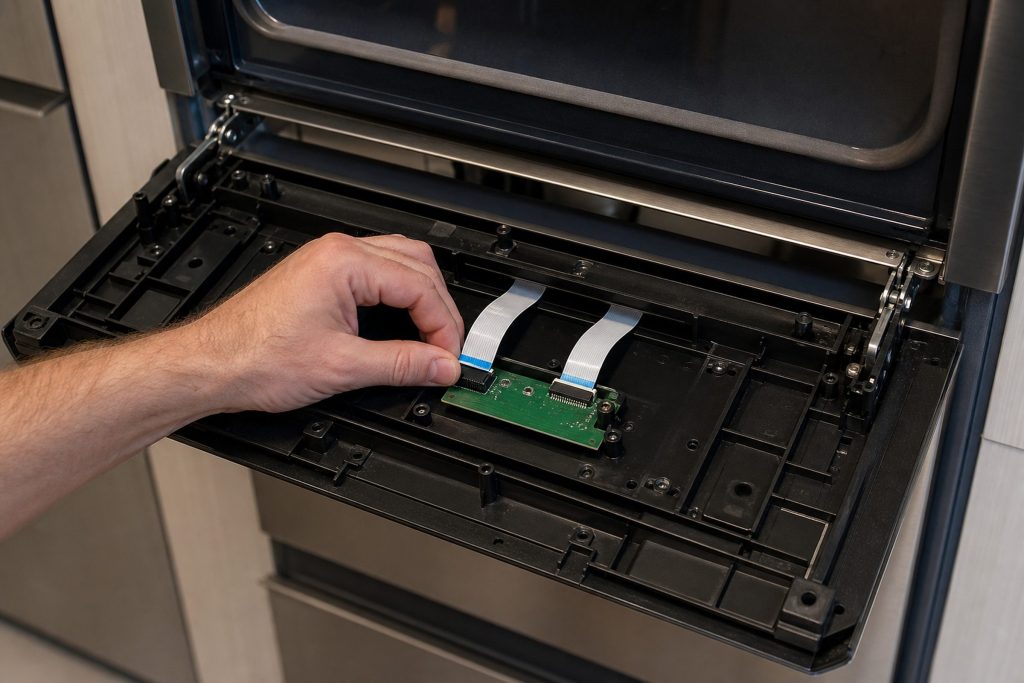
A display that will not light, controls that do not respond, a clock that will not hold, or an F number the maker prints without an explanation. This is where the oven F codes live, and this page says exactly what is knowable about them and no more.
- F numbers placed in the family the maker publishes, and no further
- Power-event recovery tried before a board is quoted
- Display, control and touch panel as separate parts
Questions people ask about this
Why does the clock matter?
Because a control that has lost the time will not carry out some timed instructions, and a self-clean latch is one of them. The maker publishes an article about an oven showing 12:00 with a locked door after a power cut, and setting the clock is very often the whole fix. It sounds too small to be the answer and it frequently is.
Is there a reset button?
Not a dedicated one on these. What people call the reset is a power cycle at the circuit, and on some models a cancel or clear key that stops a running program. Those are different things: canceling stops a cycle, cutting power restarts the control.
The code came straight back. Did I do it wrong?
No — you got an answer. A reset clears a control that came back confused; it does not clear a condition the oven can still see. A code that returns immediately means the machine is reporting something real, and that is worth more than a clean display. Tell us it came back, because it turns an uncertain symptom into a definite one.
Should I wait longer than a minute?
For the ordinary F numbers a full minute is enough and a quick flick is not. For the lettered codes the maker asks for five, and there is no harm in giving any of them five. What matters more than the length is that the power is genuinely off at the circuit rather than at the appliance's own controls.
Will a reset clear a self-clean lock?
Sometimes, and only once the cavity is genuinely cool — the lock releases on temperature rather than on a signal. The maker's own instruction for a door that will not unlock is to power off at the wall and back on, then touch the oven door to help the lock disengage. Doing it while the oven is still hot achieves nothing.
Can I reset an induction cooktop the same way?
Yes, and the maker prints the same instruction for its induction codes: power off at the supply, wait a minute, restart, and book a repair if it returns. A plain E or Er with nothing after it means the electronics overheated, and that one usually comes back until the airflow under the cooktop is dealt with.
Troubleshooting
More guides like this one
-
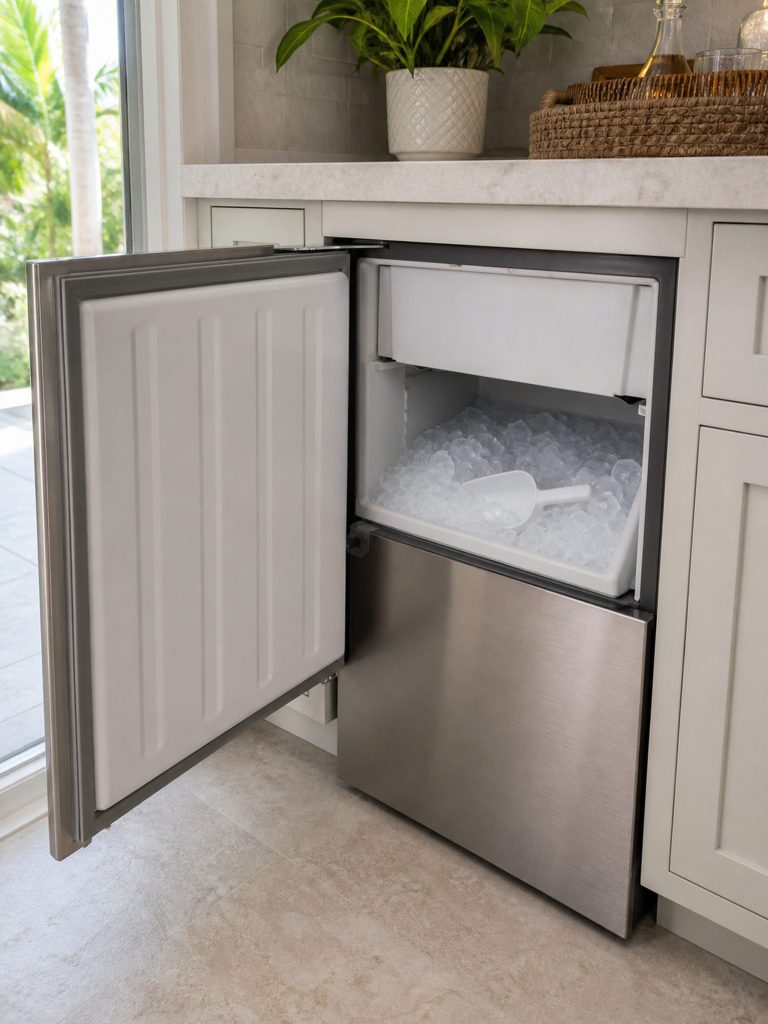
Resetting the Ice Maker, and Why It Almost Never Is the Ice Maker
Four complaints arrive as one — no ice, slow ice, small cubes, bad taste — and three of them start at the filter and the water pressure rather than at the machine that makes the ice.
Read more -
A Noisy Refrigerator: What the Sound Means Depends on When It Happens
Every noise page is a list of sounds. This one is organized by when — on opening, continuously, in bursts, or a change in the hum — because three of those four are usually normal.
Read more -
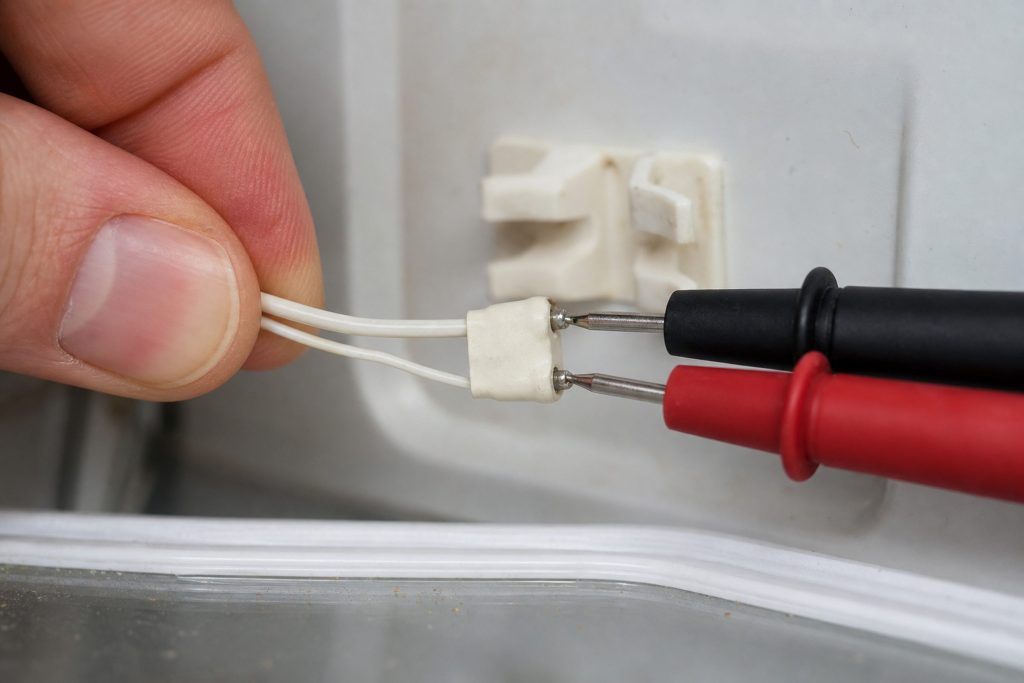
Testing a Freezer Thermistor: the Cheapest Part, Measured Rather Than Guessed
A thermistor is a resistance at a known temperature. Measuring it takes minutes and it is what separates a cheap part from a sealed-system conversation.
Read more
Tell us the model number and what it is doing.
This article is based on:
- Official manufacturer documentation
- Internal repair procedures
- Technician repair history
- Company quality standards