Safety & Risks
Gas Smell From the Oven: What Is Normal, What Is Not, and What to Do First
One question separates them. If the smell is brief, arrives as a burner lights or in the first minute of an oven warming up, and clears, that is combustion — unburnt gas at ignition and the smell of dust and manufacturing residue burning off — and it is normal. If you can smell gas with the appliance switched off, or the smell is persistent while it runs, treat it as a leak: do not switch anything on or off, do not use a light switch or a phone in the room, open a door on your way out, leave the house, and call your gas utility or the fire department from outside. That is the whole of the emergency advice and it is deliberately short. Everything else — a burner that smells whenever it is on low, a smell that started after a cooktop was cleaned, a new appliance that smells for its first few uses — belongs to the second half of this page and to a service call rather than an evacuation.
The full guide
Gas smell from oven: answer this before reading anything else
Is the appliance switched off?
If you can smell gas with the range or cooktop off, treat it as a leak. Right now:
- Do not touch any switch — not a light, not an extractor, not the appliance.
- Do not use a phone indoors.
- Open a door on your way past it.
- Leave the house.
- Call your gas utility or the fire department from outside.
That is the whole of the emergency advice. It is short on purpose, and it is the same advice whether or not you own this brand.
Everything below is for the other situation.
The smell that is combustion, and is normal
A brief smell of gas as a burner lights is unburnt gas from the fraction of a second before ignition. It clears immediately. Every gas appliance does it.
A sharper smell in the first minute of an oven warming up, especially in a new or recently cleaned oven, is not gas at all. It is dust, spilled food, manufacturing residue or coating binders burning off the cavity. It is unpleasant and it goes.
Two rules of thumb that hold well:
- brief and tied to ignition — combustion;
- present with the appliance off — a leak.
The smells that are worth a service call
Between the emergency and the normal sits a real category, and this is where most of these calls actually live.
A burner that smells whenever it is on low. Almost always combustion at that setting rather than a leak. The low flame lives on a small number of ports, and blocking a few of them — a boil-over dried into the crown, a cap put back a fraction proud after cleaning — makes the flame burn badly while the high setting stays perfect.
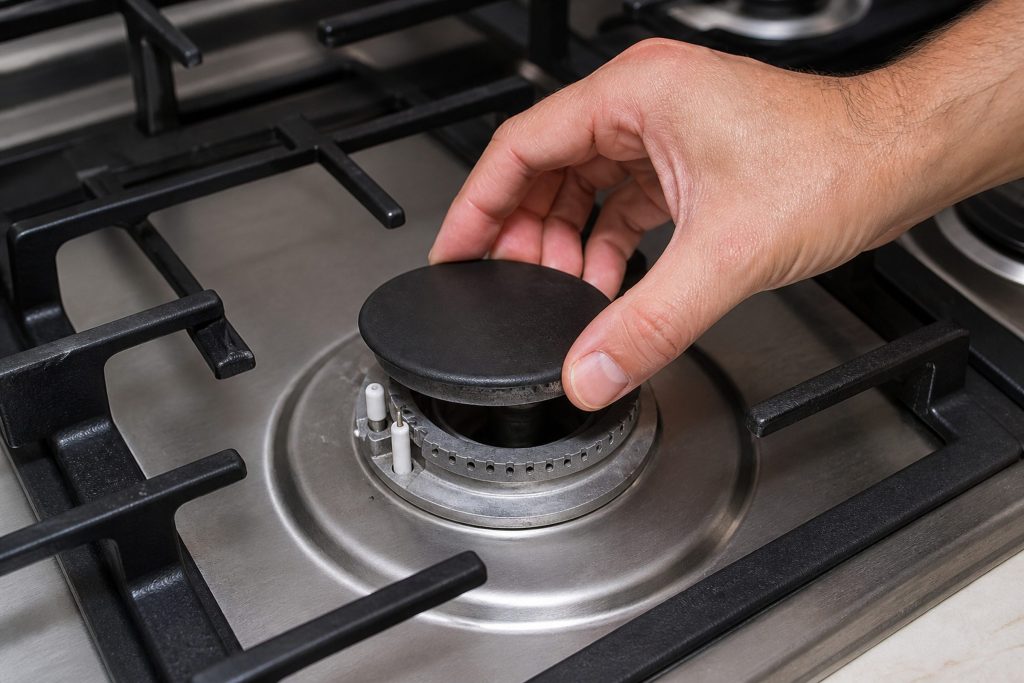
A smell that started right after somebody cleaned the cooktop. Caps come off to be washed and go back rotated or slightly out of seat, which spreads the gas away from where it should burn. Free to check: let the burner cool, lift the cap, and let it drop back into place rather than pressing it down.
A machine converted between natural gas and LPG. A conversion changes the injectors and the low-flame adjustment. If the appliance has ever been moved between fuels and has never burned cleanly since, that is the first thing to look at.
:::
Yellow flames. Fisher & Paykel publishes an article on this because it is asked so often. A little yellow at the extreme tip can be normal. A flame that is yellow through its body, lazy, or leaving soot on pans is a combustion problem — air, gas type or blocked ports — and it belongs with the smell rather than beside it.
What we would look at
- Caps, crowns and ports, cold, on every burner rather than the one you mentioned.
- The flame pattern at high and at low, because everything marginal shows up at simmer.
- The connections at the appliance, with a proper leak test rather than a sniff.
- The regulator and the injectors if there has ever been a fuel conversion.
- The ignition and flame-sensing side, since a burner that re-sparks after lighting and one that smells at low often turn out to be the same underlying problem.
The one thing worth saying twice
A gas smell that is present when the appliance is off is not a repair question. It is a leave-the-house question, and it costs you nothing to be wrong about it. We would far rather be called out afterwards to a range that turned out to be fine than be called out instead of the utility.
If it turns out to be a repair
What this leads to, and what it costs
Every job on this site is priced the same way: an on-site diagnostic first, the figure agreed in writing before anybody starts.
-
from $155 Range burner & ignition repair
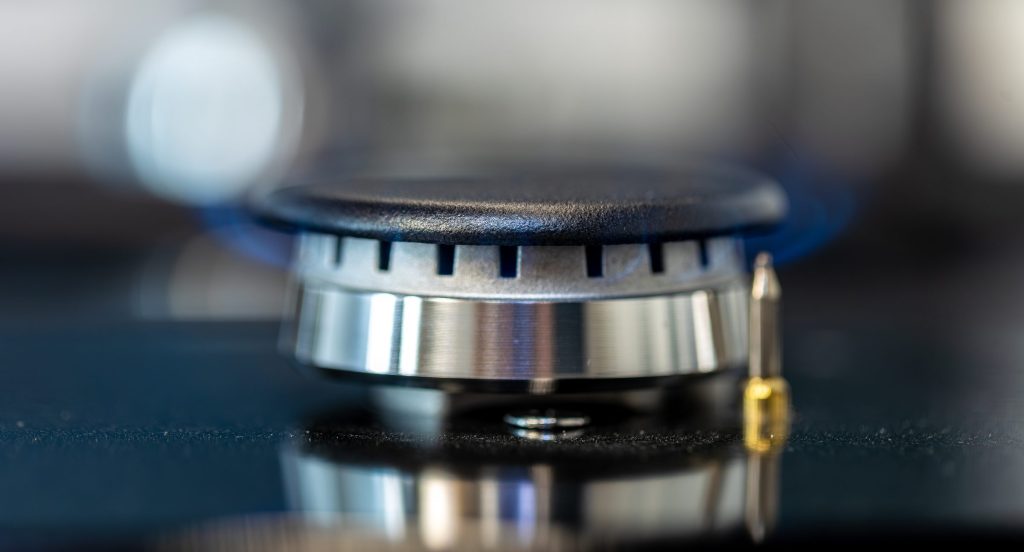
A burner that clicks and will not light, lights and drops out, or holds on high and dies at simmer. Three complaints, three different answers — and on this maker the low-setting one is the article its own owners link most, which tells you where these machines actually fail.
- Spark, gas and flame sensing told apart before anything is ordered
- Caps and ports checked first — the commonest cause by a distance
- Thermocouples tested at a low flame, where they actually fail
-
Sparking, no flame Burner clicks and will not light
A burner that sparks and never catches. The good news is in the symptom itself: if it is sparking, the ignition side is alive, and the problem is gas reaching the burner or the burner itself — which is very often something you can put right in five minutes.
- It clicks steadily and nothing lights
- It started right after the cooktop was cleaned
- One burner only, or all of them
-
Professional gas · Dual fuel · Induction · Classic · 4 · 5 · 6 · 8 burner · Griddle · 30" · 36" · 48" Ranges
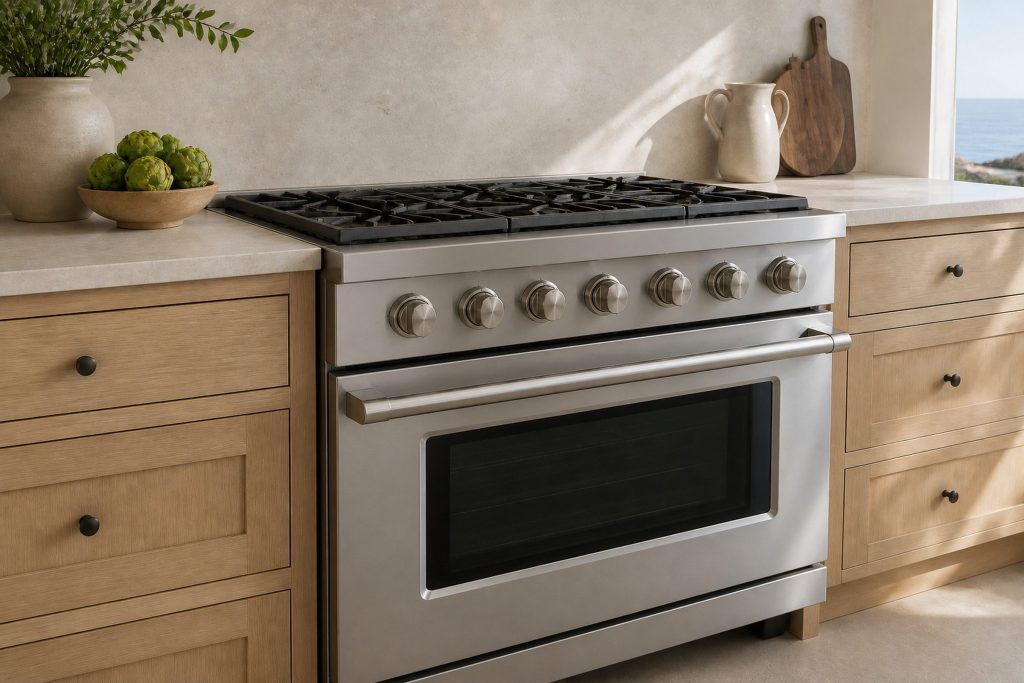
Forty-one freestanding ranges, and the split tells you what this maker is: sixteen dual fuel, fifteen gas, seven induction and one electric. Twenty-seven of them are Professional — heavy grates, dual-flow burners, four to eight of them, and on the larger machines a griddle let into the top. On a 48-inch range, "the oven is not heating" means one of two ovens, and which one narrows the part before anybody drives anywhere.
- A burner that will not light, or lights and drops out at low setting
- The oven running hot or cold while looking perfectly healthy
- An induction zone that cuts out under load while the others carry on

Questions people ask about this
My brand-new oven smells for the first few uses.
That is normal and it is not gas. A new oven burns off manufacturing residue, protective coatings and insulation binders for the first several heat cycles, and the smell is sharp and unpleasant. Run it empty at a high temperature for an hour with the kitchen ventilated before you cook in it, and it goes.
I smell gas only when a burner is on low.
That is worth a service call rather than an evacuation, and it usually means the flame is not burning cleanly at that setting: ports blocked around the low-flame side, a cap sitting a fraction out of place, or a low-flame adjustment set below where the flame is stable. On a machine converted between natural gas and LPG, the last of those is the first thing to look at.
How do I check for a leak myself?
The soap test — a little dish soap and water brushed onto a connection, watching for bubbles — is a real method and it is for a fitting you can see and reach, with the appliance off. It is not for hunting a smell of unknown origin. If you can smell gas in a room and you do not know where from, that is not a job to start; it is a job to leave and call about.
The flames are yellow. Is that related?
It can be. Yellow, lazy or sooting flames are a combustion problem — air, gas type, or a blocked port — and combustion problems and smells travel together. A little yellow at the very tip can be normal; a flame that is yellow through its body is not, and the maker publishes an article on it for that reason.
Should I turn the gas off at the appliance?
If you are already outside and safe, leave it to the utility. If the smell is faint and you are certain of the source and it is safe to reach — a valve behind the range you can turn without leaning over anything — closing it is reasonable. What is not worth doing is going back into a room that smells of gas to be tidy.
Can a smell come from the oven when nothing is wrong with the gas?
Yes, and it is common. Spilled food burning on the cavity floor, a self-clean cycle, or a plastic item left in the oven all produce strong smells that people report as gas. So does a new oven. The distinguishing feature of a real gas smell is that it is present with the appliance off.
Safety & Risks
More guides like this one
-
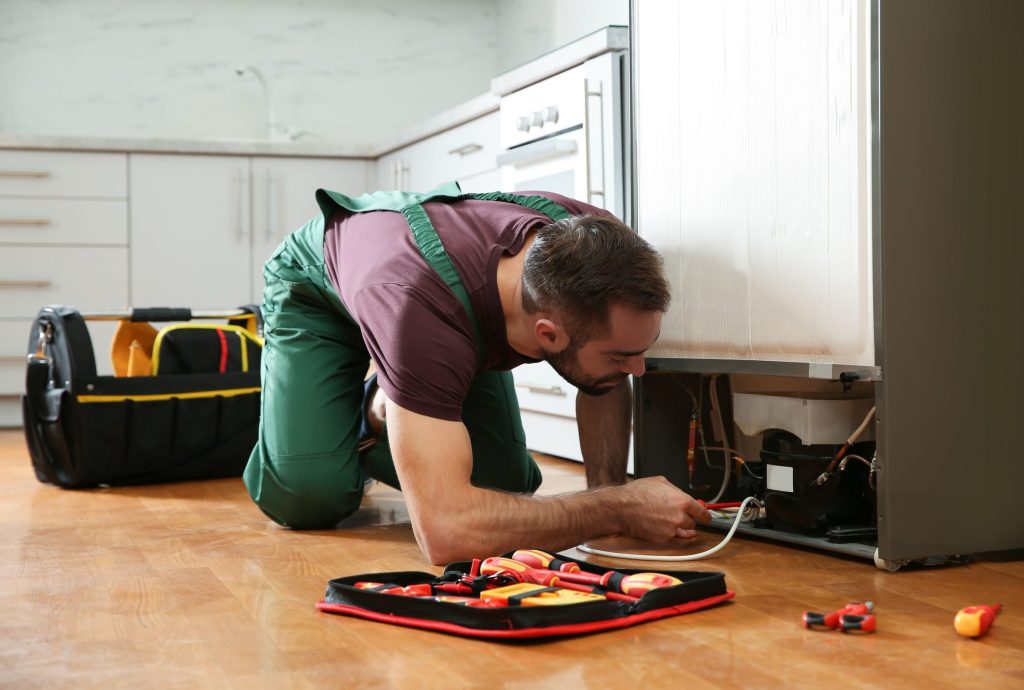
Refrigerant Leak in a Refrigerator: the Signs, the Real Risk, and the Right Response
A sealed system is sealed. If it is short of refrigerant it leaked, and topping it up sends the same amount out of the same hole. Here is what a leak actually looks like from the kitchen.
Read more -
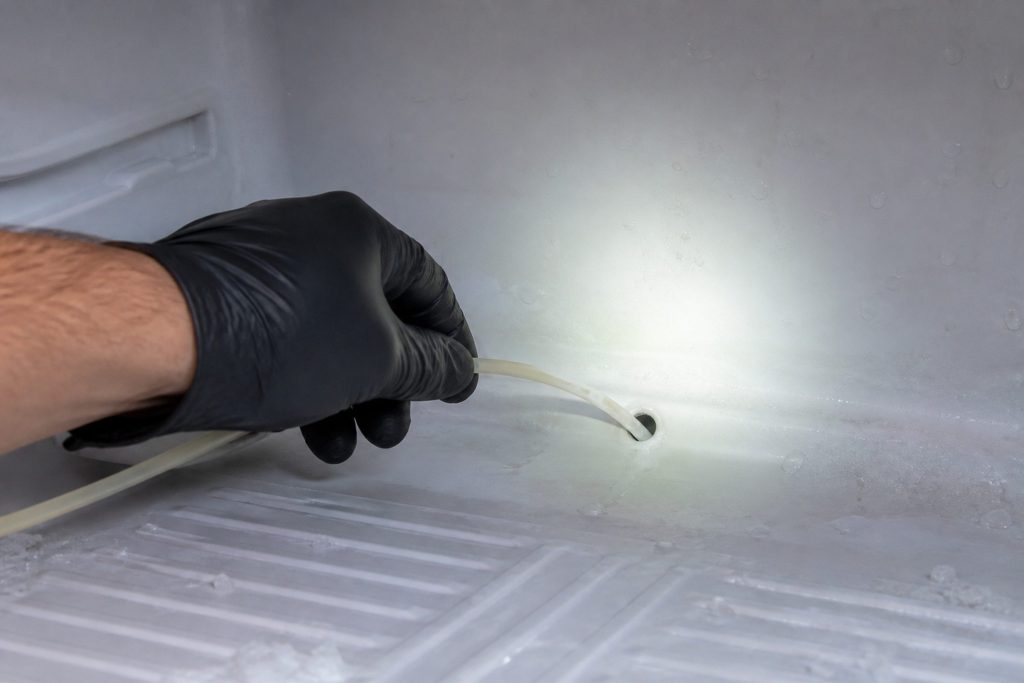
Mold in the Refrigerator Drip Pan: Where It Grows and How to Clear It
Everybody cleans the shelves. Almost nobody cleans the pan under the machine or the drain line into it — which in eight humid months a year is where the smell actually comes from.
Read more -
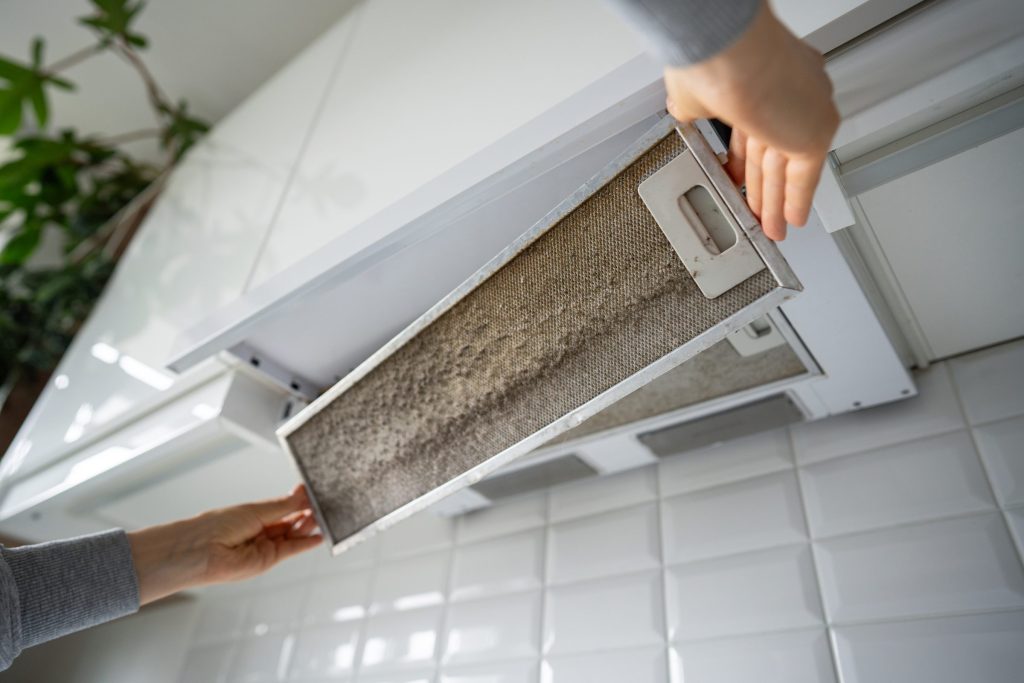
Grease Fire on a Cooktop: the Thirty Seconds That Decide It
Lid on, heat off, do not move the pan, never water. Everything else is written for somebody with time to read, and in this situation nobody has any.
Read more
Tell us the model number and what it is doing.
This article is based on:
- Official manufacturer documentation
- Internal repair procedures
- Technician repair history
- Company quality standards