Maintenance & Prevention
Dryer Maintenance for a Machine the Maker No Longer Sells Here
Maintenance on any dryer is airflow, sensing and mechanics. What changes here is the arithmetic behind it. Fisher & Paykel's own US support site publishes a laundry category with no machines in it, while it continues to sell laundry spare parts and stacking kits — machines in service, no machines for sale. So the common wear items are generally available and model-specific electronics are the risk, which means every hour of maintenance that keeps a control board alive is worth more than it would be on a machine you could replace with the same thing next week. In practice that is four habits: the lint filter every load, the filter housing every few months, the whole duct run on a vented machine or the second filter and heat exchanger on a ductless one, and the moisture sensor bars wiped clean. All four protect the parts that are hardest to source, and all four are free.
The full guide
Fisher & Paykel dryer maintenance: the fact that changes the arithmetic
Almost every maintenance article is written on an unstated assumption — that if the machine finally gives up, you buy another one.
On this appliance that assumption does not hold, and it is worth saying plainly.
Fisher & Paykel no longer lists a dryer for the United States. Its own support site publishes a laundry category with four sections — washing machines, dryers, cabinets and combination machines — and every one of them returns an empty list, while cooking, cooling and dishwashing return hundreds of models between them. The US product menu carries Cooking, Ventilation, Cooling, Dishwashing and Parts & Accessories. No fabric care.
At the same time, the maker still sells laundry spare parts and stacking kits.
Machines in service, no machines for sale. That is the situation, and it means maintenance on this appliance buys you something it does not buy on a machine you could replace next week.
What is available, and what is the risk
On any discontinued line the pattern is the same, and it is worth knowing which side of it you are on.
Generally available — the mechanical and thermal parts, because they are shared across families and simple to make: heating elements, thermostats, thermal cut-outs, belts, rollers, drum bearings, door catches and switches, filters.
The risk — model-specific electronics. Control boards, display assemblies, and anything with a part number that belongs to one machine and nothing else.
So the maintenance worth doing is the maintenance that protects the electronics and the motor, and that turns out to be the same four habits that would be worth doing anyway.
The four habits
One: the lint filter, every load. Not negotiable and not new. If the mesh has a waxy film from dryer sheets, wash it in warm soapy water occasionally and let it dry fully.
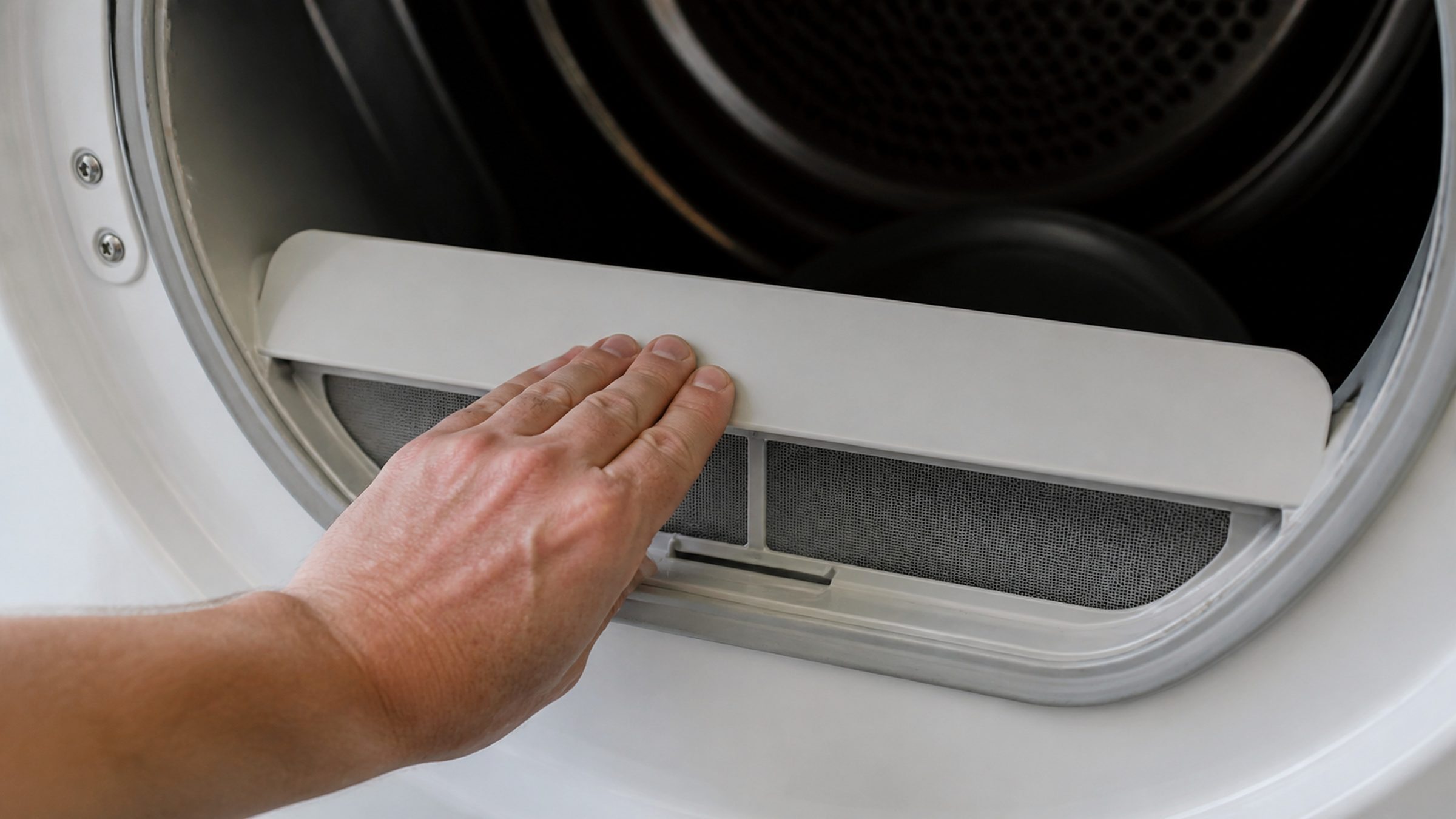
Two: the filter housing, every few months. The slot the filter sits in collects what gets past it, and nobody cleans it. A vacuum crevice tool pushed down into it removes a startling amount from a machine whose filter has been cleaned religiously for years.
Three: airflow, properly.
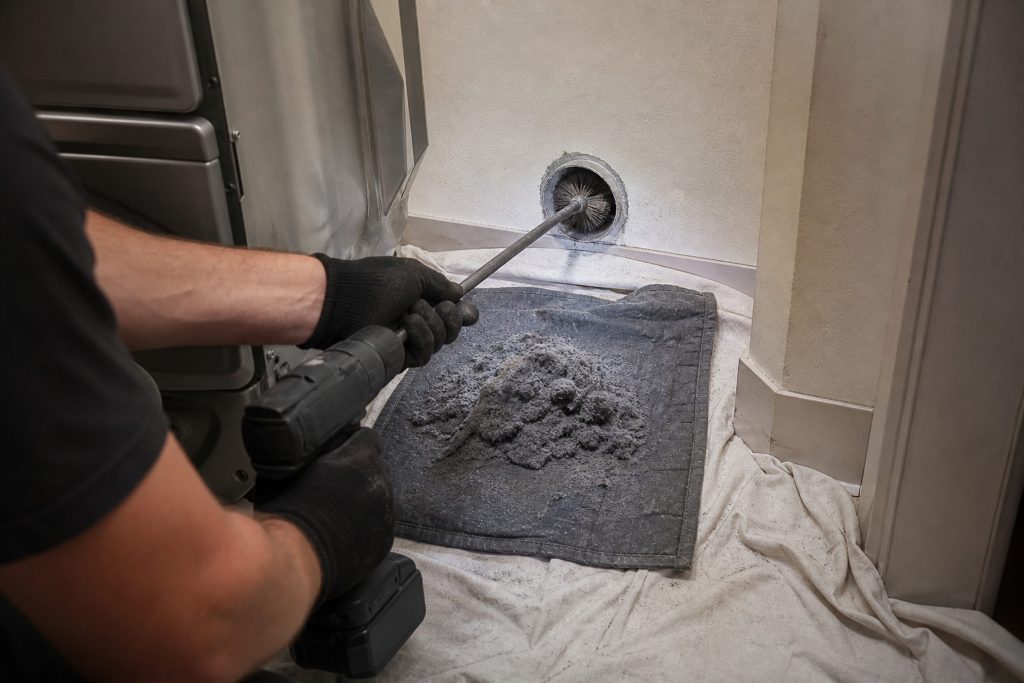
- On a vented machine that means the whole duct run to the outside wall, not just the flexible section behind the appliance. The test is at the wall: run the dryer, put your hand at the outside vent, and feel. Weak air with a clean filter means a restricted run.
- On a condenser or heat pump machine there is no duct, and the equivalent is the second filter and the heat exchanger behind the lint filter, usually behind a flap at the bottom of the door opening. That is what packs slowly with fine lint and makes the machine dry a little worse every month.
:::
Four: the moisture sensor bars. Two metal strips inside the drum, coated over time by fabric-softener residue, so the machine reads dry early and ends the cycle with damp clothes. A little detergent on a damp cloth. One minute.
Why airflow specifically protects the parts you cannot buy
A restricted dryer does not simply dry slowly. It runs hotter than it was designed to, trips its own thermal cut-out, and works its element and its motor against a resistance they were not built for.
:::
A thermal cut-out that has opened is a message rather than a failure — it is telling you about the airflow behind it. Replacing it and leaving the duct blocked gets you a second failure, and each of those cycles takes a little more out of the parts that are hardest to source.
That is the whole argument for taking the duct seriously on a machine like this, and it is also the fire argument.
The noise worth acting on
Rollers and drum bearings give you warning. A dryer that has become louder is telling you something months before it becomes a dryer that has stopped, and mechanical parts are exactly the ones still available.
Catching it at "louder" is a belt and a set of rollers. Catching it at "stopped" can be a drum, and on a discontinued line that is a different conversation.
What we do differently on these
We confirm availability before anything is ordered rather than after, and we tell you plainly when a machine is not worth the part. On a line where replacement is not a simple trip to a showroom, that conversation belongs at the diagnosis rather than a week later.
If it turns out to be a repair
What this leads to, and what it costs
Every job on this site is priced the same way: an on-site diagnostic first, the figure agreed in writing before anybody starts.
-
Vented · Condenser · Heat pump · Stacked · AeroCare · Laundry closets Dryers
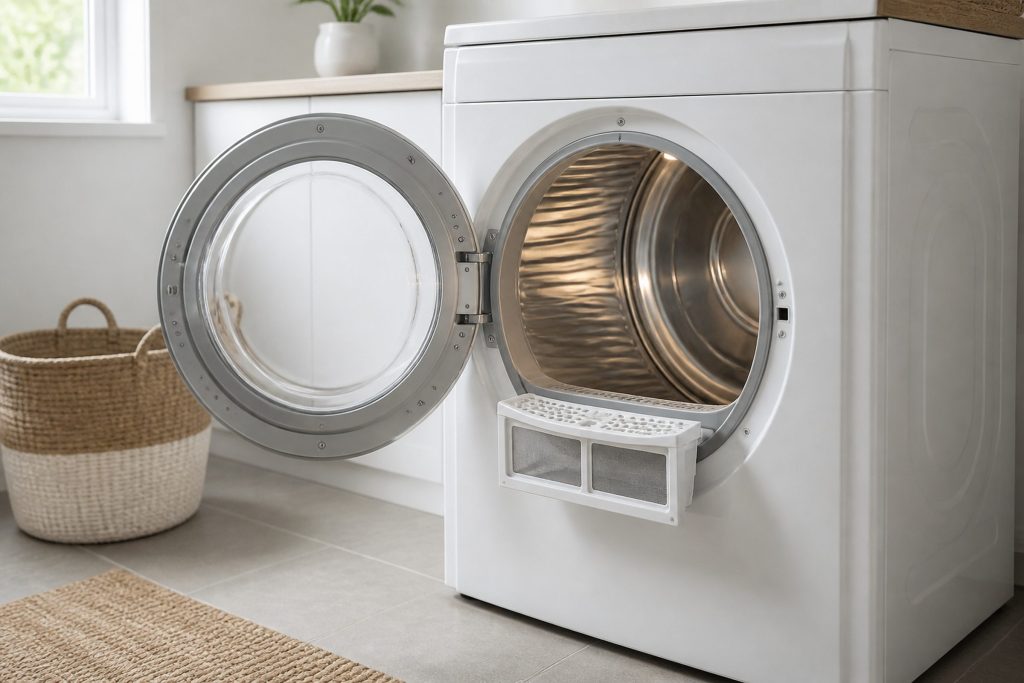
The same situation as the washers: Fisher & Paykel lists no dryer for the United States today, and the ones in South Florida laundry rooms are still working and still repairable. What is worth knowing before you call is which kind you have — vented, condenser or heat pump — because the three fail in completely different places, and only one of them is about a duct.
- Long cycles, or clothes still damp at the end of one
- A drum that turns with no heat, or heat that cuts out part-way
- Water where a condenser or heat pump machine should be emptying itself
-
from $135 Dryer airflow & moisture sensing repair
Long cycles, clothes still damp when the machine says it has finished, or a dryer that has quietly got slower over a couple of years. Two causes behind almost all of it — the air cannot get out, or the machine cannot tell whether the load is dry — and a real share of both is outside the appliance.
- The whole duct run, not just the filter
- Sensor bars cleaned and tested rather than replaced on sight
- The lowest figure on this site, because most of it is not a part
-

from $135 Appliance maintenance visit
The things this maker's own guides ask an owner to do, done properly and all at once: condensers, filters, seals, descaling, spray arms, ducts. Priced per visit rather than per appliance, which is what makes it worth doing on a kitchen where most of the machines come from one maker.
- Condenser and seals, which are the local weak points
- Steam ovens descaled, which nothing else here does
- One visit, several appliances, one travel charge

Questions people ask about this
Is it true they stopped selling laundry here?
That is what the maker's own US site says. The support base publishes a laundry category with four sections — washing machines, dryers, cabinets and combination machines — and every one returns an empty list, while cooking, cooling and dishwashing return hundreds of models. The United States product menu lists Cooking, Ventilation, Cooling, Dishwashing and Parts & Accessories, and no fabric care. Laundry spare parts and stacking kits are still on sale.
So should I get rid of mine?
Not on that basis alone. A machine that is working, drying properly and getting its filters and duct cleaned has years in it, and the common wear parts are available. What has changed is that you cannot replace it with the same appliance, which makes it worth looking after rather than worth abandoning.
What should I keep an eye on?
Airflow above everything, because a restricted dryer runs hot and works its element and its motor harder than they were designed for — and those are the parts you want to keep. After that, noise: rollers and bearings give you warning, and catching them at 'louder' is cheaper than catching them at 'stopped'.
Are heating elements still available?
Generally yes, along with thermostats, thermal cut-outs, belts, rollers and door catches. Those are the parts most likely to be there on any discontinued line because they are mechanical and shared across families. Boards are the ones that get scarce, which is exactly why the maintenance that protects them matters.
Is a heat pump machine different to maintain?
Yes, in one important way: there is no duct to clean and there is a second filter and a heat exchanger behind the lint filter that most owners do not know about. That is what packs slowly and makes the machine dry a little worse every month. On a ductless dryer that is the equivalent of the duct run and it needs the same attention.
Do you still repair these?
Yes. The diagnosis is the same as on any dryer; what is different is the parts conversation, and we have that one first rather than after a week of waiting. Availability is confirmed before anything is ordered, and where a machine is not worth the part you are told at the diagnosis.
Maintenance & Prevention
More guides like this one
-

Changing the Water Filter: the Part Behind Three Different Ice Complaints
Slow ice, small cubes and a bad taste look like three failures and are frequently one $50 part past its life. Here is how to change it, reset the light, and read what happens next.
Read more -

Cleaning and Reviving a Refrigerator Door Seal Before It Costs You a Compressor
A door seal is the cheapest preventive repair in the kitchen, and the one nobody thinks of as a repair at all. Four separate complaints trace back to it.
Read more -

The Refrigerator Drain Line: Where the Water on Your Floor Actually Comes From
Most refrigerator leaks are not leaks. A blocked defrost drain backs water up into the cabinet and out under the door — and clearing it is ten minutes with warm water and no part at all.
Read more
Tell us the model number and what it is doing.
This article is based on:
- Official manufacturer documentation
- Internal repair procedures
- Technician repair history
- Company quality standards