Maintenance & Prevention
Cleaning a Dryer and Its Duct: the Maintenance That Prevents the Expensive Repair
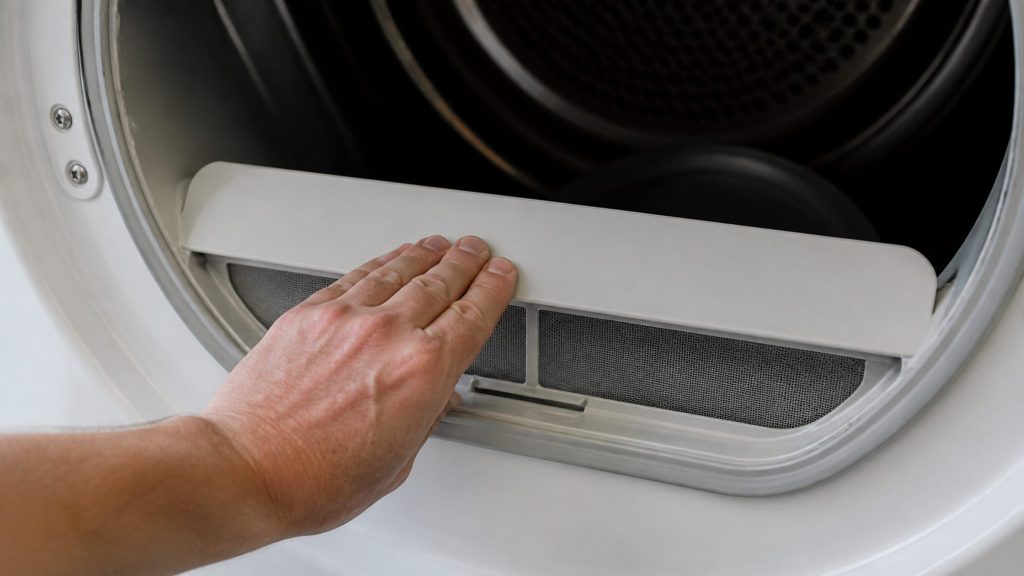
First work out which machine you have, because the answer is different. A vented dryer pushes hot wet air out through a duct to an outside wall, and cleaning it means the lint filter, the housing the filter sits in, and the whole duct run — not just the flexible section behind the machine. A condenser or heat pump dryer has no duct at all; its equivalent is a second, finer filter and a heat exchanger behind the lint filter, usually behind a flap at the bottom of the door opening, and most owners do not know it is there. On either machine, clean the filter every load and the housing under it every few months with a vacuum crevice tool. On a vented machine, check airflow at the outside vent with the dryer running: weak air at the wall with a clean filter means the duct is restricted, and that is where a surprising share of slow-drying and no-heat calls actually end.
The full guide
How to clean Fisher Paykel dryer filters and ducts: which machine is it?
Everything on this page depends on the answer, and almost no article asks it.
Vented. There is a hose or a pipe going out through a wall. The machine heats air, passes it through the drum, and throws the now-wet air outside.
Condenser. No duct. The moisture is condensed inside the machine and collected in a container you empty, or sent to a drain.
Heat pump. Also no duct, empties the same way, and runs noticeably cooler and longer than either — by design, not because anything is wrong.
:::
Every load: the lint filter
The one thing everybody does, and it is the right habit. Peel the lint off, and if the mesh has a waxy film on it — which builds up from dryer sheets — wash it in warm soapy water occasionally and let it dry fully before it goes back.
Every few months: the housing under the filter
The one thing almost nobody does.
Lint gets past the filter and settles in the slot the filter lives in. Push a vacuum crevice tool down into it as far as it will go. Most people are startled by what comes out of a machine whose filter has been cleaned religiously for five years.
On a vented machine: the whole run
This is where a surprising share of slow-drying, long-cycle and no-heat calls actually end, and it is not the appliance.
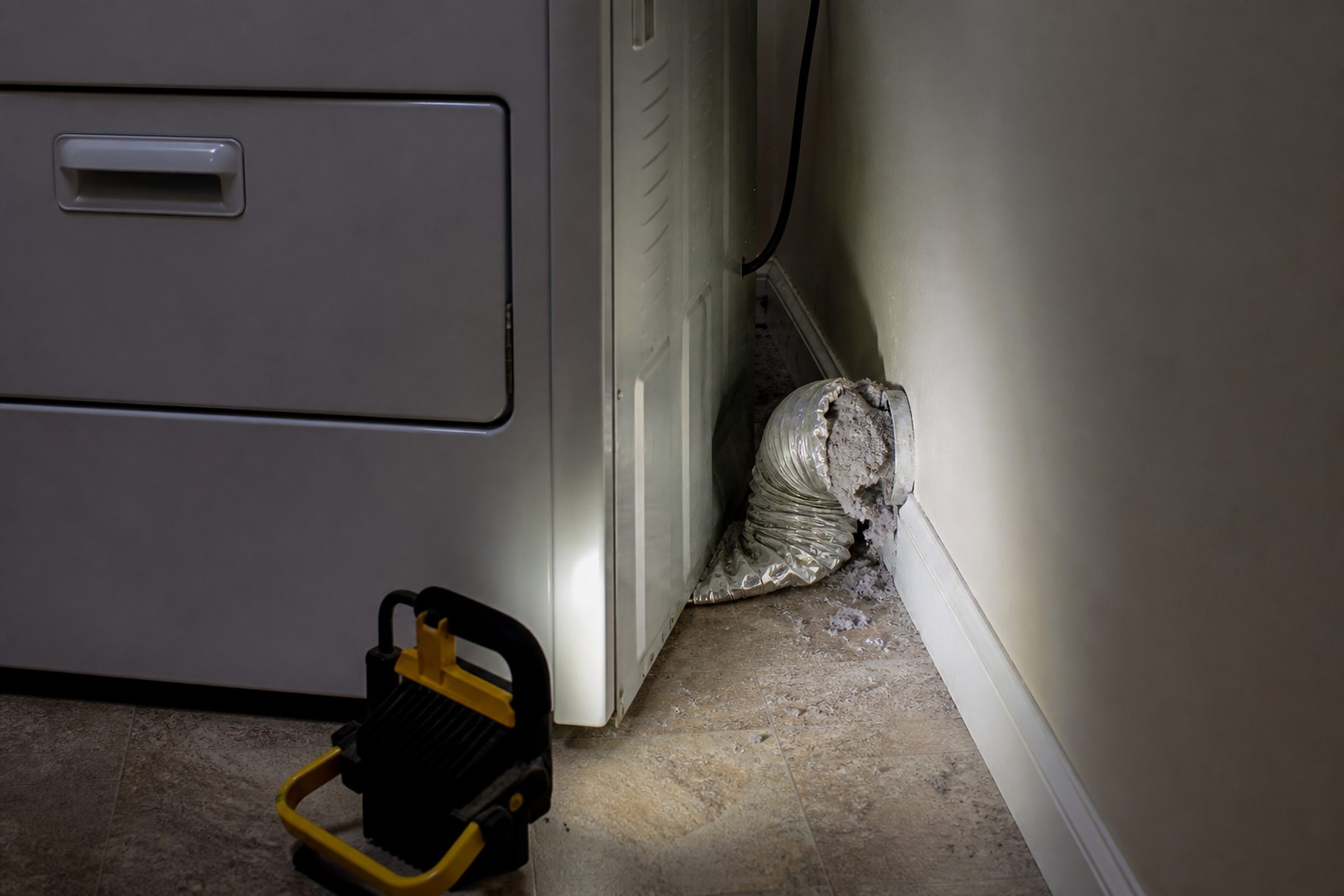
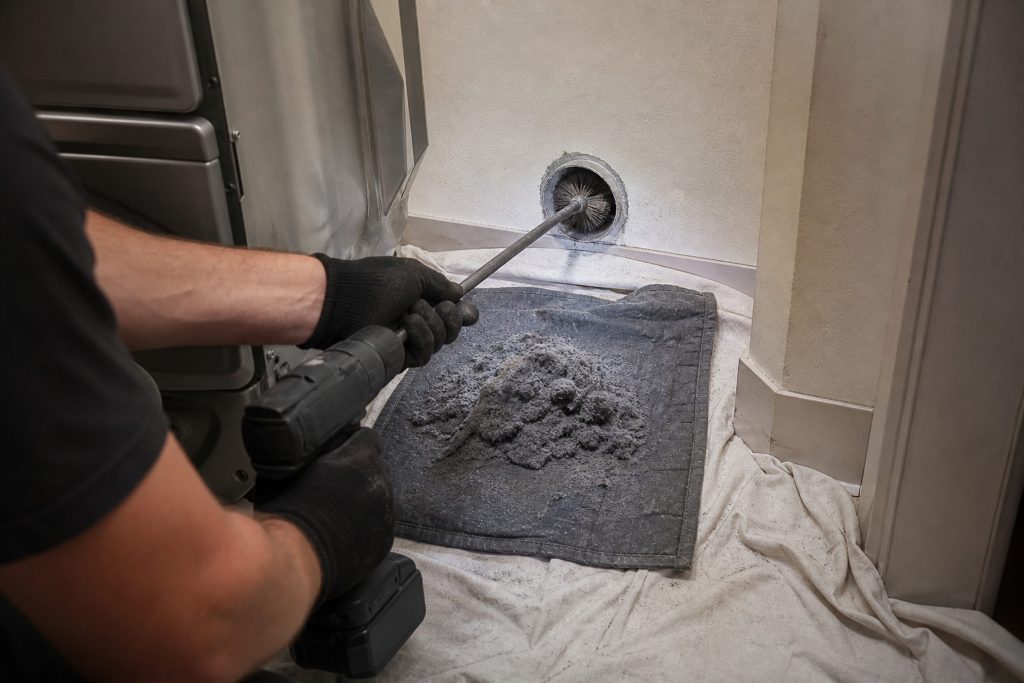
The duct is not just the flexible section behind the machine. It is the whole path to the outside wall — through a cabinet, along a ceiling, around two corners — and the flap at the far end that lint and birds both like.
The test that matters: run the dryer and go outside. Put your hand at the vent. Strong, warm airflow means the run is clear. Weak airflow with a clean filter means it is not, regardless of when it was last done.
A restricted dryer runs hotter than it was designed to and trips its own thermal cut-out — which is exactly why a blocked duct produces a no-heat complaint that looks like a failed element. Replacing the element on a machine with a blocked duct buys you a second failure and a second bill. It is also, straightforwardly, a fire subject.
On a condenser or heat pump machine: the second filter
Most owners of these do not know it exists.
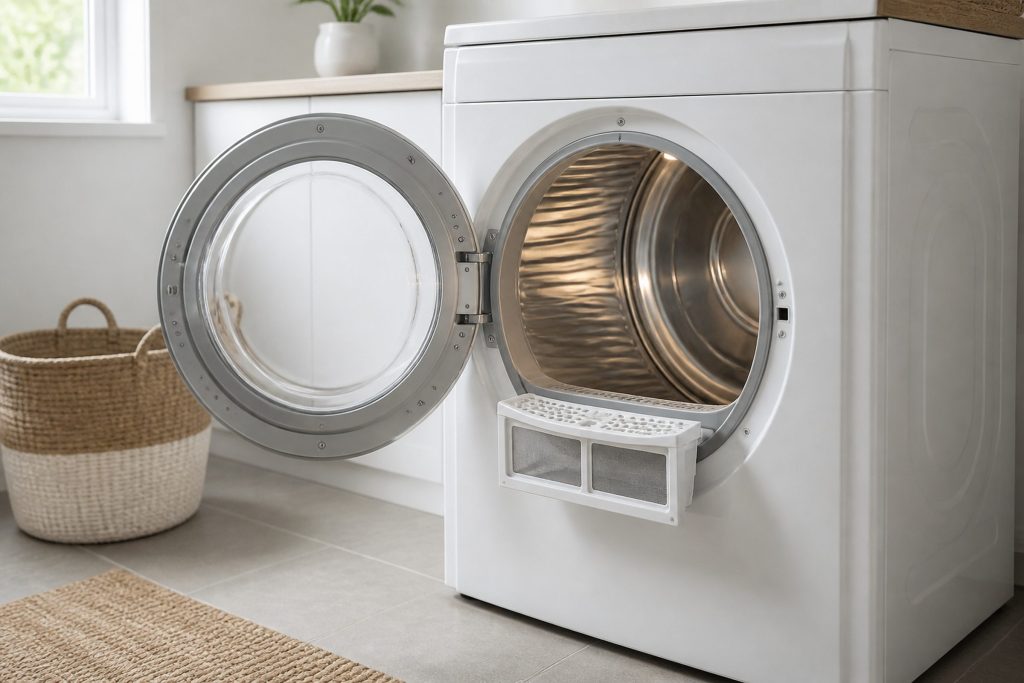
Behind the lint filter, usually behind a flap at the bottom of the door opening, there is a finer filter or a heat exchanger that catches what the first one misses. It packs slowly with fine lint, and the machine dries a little worse every month as it does — which is why the complaint is always "it has got slower" rather than "it broke".
:::
Pull it out, rinse it if the manual allows, dry it fully, and put it back. On some machines the heat exchanger behind it also lifts out for rinsing; on others it is vacuumed in place.
Once in a while: the sensor bars
Two metal strips inside the drum read how wet the load is, and the machine ends the cycle when they say it is dry.
Fabric softener leaves a film on them. A film means they read dry too early, and the cycle ends with damp clothes on a machine with nothing else wrong with it.
A little detergent on a damp cloth, wiped along both bars. One minute, and it fixes one of the commonest complaints on any dryer.
The heat pump footnote
A heat pump dryer is slower than a vented one on purpose — that is the trade for drying at a low temperature, which is gentler on fabric and cheaper to run.
:::
What is not normal is a machine that has become slower than it used to be. That is filters, then the heat exchanger, then the sensors — in that order, and two of the three are cleaning rather than a repair.
The reason this page exists
Fisher & Paykel no longer lists a washer or a dryer for the United States, while continuing to sell laundry spare parts and stacking kits. The machines are still here and still repairable, and replacing one with the same thing is not an option.
That makes maintenance worth more on these two appliances than on anything else in the house.
If it turns out to be a repair
What this leads to, and what it costs
Every job on this site is priced the same way: an on-site diagnostic first, the figure agreed in writing before anybody starts.
-
Long cycles, damp clothes Dryer not drying properly
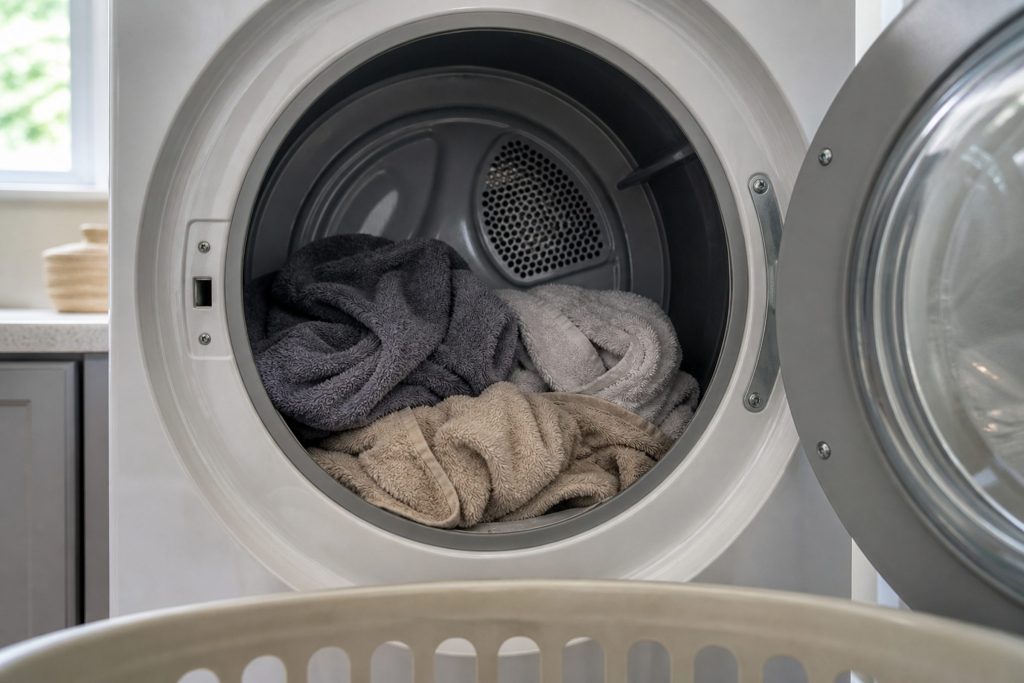
Cycles that take forever, or clothes still damp when the machine says it has finished. Two causes account for nearly all of it — the air cannot get out, or the machine cannot tell the load is dry — and a large share of both is free to check.
- It takes two cycles to dry one load
- Clothes are damp but the machine has stopped
- It has got slower over a year
-
from $135 Dryer airflow & moisture sensing repair
Long cycles, clothes still damp when the machine says it has finished, or a dryer that has quietly got slower over a couple of years. Two causes behind almost all of it — the air cannot get out, or the machine cannot tell whether the load is dry — and a real share of both is outside the appliance.
- The whole duct run, not just the filter
- Sensor bars cleaned and tested rather than replaced on sight
- The lowest figure on this site, because most of it is not a part
-
Vented · Condenser · Heat pump · Stacked · AeroCare · Laundry closets Dryers
The same situation as the washers: Fisher & Paykel lists no dryer for the United States today, and the ones in South Florida laundry rooms are still working and still repairable. What is worth knowing before you call is which kind you have — vented, condenser or heat pump — because the three fail in completely different places, and only one of them is about a duct.
- Long cycles, or clothes still damp at the end of one
- A drum that turns with no heat, or heat that cuts out part-way
- Water where a condenser or heat pump machine should be emptying itself

Questions people ask about this
How do I tell which kind of dryer I have?
Look for a duct. A vented machine has a hose or a pipe going out through a wall. A condenser dryer has no duct and either a water container you empty or a drain hose to a standpipe. A heat pump dryer also has no duct, empties the same way, and runs noticeably cooler and longer than either by design.
I clean the lint filter every time. Is that enough?
It is the most important habit and it is not the whole job. Lint gets past the filter and settles in the housing the filter sits in, and that housing is never cleaned by anybody. A vacuum crevice tool pushed into the slot every few months removes a surprising amount, and it is the second-cheapest thing you can do for the machine.
How often should the duct be cleaned?
The honest answer is not a schedule but a test: if you cannot feel strong airflow at the outside vent with the machine running, it needs doing regardless of when it was last done. In South Florida the runs are often long, they turn several times, and the air is damp for most of the year — so more often than the general advice suggests.
My heat pump dryer has got slower. Is that the filters?
Usually yes, and specifically the second one. A heat pump machine has a fine filter or a heat exchanger behind the lint filter, and it packs slowly with fine lint that the first filter does not catch. It makes the machine dry a little worse every month, which is why owners describe it as gradual rather than as a failure.
What about the sensor bars in the drum?
Worth cleaning at the same time, and it takes a minute. Two metal strips inside the drum read how wet the load is, and fabric-softener residue coats them so the machine reads dry early and ends the cycle with damp clothes. A little detergent on a damp cloth is all it takes.
Is a blocked duct really a fire risk?
Yes, and that is not scaremongering. A restricted dryer runs hotter than it was designed to, trips its own thermal protection, and does that against a duct full of lint. It is also why a machine with a blocked duct develops no-heat symptoms: the cut-out is doing its job. Airflow is the cheapest maintenance in the house and the one that prevents the most expensive dryer repair.
Maintenance & Prevention
More guides like this one
-

Changing the Water Filter: the Part Behind Three Different Ice Complaints
Slow ice, small cubes and a bad taste look like three failures and are frequently one $50 part past its life. Here is how to change it, reset the light, and read what happens next.
Read more -
Dryer Maintenance for a Machine the Maker No Longer Sells Here
Fisher & Paykel lists no dryer for the United States today, and still sells laundry spare parts. That combination changes what maintenance is worth, and it is worth more.
Read more -

Cleaning and Reviving a Refrigerator Door Seal Before It Costs You a Compressor
A door seal is the cheapest preventive repair in the kitchen, and the one nobody thinks of as a repair at all. Four separate complaints trace back to it.
Read more
Tell us the model number and what it is doing.
This article is based on:
- Official manufacturer documentation
- Internal repair procedures
- Technician repair history
- Company quality standards