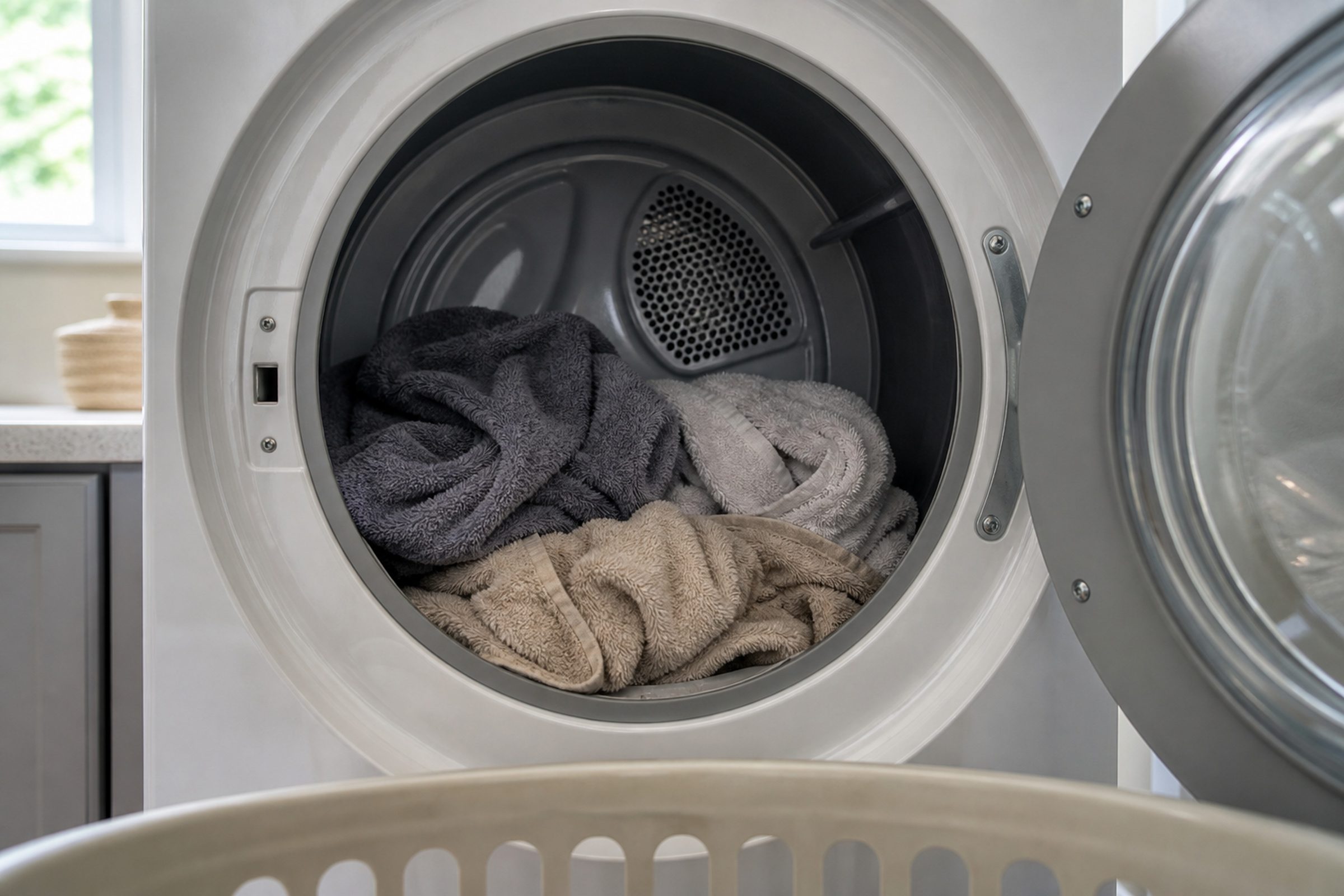
- “It takes two cycles to dry one load”
- “Clothes are damp but the machine has stopped”
- “It has got slower over a year”
Symptom
Fisher & Paykel dryer not drying properly
Cycles that take forever, or clothes still damp when the machine says it has finished. Two causes account for nearly all of it — the air cannot get out, or the machine cannot tell the load is dry — and a large share of both is free to check.
- From $95 diagnostic, credited to the repair
- 59 cities and neighborhoods covered
- OEM parts available on order
- In writing the price, before anything is opened
Five ordinary causes
What this usually turns out to be
Cheapest and commonest first, which is also the order we check them in. They sit hundreds of dollars apart, and only the unit settles which one is yours.
-
The lint filter and its housing
Free. Everybody cleans the filter; almost nobody cleans the slot it sits in.
Dryer airflow & moisture sensing repair from $135 -
The duct run to the outside wall
Long, crushed, or blocked at the flap. Not the appliance, and a fire matter as well as a drying one.
Dryer airflow & moisture sensing repair from $135 -
The heat exchanger, on a ductless machine
The second filter people do not know about. It packs with fine lint and the machine gets slower every month.
Dryer airflow & moisture sensing repair from $135 -
Moisture sensor bars
Coated with fabric-softener residue, so the machine ends the cycle before the load is dry.
Dryer airflow & moisture sensing repair from $135 -
The heating side
Element, thermostat or cut-out on a vented machine; the refrigerant circuit on a heat pump. This is the other page.
Dryer heating repair from $155
In five minutes
Before you call anybody
None of it needs tools, and all of it makes the visit shorter.
-
01
Filter and its slot
Both. A vacuum crevice tool into the housing does more than people expect.
-
02
Feel the outside vent
With the machine running. Weak airflow with a clean filter is a duct problem.
-
03
Find the second filter
On a condenser or heat pump machine. It is usually behind a flap at the bottom of the door opening.
-
04
Wipe the sensor bars
Two metal strips inside the drum, cleaned with a little detergent on a damp cloth.
-
05
Then book the visit
Say which kind of dryer, whether it is hot inside at the end, and how long the cycles take now against what they used to.
How it shows up
What people describe when they call
In more detail
About Fisher & Paykel dryer not drying properly
The fastest diagnosis is the code
Clean the lint filter and the housing under it, then go outside and feel for airflow at the vent while the machine is running. Weak airflow at the wall with a clean filter means the duct run is restricted, and that is where a surprising share of these end. If your dryer has no duct, find the second filter or the heat exchanger behind the lint filter — most owners of ductless machines do not know it is there.
Two causes, most of the calls
The air cannot get out — filters, internal duct, heat exchanger, or the whole run to the outside wall. Or the machine cannot tell the load is dry — the moisture-sensing bars in the drum. Between them they account for most of what arrives described as "the dryer is not working properly", and most of both is cleanable rather than replaceable.
Which machine you have decides everything
A vented dryer has a duct, and that duct is the first suspect. A condenser or heat pump machine has no duct at all, and its equivalent is the heat exchanger behind the lint filter — which most owners do not know exists.
Why it matters beyond the laundry
A restricted dryer runs hot, trips its own protection, and works its element and motor harder than they were designed for. Airflow is the cheapest maintenance in the house and the one that prevents the most expensive dryer repair.
This article is based on:
- Official manufacturer documentation
- Internal repair procedures
- Technician repair history
- Company quality standards
Before you book
Questions about Fisher & Paykel dryer not drying properly
Clothes are damp but the cycle ended.
That is moisture sensing rather than heat. These machines finish when the sensor says the load is dry, and bars coated in fabric-softener residue read dry early. Cleaning them with a little detergent on a cloth is worth doing before anybody comes out. If it still ends early on clean bars, the sensing circuit or the control is the repair.
My heat pump dryer has always been slow.
It is meant to be slower than a vented machine — that is the trade for drying at a low temperature, which is gentler on fabric and cheaper to run. What is not normal is a machine that has become slower than it was. That is the filters and the heat exchanger first, then the sensors.
How often should the duct be cleaned?
More often here than the general advice suggests, because the runs are often long and the air is damp for most of the year. The honest test is not a schedule but the vent itself: if you cannot feel strong airflow at the outside vent with the machine running, it needs doing regardless of when it was last done.
Where we do it
Across Miami-Dade, Broward, and Palm Beach
Same terms everywhere we go: an on-site diagnostic first, the price agreed in writing, and the exact figure confirmed once we have seen the unit.
Neighborhoods people ask for by name