Cost Expectations
Wine Cooler Repair Cost: When Two Degrees Is Worth a Service Call
One question splits the whole diagnosis and most of the cost: is one zone wrong or both. One zone points at that compartment — its sensor, its fan, its damper — and those are ordinary parts in the middle of the range. Both zones wrong points upstream at the control, the door seal, the condenser or the sealed system, and only the last of those is expensive. Before any of it, the airflow around the cabinet is worth checking, because these are 24-inch integrated machines usually built into an island or a bar run with very little air around the condenser, and a cabinet that struggles only in August is often telling you about its installation rather than a failed part. Researched market ranges for South Florida put wine cabinet repairs at roughly $180 to $500 parts and labor, sealed-system work aside, which sits in its own band of roughly $600 to $1,500.
The full guide
Wine cooler repair cost: one question decides most of it
Before any figure means anything, measure both zones with a thermometer rather than reading the display. Then answer one question.
One zone wrong. The problem is inside that compartment: its temperature sensor, the fan moving air into it, or a damper. Ordinary parts, ordinary labor, the middle of the range.
Both zones wrong. The problem is upstream — the control, the door seal, the condenser, or the sealed system. Three of those four are cheap and one is not.
That single answer is worth more than any description you can give on the phone, and it takes an afternoon and two thermometers.
:::
Why these come up more often than the line size suggests
Fisher & Paykel lists five of these for the United States: two integrated wine cabinets, a column wine cabinet and two beverage centers, all 24 inches, all built in.
They generate more calls than five machines should, and the reason is South Florida.
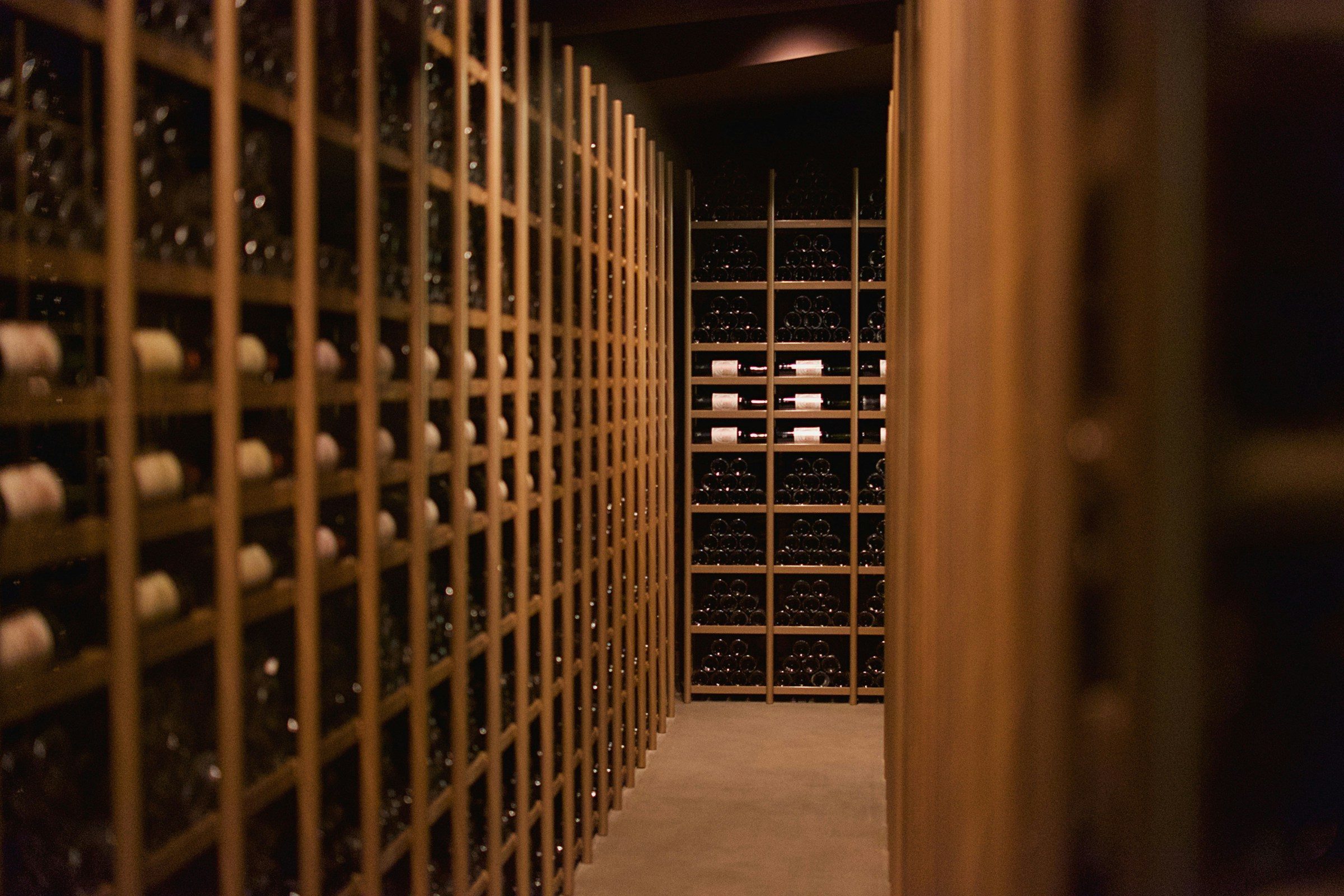
A wine cabinet is asked to hold a narrow band of temperature and humidity against a kitchen that is warm and damp for eight months of the year. And it is almost always built into an island, a bar run or a butler's pantry with very little air around its condenser — because that is where a wine cabinet looks best.
The consequence is a machine that was perfectly happy in February and cannot get there in August, with nothing broken inside it. That is an installation answer rather than a repair, and where that is what we find, the visit fee is the whole cost.
What the market says
Researched ranges for South Florida, parts and labor together:
| Work | Market range |
|---|---|
| Diagnostic or service call | $59 – $129 |
| Sensor, fan, damper, seal | $180 – $500 |
| Door hardware on a glass door | $140 – $350 |
| Sealed system | $600 – $1,500 |
:::
Those are the market's numbers rather than ours, published so a starting figure can be read in context.
What actually fails
A drifting sensor. The cabinet controlling perfectly to a number that is not true. It is the cheapest outcome inside the machine and the display will look completely normal.
A fan that has slowed. Air not being moved where it needs to go. On a dual-zone cabinet, this is what one warm zone and one correct zone usually means.
A door seal that has taken a set. A heavy glass door held open at parties, in a humid room, for years. It lets a continuous trickle of warm air in and the cabinet never wins.
Door hardware. Hinges that have carried the weight, or an alignment that closes on one corner first. Cracked glass is the exception and it is a replacement.
The sealed system. Last, rarest, most expensive, and quoted only when everything above has been measured out.
What the maker publishes, and the unusual part
Fisher & Paykel groups its wine cabinet codes into four families — temperature sensor, fan, heater or power, and control or communication — and prints one instruction for all of them: a technician is required.
That is unusual on this make. Almost everywhere else it publishes an owner-side reset of some kind. For a wine cabinet it does not, and knowing that saves an evening.
Note the exact code before you call. It puts the visit in one of four families before anybody drives anywhere.
What we would check before quoting anything
- Both zone temperatures, measured, against their set points.
- The air around the cabinet — plinth vent clear, nothing boxing it in, nothing stored against the back.
- The door, paper-tested around the whole frame. Glass doors take a set at the hinge side first.
- The season. Fine in winter, struggling in summer is heat rejection rather than cold production, and that is a different conversation from a failed part.
Two of those four cost nothing, and one of them is the answer more often than people expect.
If it turns out to be a repair
What this leads to, and what it costs
Every job on this site is priced the same way: an on-site diagnostic first, the figure agreed in writing before anybody starts.
-
from $195 Wine cabinet & beverage center repair cost
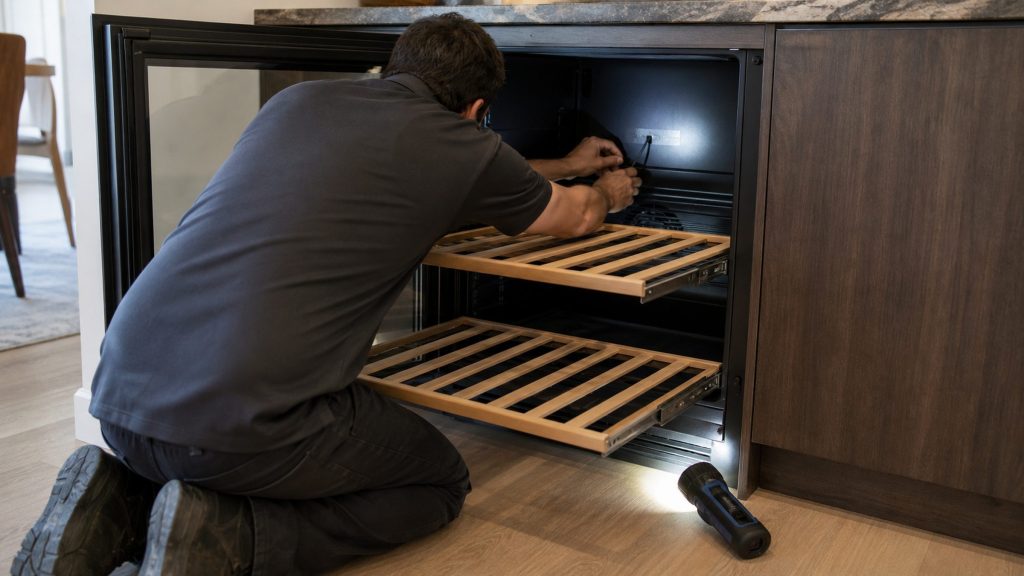
Sensors, fans, seals and controls on a 24-inch integrated cabinet with very little air around its condenser. The figure carries the diagnosis time, because proving a cabinet holds a narrow band takes hours rather than minutes.
- Researched market range for South Florida: wine cabinet work $180–$500
- Which zone, on a dual-zone cabinet
- No owner-side reset published for these
-
A zone two degrees off Wine cabinet holding the wrong temperature
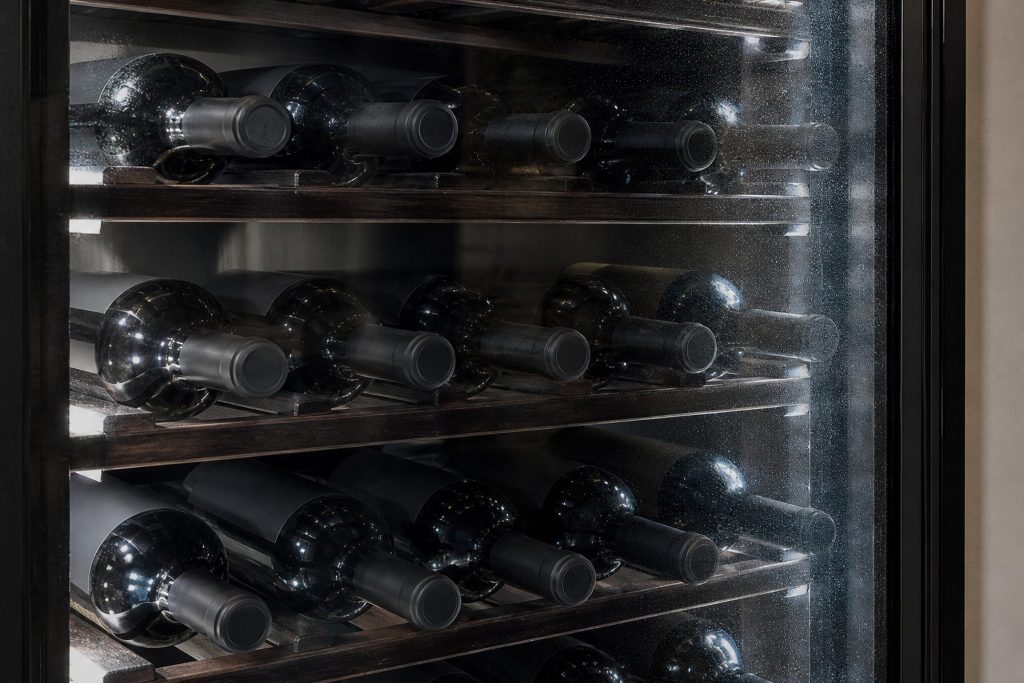
For wine, two degrees is a symptom rather than a rounding error. A cabinet that sits steadily off, or one that runs continuously without arriving, is telling you about a sensor, a fan, a seal or the air around its condenser.
- One zone off and the other correct
- The cabinet runs constantly in summer
- It was fine last winter

Questions people ask about this
Is two degrees really worth a service call?
For wine, yes. Holding a narrow, steady temperature is the entire function of the cabinet, and a persistent offset is a real symptom — usually a sensor that has drifted, a fan that has slowed, or a seal that has taken a set. All three are ordinary repairs at the lower end of the range. What is not worth a call is a cabinet swinging while it is opened every ten minutes at a party.
It shows an F code. Can I reset it?
Unusually for this maker, there is no owner-side reset published for a wine cabinet. It groups the codes into temperature sensor, fan, heater or power, and control or communication, and it says outright that a technician is required for all of them. That is worth knowing before you spend an evening looking for a button that is not there.
My beverage center has the same problem. Same price?
Yes. A beverage center and a wine cabinet share the compressor, the evaporator, the fan, the door seal and the control; what differs is shelving and the temperature range they are set up for. The repair, the access and the figure are the same.
It runs constantly and never quite gets there.
Three candidates in order, and the first two are cheap. Airflow around the condenser — these are built into cabinetry and often boxed in. The door seal, which lets a continuous trickle of warm room air in. And only then the sealed system. A cabinet that was fine in February and struggles in August is telling you about the first one.
Is a sealed-system repair worth doing on a wine cabinet?
On a 24-inch integrated cabinet holding a collection, usually — the alternative is an appliance job and a cabinetry job. On a small beverage center, often not. You should get the arithmetic along with the figure rather than a recommendation without one.
The interior lighting has failed. Is that a repair?
Yes, and it is a straightforward one. On a display cabinet the lighting is part of what you bought, and a failed strip or driver is an ordinary part rather than something to live with. Mention it when you book so the right part is on the van rather than on a second visit.
Cost Expectations
More guides like this one
-
Oven Thermostat and Sensor Replacement: the Cheapest Part, the Commonest Cause
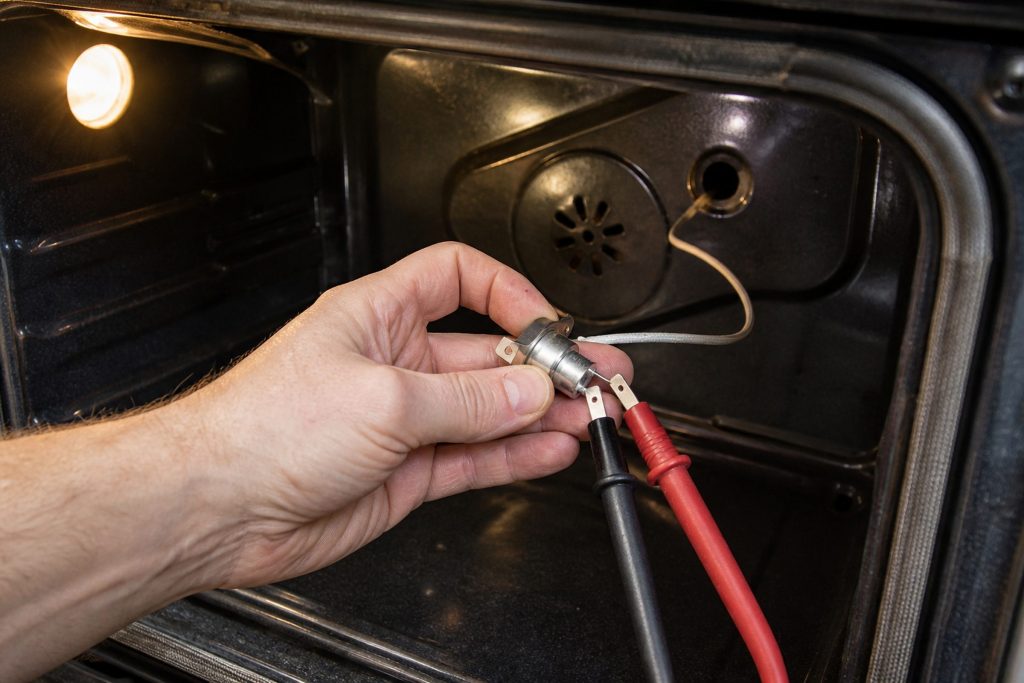
An oven that runs hot, runs cold or browns unevenly is almost always the sensor, and the sensor is the least expensive part in the oven. Measuring it first is what keeps a control board off your invoice.
Read more -
How Much Does a Refrigerator Repair Cost, and What Actually Moves the Number
Three things decide it, and only one of them is the part. This is the page that comes before the cost pages: which component, how the machine comes out, and whether it is worth doing at all.
Read more -

Cracked Glass Cooktop: Replacement Cost, and Why There Is No Repair
Nothing fills a crack in a cooking surface and survives the heat. The glass is a barrier as well as a surface, which is why this is a replacement and why the first advice is to switch it off at the wall.
Read more
Tell us the model number and what it is doing.
This article is based on:
- Official manufacturer documentation
- Internal repair procedures
- Technician repair history
- Company quality standards