Cost Expectations
Cracked Glass Cooktop: Replacement Cost, and Why There Is No Repair
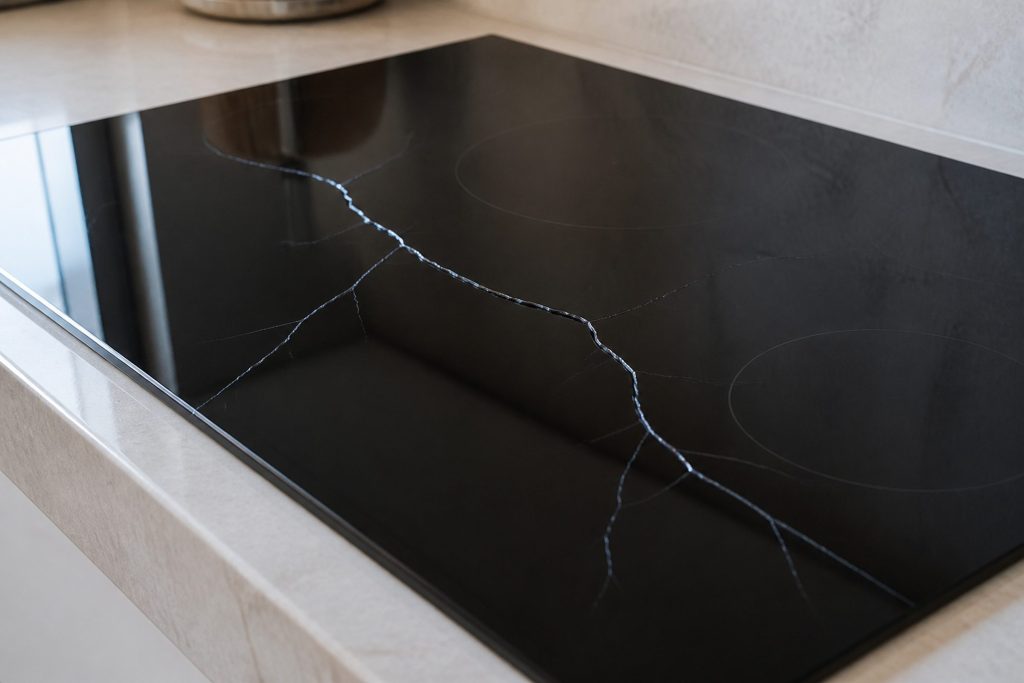
Switch it off at the wall and stop cooking on it. On an induction or radiant cooktop the glass is not decoration — it is the barrier between the cooking surface and the electronics underneath, and it carries the weight of the pans. A crack takes liquid, and liquid reaching the electronics is an electrical problem rather than a cleaning one. There is no repair: nothing that fills a crack survives the thermal cycling of a cooking surface and nothing restores the barrier, so the surface is replaced or the cooktop is. What decides the cost is almost entirely the part, because cooktop glass is model-specific and often model-year specific. Researched market ranges for South Florida put glass replacement at roughly $290 to $800 parts and labor. On an older machine the real question is availability, and it should be confirmed before you are asked to agree to anything.
The full guide
Glass stove top cracked repair cost: the first thing is not the price
Switch it off at the wall. Not at the touch controls — at the circuit breaker or the isolator.
That is not caution for its own sake. On an induction or radiant cooktop, the glass is doing two jobs at once: it carries the weight and the heat of the pans, and it separates the cooking surface from the electronics directly underneath. A crack compromises both, and the way it goes wrong when liquid finds its way through is not gradual.
:::
Why there is no repair
People ask this first and hope the answer is different. It is not, and the reason is physical rather than commercial.
A cooking surface goes from room temperature to several hundred degrees and back, repeatedly, for years. Nothing that fills a crack — resin, adhesive, glass filler — survives that cycling. And even if something held cosmetically, it would not restore the barrier, which is the part that matters.
So the honest options are two: replace the glass, or replace the cooktop. Which one wins depends on the machine, and you should be given that arithmetic rather than a sales pitch.
First, are you sure it is cracked?
The maker publishes separate articles for scratched glass and cracked glass, because they are different problems with different answers, and one of them is not a problem at all.
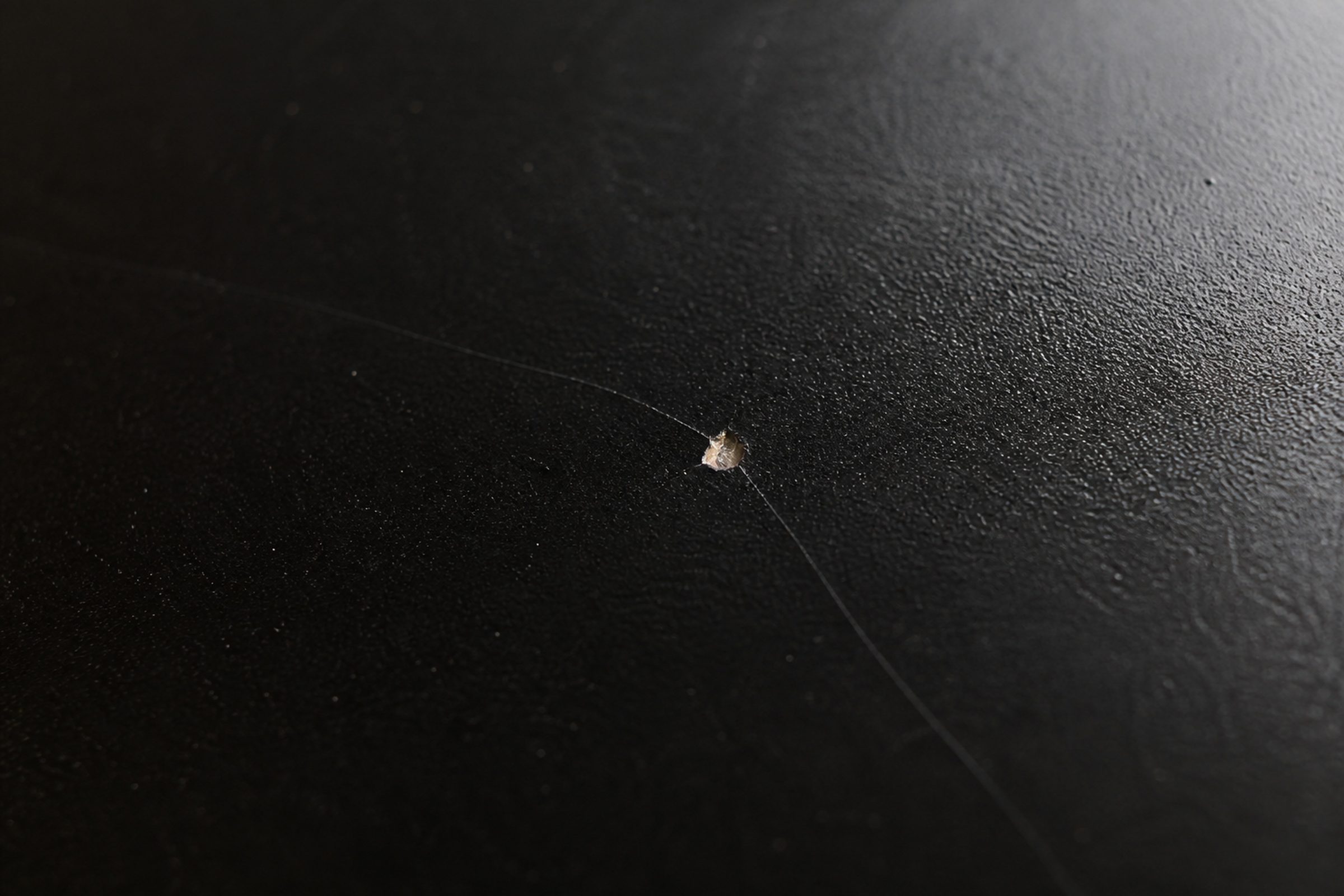
Run a fingernail lightly across the mark:
- it catches — a crack. Stop using the cooktop.
- it glides over — a scratch. The cooktop is safe and it cooks exactly as it did.
Scratches come from dragging pans with rough or gritty bases across the surface. They are cosmetic, they are permanent, and the sensible response is prevention rather than a repair. Anybody who quotes you glass for a scratch has not looked.
What actually decides the cost
Unusually for a repair, this is a parts-led figure rather than a labor-led one.
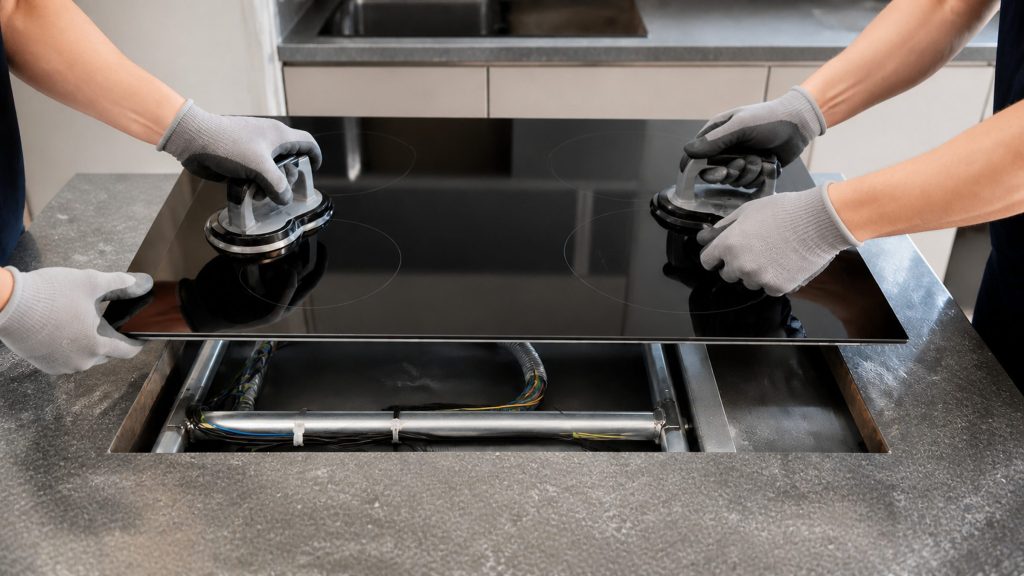
Cooktop glass is model-specific and frequently model-year specific — there is no generic version of it, and it is the majority of the total. The labor is real but predictable: the cooktop comes out of the counter, the new surface goes on with its frame and seal, and it goes back into the cutout properly. On a stone counter that is careful work rather than quick work.
Researched market ranges for South Florida put glass replacement at roughly $290 to $800 parts and labor, and where a given machine sits inside that band is almost entirely the part.
The question that decides it on an older machine
Is the glass still available?
On a cooktop past its first decade this is the real conversation, and it should happen before you are asked to agree to anything. Photograph the model plate rather than transcribing it — the letters and digits run together and a single character changes which part fits — and let availability be confirmed first.
Where the part has gone, you should be told plainly at the diagnostic. What wastes people weeks is a company that orders hopefully and reports back later.
While you are waiting
- Leave the circuit off. A cooktop that is off at the controls is still live underneath.
- Do not wipe across the crack. Wipe around it, and keep liquid away from it.
- If the cooktop is part of a range, the ovens underneath are generally unaffected and can be used — but confirm that with whoever looks at it rather than assuming.
What we do first
Tell you whether you need it. Then confirm the part exists. Then give you a written figure with the access included, and our honest view on replacement if the arithmetic says so.
Exact cost is confirmed after an on-site diagnostic, and nothing is ordered before you have agreed the scope and the figure.
If it turns out to be a repair
What this leads to, and what it costs
Every job on this site is priced the same way: an on-site diagnostic first, the figure agreed in writing before anybody starts.
-
Stop using it Cracked cooktop glass
A crack, a chip or a shatter in an induction or radiant surface. This page is short and blunt because the advice is: switch it off at the wall and stop using it. It is a safety matter rather than a cosmetic one.
- A crack across or radiating from a zone
- A chip at the edge or around a control
- It happened when something was dropped
-
from $295 Cooktop glass replacement
A cracked or shattered induction or radiant surface. This one is a replacement rather than a repair and the page says so plainly, along with the part people least want to hear: stop using it and switch it off at the wall until it is done.
- A safety matter, not a cosmetic one
- Part availability confirmed before anything is committed
- The frame, seal and cabinet cutout checked with it
Questions people ask about this
It is only a hairline crack. Can I keep using it?
No, and this is the one page on this site where we will not soften it. The glass separates the cooking surface from the electrics beneath, and a hairline crack takes liquid perfectly well. Boil-overs, cleaning water and spills all find it. Switch the cooktop off at the circuit and stop using it until it is replaced.
Can the crack be filled or bonded?
Nothing that fills a crack survives the thermal cycling a cooking surface goes through, and nothing restores the structural or electrical barrier. Anybody offering a repair on cracked cooking glass is selling you a cosmetic fix on a safety part.
What about scratches?
Scratches are cosmetic and safe, and the maker publishes a separate article about them because they are reported constantly. They come from dragging pans with rough bases and they do not affect how the cooktop cooks. We will not sell you glass for a scratch. A fingernail settles it: it catches in a crack and glides over a scratch.
What if the glass is no longer available?
Then you get told, and before you have committed to anything beyond the diagnostic. On an older cooktop this is a real outcome, and pretending otherwise wastes weeks waiting for a part that is not coming. The conversation becomes replacement, and it is your decision with our honest view of it.
How did it crack? I did not drop anything.
Four usual causes and only one is a dropped pan. Thermal shock — something cold onto a very hot zone, or a wet cloth on a zone just used. A pan boiled dry, putting extreme heat in one small place with nothing to absorb it. And stress at the cutout, where a cooktop has been clamped into a counter that is not quite flat; cracks that start at an edge usually point there.
Is replacing the glass worth it against a new cooktop?
On a recent machine, usually — fitting a new cooktop into stone is a bigger job than changing a surface. On an older one the arithmetic can go the other way, especially if the part has to be hunted. You should get that arithmetic in plain words along with the figure.
Cost Expectations
More guides like this one
-
Wine Cooler Repair Cost: When Two Degrees Is Worth a Service Call
For a cabinet whose whole function is holding a narrow band, two degrees is a symptom rather than a rounding error. What it costs depends on one question: one zone, or both.
Read more -
Oven Thermostat and Sensor Replacement: the Cheapest Part, the Commonest Cause
An oven that runs hot, runs cold or browns unevenly is almost always the sensor, and the sensor is the least expensive part in the oven. Measuring it first is what keeps a control board off your invoice.
Read more -

How Much Does a Refrigerator Repair Cost, and What Actually Moves the Number
Three things decide it, and only one of them is the part. This is the page that comes before the cost pages: which component, how the machine comes out, and whether it is worth doing at all.
Read more
Tell us the model number and what it is doing.
This article is based on:
- Official manufacturer documentation
- Internal repair procedures
- Technician repair history
- Company quality standards