- “One dial stiffer than the rest, or all of them”
- “It got gradually harder over a year or two”
- “A dial that has started to feel gritty”
Symptom
Fisher & Paykel cooktop dials difficult to turn
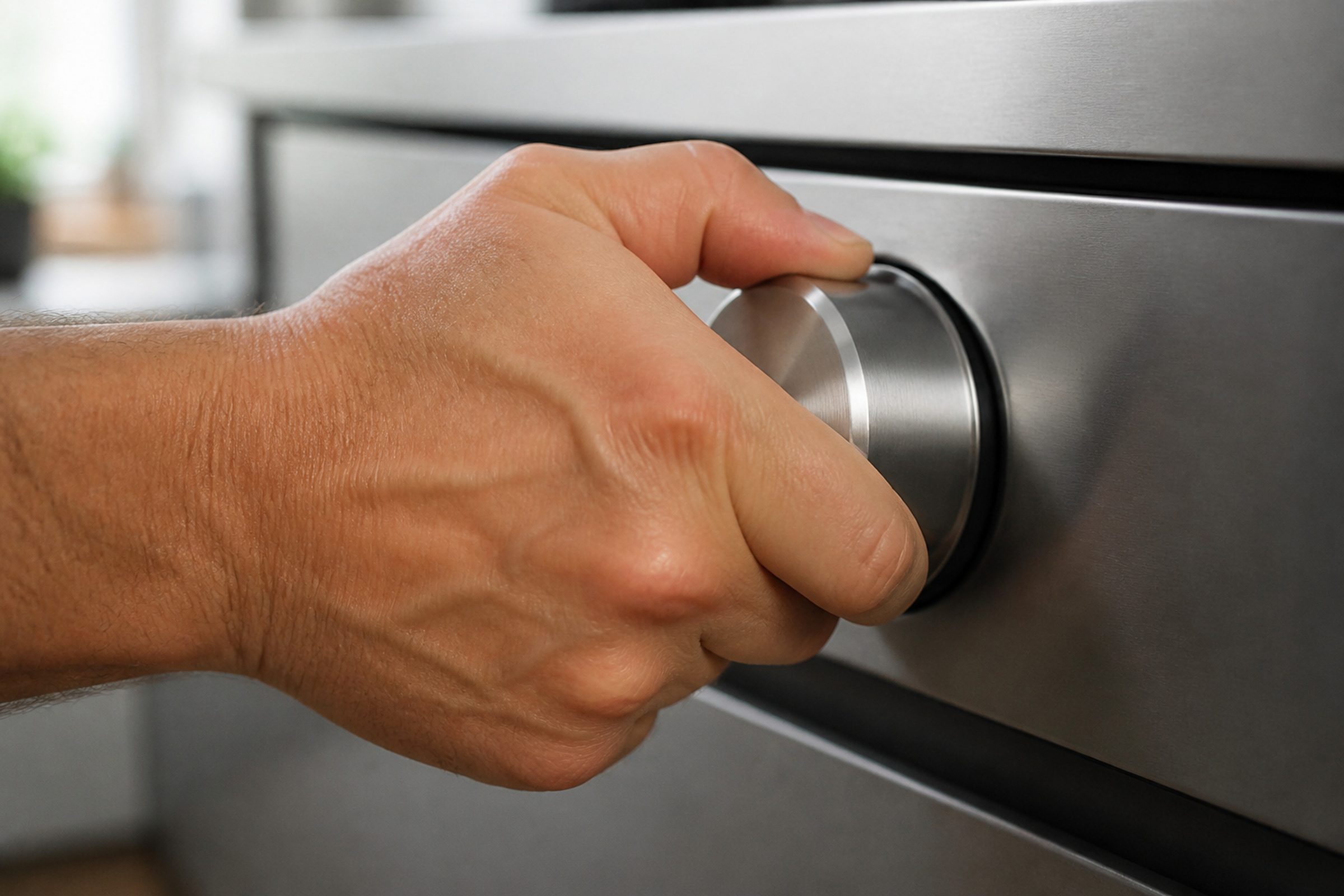
The complaint this maker's own cooktop owners raise more than any other — its article is linked from sixty-one models — and it is a maintenance repair rather than a breakdown. The one thing worth doing meanwhile is not forcing it.
- From $95 diagnostic, credited to the repair
- 59 cities and neighborhoods covered
- OEM parts available on order
- In writing the price, before anything is opened
Five ordinary causes
What this usually turns out to be
Cheapest and commonest first, which is also the order we check them in. They sit hundreds of dollars apart, and only the unit settles which one is yours.
-
The valve stem grease
Stiffened by heat and by residue working past the seal. The cause in the great majority of these, and it is serviceable.
Cooktop control & dial repair from $145 -
Residue between the dial and the panel
Not the valve at all. It feels identical from the outside and it cleans off.
Appliance maintenance visit from $135 -
A dial that has been forced
A bent or partly stripped stem. This is what the advice above is trying to prevent.
Cooktop control & dial repair from $145 -
A boil-over that reached the stem
One dramatic spill can do in an evening what years of cooking do slowly.
Cooktop control & dial repair from $145 -
The valve itself
Genuinely worn rather than stiff. Less common, and it is a different figure.
Cooktop control & dial repair from $145
In five minutes
Before you call anybody
None of it needs tools, and all of it makes the visit shorter.
-
01
Pull the dial off and look
They come off on most of these. If the stem turns freely with the dial removed, the problem is the dial or the panel and not the valve.
-
02
Clean around the collar
Warm water and a cloth. Free, and it fixes a share of these outright.
-
03
Compare all the dials
One stiff dial is that burner's valve. All of them stiff is age and residue across the cooktop, and it is one visit either way.
-
04
Do not lever it
Pliers on a dial and a screwdriver behind it are how this becomes an expensive page.
-
05
Then book the visit
Say how many dials and whether any of them has been forced. Both change what is needed.
How it shows up
What people describe when they call

In more detail
About Fisher & Paykel cooktop dials difficult to turn
The fastest diagnosis is the code
Stop turning it hard. Under each dial is a gas valve with a stem, and that stem carries a grease that stiffens once cooking residue works past its seal. A stiff stem is a service job; a snapped one is a valve replacement, and the difference between them is about ten seconds of determination. Clean around the base of the dial and the collar it sits in — sometimes what feels like a stiff valve is simply residue between the dial and the panel.
Why the maker publishes this on sixty-one models
Because it happens to almost every gas cooktop that gets used, and because it looks like a failure when it is wear. Under each dial is a valve with a stem, and that stem turns in a high-temperature grease. Cooking residue works past the seal over years, the grease stiffens, and the dial goes from smooth to firm to genuinely hard.
The one mistake that matters
Forcing it. A stiff stem is serviced; a snapped stem is a valve replacement, and on a gas cooktop that is a considerably larger job. If a dial needs two hands, stop using that burner and book it.
What we actually do
The cooktop comes up, the valves come apart, the old grease is cleaned out and the correct high-temperature grease goes back in. It is unglamorous, it is not a part, and it returns the cooktop to how it felt when it was new.
This article is based on:
- Official manufacturer documentation
- Internal repair procedures
- Technician repair history
- Company quality standards

Before you book
Questions about Fisher & Paykel cooktop dials difficult to turn
Is this dangerous?
Not in itself, but it is worth dealing with rather than living with. A stiff valve makes fine control hard, which on a gas burner means overshooting a setting and, on the low end, ending up below where the flame is stable. It also gets worse rather than better, and it gets much worse if anybody forces it.
Can I just spray something into it?
No. Household lubricants are not made for the temperatures a burner valve sees and several of them are flammable, which is not a combination worth experimenting with under a gas cooktop. The correct grease is a specific high-temperature product and getting it in the right place means taking the valve apart.
All six have gone stiff at once.
That is age and residue rather than six failures, and it is one visit rather than six. It is also a good moment to have the burner caps, ports and ignition looked at while the cooktop is open — the setup is most of the cost either way.
Where we do it
Across Miami-Dade, Broward, and Palm Beach
Same terms everywhere we go: an on-site diagnostic first, the price agreed in writing, and the exact figure confirmed once we have seen the unit.
Neighborhoods people ask for by name