
Cost Expectations
The Appliance Repair Diagnostic Fee: What It Buys and When ‘Free’ Is Not
A diagnostic fee pays for a technician and a stocked van to arrive, spend time measuring rather than guessing, and leave you with a named cause and a written figure. It is normally credited toward the work when you go ahead, so on a job that happens it is not an extra line at all. 'No diagnostic fee' almost never means the visit was free — it means the cost has been moved into the repair price, which is fine if the repair happens and expensive if you are being quoted competitively. Three arrangements share the name and they are not the same: a trip charge pays only for arriving, a diagnostic fee pays for finding out what is wrong, and a service call sometimes bundles the first half-hour of labor. Ask which one is on offer, ask whether it is credited, and ask whether the quote will be in writing before anything is opened.
The full guide
Appliance repair diagnostic fee: three arrangements, one name
The words get used interchangeably and they mean different things. Before you compare two companies on the number, work out which of these each is quoting.
A trip charge pays for the journey — a technician and a stocked van at your address. Diagnosis may be extra on top.
A diagnostic fee pays for finding out what is wrong: the time, the measurement, and a named cause with a figure against it. This is the common arrangement and the one that is normally credited toward the repair.
A service call sometimes bundles the first block of labor with the visit, so a quick job is finished inside the fee and a longer one continues at an hourly rate.
:::
Comparing a $59 trip charge against a $95 credited diagnostic is not comparing like with like, and the cheaper number can easily end up being the more expensive visit.
What the fee actually buys
On a good visit, four things:
- Somebody arrives with the parts your description points at. Not the whole warehouse — the ones a stated symptom and a model number make likely. On built-in equipment that is the difference between one visit and two.
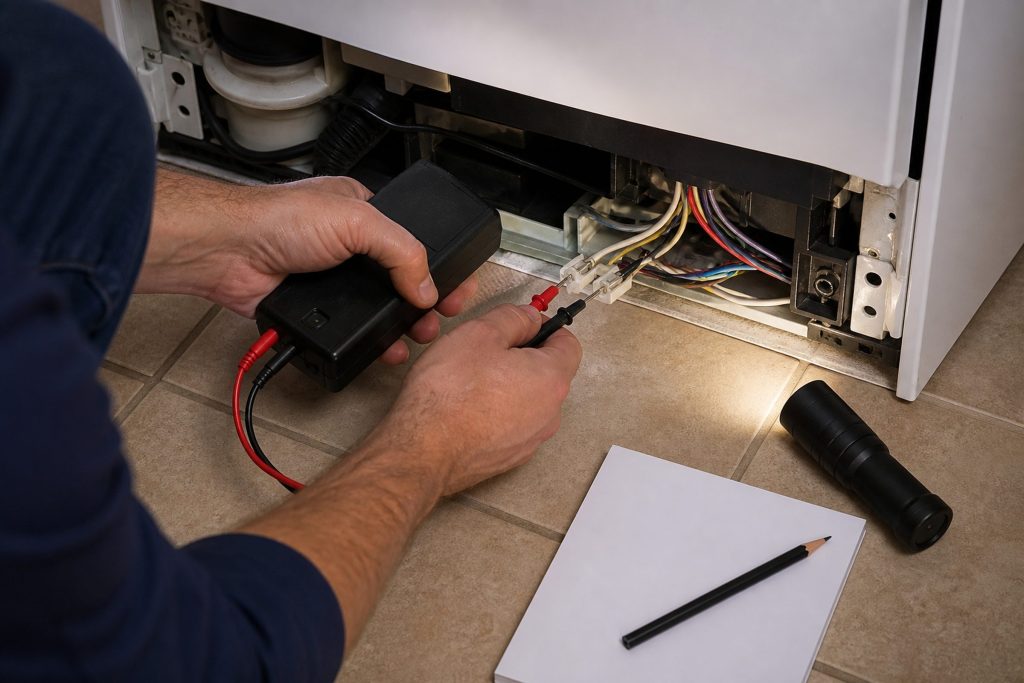
- Measurement rather than assumption. A sensor is a resistance at a known temperature. An element is a current under load. A seal is proved with a sheet of paper at several points, not by eye. Those take minutes and they are what separate a diagnosis from a guess.
- The free causes ruled out first. A blocked filter, a dirty condenser, a vent behind a full shelf, a burner cap seated wrong, a wet fingertip on a touch panel, a control that needed a full minute at the breaker. A real share of visits end here, and you should be told so plainly.
- A written scope and figure before anything is opened, with the option to say no.
That last one is the whole point. What you are buying is the information you need to make a decision — including the decision not to spend anything.
Why "no diagnostic fee" is usually not free
It is a legitimate business model and it is worth understanding.
If diagnosis is free with a repair, the cost has been moved into the repair. That works out well when the repair happens, and it means the company has an incentive to find one. If diagnosis is free with no obligation at all, the cost is still somewhere — typically a higher parts markup or a labor rate that is hard to compare because you never received an itemized scope.
Neither is dishonest. What is worth avoiding is comparing a credited fee against a free visit as though the second is a saving, when the total on a completed job is often the other way round.
The three questions worth asking before you book
Anybody, not just us:
- Is the fee credited toward the work? And credited in full, or partly?
- Will I get the scope and the price in writing before anything is opened?
- What happens if the repair does not hold? A workmanship warranty and a second diagnostic are very different answers.
A company that answers those three clearly on the phone will usually behave the same way in your kitchen.
What it costs here
Service call and diagnostic fees across South Florida sit in a researched market range of about $59 to $129, and many companies credit them toward the work. Ours starts at $95 and is credited on any job we carry out. If you decide not to go ahead, you pay that and nothing else.
The cheapest possible outcome is genuinely common: the visit, a cleaned condenser or a cleared filter, and an explanation of how to stop it happening again. We would rather charge $95 and tell you that than sell you a pump.
If it turns out to be a repair
What this leads to, and what it costs
Every job on this site is priced the same way: an on-site diagnostic first, the figure agreed in writing before anybody starts.
-
from $95 Diagnostic visit
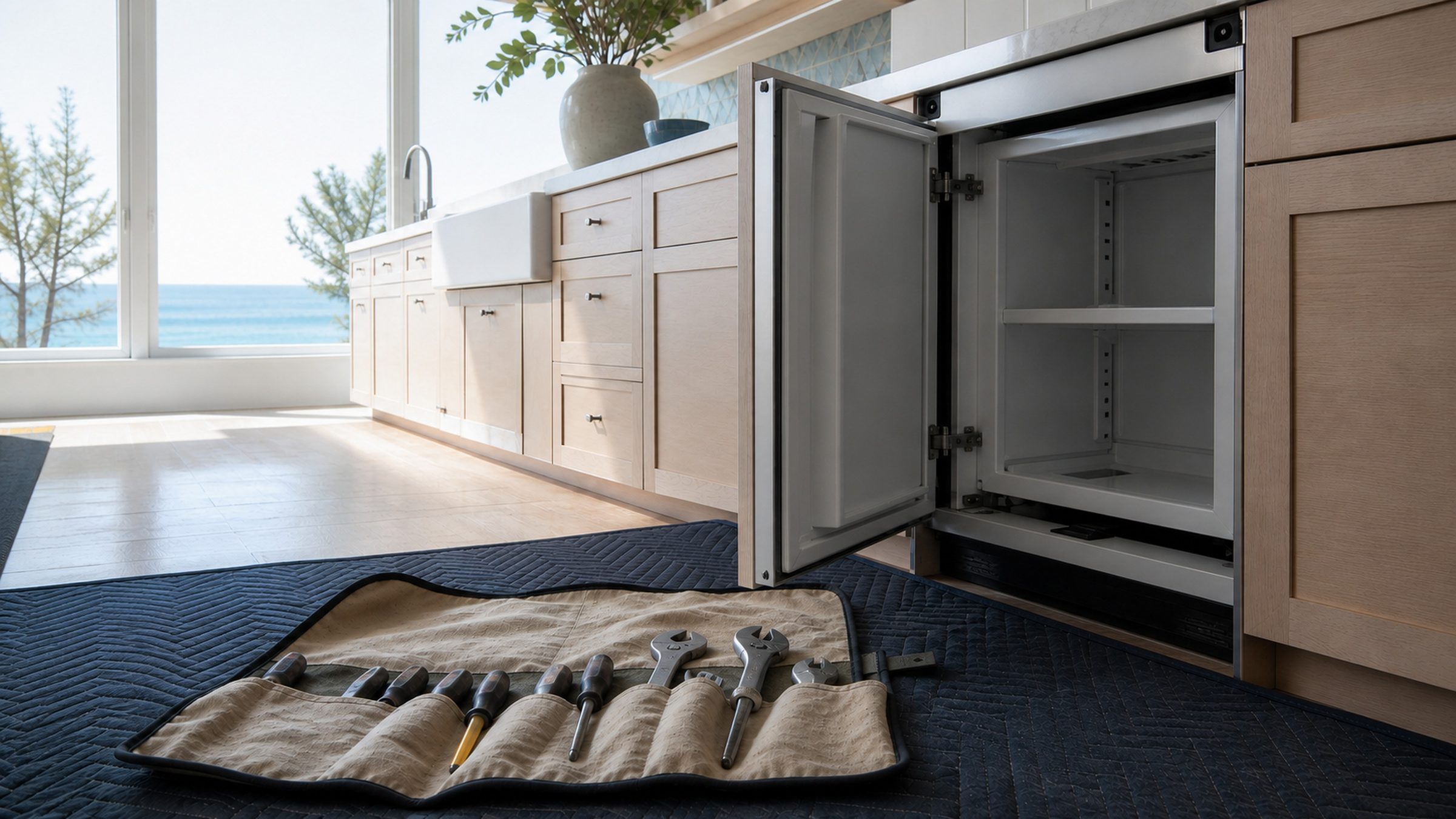
We read what the appliance is reporting, then measure before saying anything about the repair. On this equipment that also means working out how the machine leaves its opening before anybody touches it. The fee is credited toward the work when you go ahead.
- The code or the light pattern read on site, before anything is cleared
- Measured rather than guessed
- Credited toward the repair
Questions people ask about this
Why should I pay to be told what is wrong?
Because that is the part that takes skill and the part that saves you money. A named cause with a figure against it is what stops you buying a control board when the problem was a sensor. The visit, the measurement and the written scope happen whether or not you go ahead — and when you do go ahead, the fee comes off the bill.
Someone is offering a free diagnostic. Should I take it?
Read the rest of the offer. Free diagnosis with a repair, priced into the repair, is a perfectly normal arrangement and can be good value. Free diagnosis with no obligation is rarer than it looks, and the cost is somewhere — usually in a parts markup or a labor rate you cannot compare because you were never given a written scope.
Do I pay it twice if the same problem comes back?
You should not. If the repair that was carried out does not hold, that is a workmanship warranty call rather than a new diagnosis. It is a fair question to ask before booking, and any company that cannot answer it clearly has told you something.
Is it more for a built-in appliance?
The diagnostic should not be. Access changes what a repair costs, not what it costs to work out what is wrong. What is reasonable is for the technician to spend part of the visit establishing how the machine comes out, because on built-in equipment that is genuinely part of the diagnosis rather than an afterthought.
Can I get a price over the phone instead and skip the fee?
You can get a range, and you should. What you cannot honestly get is the figure, because the same symptom has several causes hundreds of dollars apart. A company that names an exact price on the phone is either padding it to cover the worst case or setting up a conversation in your kitchen that starts with 'it turns out to be'.
Several appliances need looking at. Do I pay per machine?
You should not pay a full diagnostic for each. The travel and the setup are the bulk of what a service call costs, so a second and third appliance seen on the same visit ought to cost far less than a second and third appointment. Say what else is in the kitchen when you book rather than when the technician arrives.
Cost Expectations
More guides like this one
-

Wine Cooler Repair Cost: When Two Degrees Is Worth a Service Call
For a cabinet whose whole function is holding a narrow band, two degrees is a symptom rather than a rounding error. What it costs depends on one question: one zone, or both.
Read more -
Oven Thermostat and Sensor Replacement: the Cheapest Part, the Commonest Cause
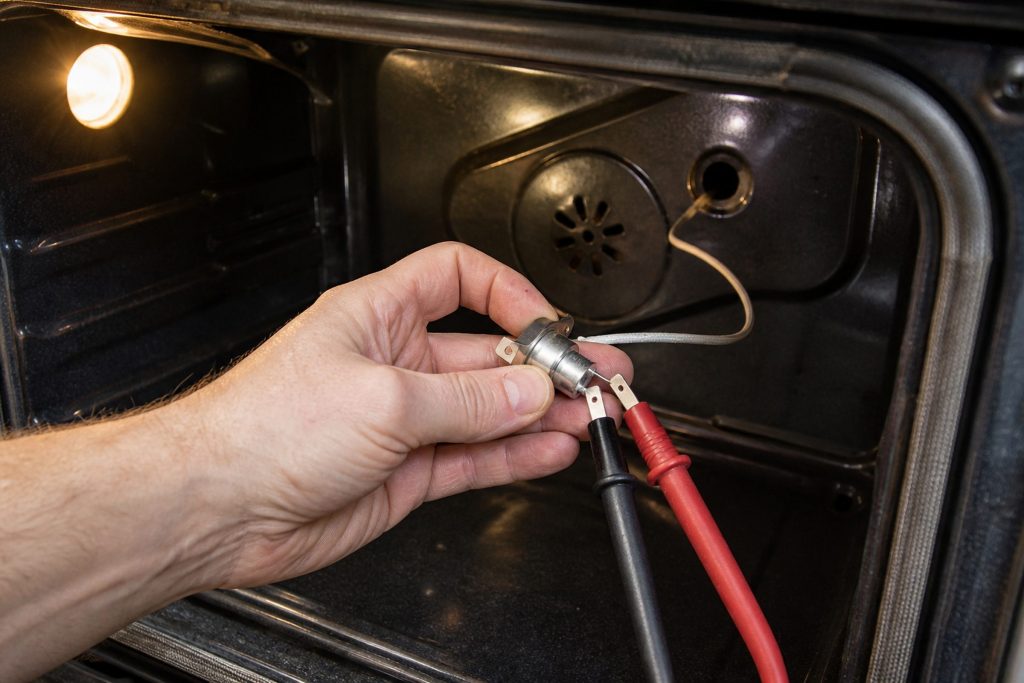
An oven that runs hot, runs cold or browns unevenly is almost always the sensor, and the sensor is the least expensive part in the oven. Measuring it first is what keeps a control board off your invoice.
Read more -

How Much Does a Refrigerator Repair Cost, and What Actually Moves the Number
Three things decide it, and only one of them is the part. This is the page that comes before the cost pages: which component, how the machine comes out, and whether it is worth doing at all.
Read more
Tell us the model number and what it is doing.
This article is based on:
- Official manufacturer documentation
- Internal repair procedures
- Technician repair history
- Company quality standards