Service
Fisher & Paykel dishwasher wash performance repair
Dishes coming out dirty, detergent still sitting in the dispenser, white film on glass, or a load that will not dry. These are the four things owners of this equipment write to the maker about most, and a good share of them are not repairs at all — which is exactly why the visit starts with what does not cost anything.
- From $95 diagnostic, credited to the repair
- 59 cities and neighborhoods covered
- OEM parts available on order
- In writing the price, before anything is opened
Before you read on
What this job costs and how it is agreed
A starting figure, not a quote. What moves it is the model, how the unit is built in and which part it needs — settled after the on-site diagnostic.
Starts at
from $135
After a diagnostic from $95, which comes off the bill when you go ahead.
or call (305) 902-4477
Diagnostic
From $95, credited to the repair
The price
In writing, before anything is opened
Warranty
On the labor we performed
On the visit
How this visit actually goes
The same order every time, so nothing is opened and nothing is charged before you have seen the figure and said yes.
-
01
Which of the four complaints it is
Not cleaning, not drying, detergent left behind and white residue are four different searches. They get grouped as "it does not work properly" and they have almost nothing in common underneath.
-
02
The free causes first
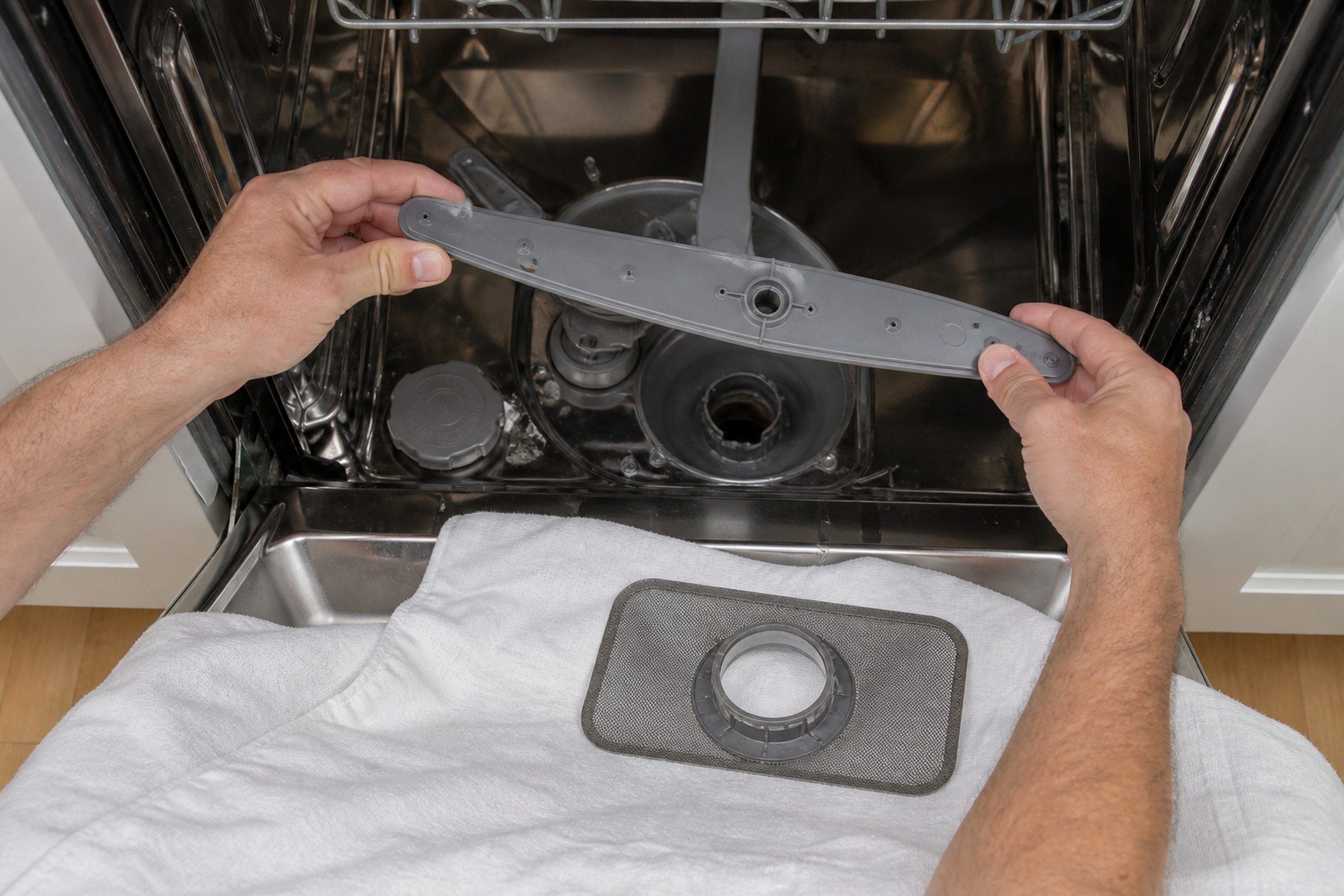
A dish leaning over the dispenser cover. A spray arm that has loosened or is blocked. A filter that is clean on top and packed underneath. Water arriving cold because the run from the heater is long. All four are the maker's own published causes and none of them is a part.
-
03
Measure the water
Temperature at the machine and pressure at the inlet. A drawer that fills slowly or cool will underperform without ever reporting anything, and both are measurable in minutes.
-
04
Then the parts that can actually be the cause
The spray arm and its bearing, the heating element, the dispenser cover and its release, and the fill valve. This is where the repair starts, and it is deliberately fourth.
-
05
Tell you which half you are in
If your machine needs a part, you get a figure. If it needs a teaspoon less detergent and the filter cleaned monthly, you get told that instead, even though it earns us nothing.
The money
What this usually costs in South Florida
The starting figure, the range the market quotes around it, and what pushes a job to either end.
-
Dishwasher drain & filter repair cost
Set at the low end of the market band on purpose, because on these machines the filter and the drain path end a large share of these calls before the pump is ever reached — and a page that priced for the pump would be pricing for the exception.
- Researched market range for South Florida: dishwasher drain work $120–$300
- The free checks come first and often end it
- Pump and check valve tested under load
Applies to
The Fisher & Paykel units we carry this work out on
-
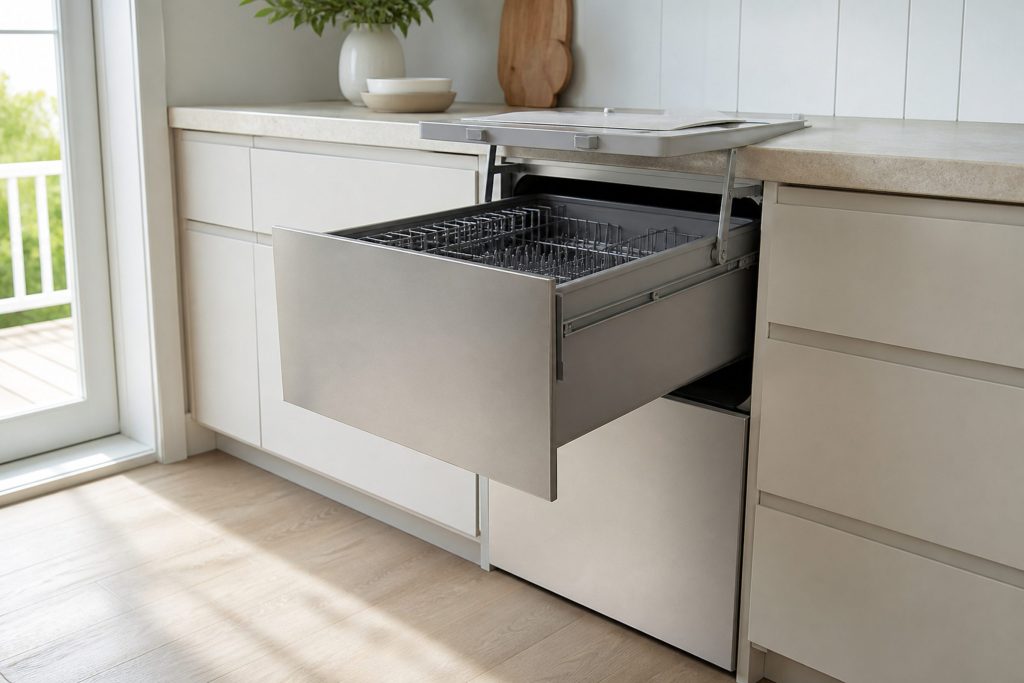
Single DishDrawer · Double DishDrawer · Tall · Drop door · Integrated · Series 5 · 7 · 9 · 11 · 24" Fisher & Paykel dishwasher repair in Miami
Fifty-one machines, and forty of them are drawers. The DishDrawer is this maker's own invention and nothing else in a South Florida kitchen works the way it does: a lid that seals under motor pressure instead of a door, a wash system per drawer, and on a double, two machines that can run — and misbehave — independently of each other.
- Detergent still sitting in the dispenser at the end of a cycle
- A drawer that stops mid-cycle, beeps, and flashes its modifiers
- Water under the machine, or a drawer that will not drain
In more detail
About Fisher & Paykel dishwasher wash performance repair
Four complaints that get one name
"It is not washing properly" is four different searches: not cleaning, not drying, detergent left in the dispenser, and white residue on glass. The maker publishes a separate article for each because they have almost nothing in common underneath, and this page is written the same way.
Why this is the cheapest row on the site
Because the commonest causes are cleanable rather than replaceable. A spray arm that has worked loose, a filter plate packed underneath, a dish over the dispenser, water arriving cool, or simply too much detergent in a small wash chamber — every one of those is put right in the visit without a part. We would rather charge you a diagnostic and tell you that than sell you a pump.
When it is a repair
A spray arm that will not stay seated or has lost its bearing. A heating element that no longer brings the wash up to temperature. A dispenser cover that does not release. A fill valve that lets the machine start a cycle underfilled. Those are parts, and they get a written figure.
This article is based on:
- Official manufacturer documentation
- Internal repair procedures
- Technician repair history
- Company quality standards

Before you book
Questions about Fisher & Paykel dishwasher wash performance repair
Detergent is still in the dispenser at the end.
This is the single most-linked article the maker publishes about these machines, and three of its four causes are free. Moisture in the dispenser before the tablet went in makes it stick. A dish leaning over the cover stops it opening. A short or cool cycle can end before a tablet has dissolved. What is left — the cover latch or its release — is a real repair, and it is worth ruling out the first three before booking anybody.
Everything comes out with a white film.
Two different things wear that description. A chalky film that wipes off is mineral, and it responds to rinse aid and to the right detergent for hard water. A cloudy etch that does not wipe off is permanent damage to the glass from over-dosing and very hot water, and no repair reverses it — what we can do is stop it getting worse. Telling them apart is a fingertip test and it is worth doing before you call.
Nothing is dry at the end of the cycle.
On these machines drying is done with residual heat and a fan rather than a big heating element, so it is more sensitive to how the load is packed and to rinse aid than a conventional machine is. Plastic staying wet is normal. Everything staying wet is worth looking at: the element, the fan, or a cycle that is ending early.
The fan carries on running after the cycle ends.
It is meant to. The maker publishes an article about it because it worries people: the drying fan runs on to pull moisture out of the drawer, and a second fan cools the electronics. What is not normal is a fan that never stops on a cold machine, or one that has become noticeably louder.
Where we do it
Across Miami-Dade, Broward, and Palm Beach
Same terms everywhere we go: an on-site diagnostic first, the price agreed in writing, and the exact figure confirmed once we have seen the unit.
Neighborhoods people ask for by name